
Key Highlights
- Ukraine's military has intensified drone strikes on Russian ships near Crimea.
- Over 36 vessels reportedly hit in the Sea of Azov in recent days.
- Attacks aim to disrupt Russian fuel supplies and logistics routes.
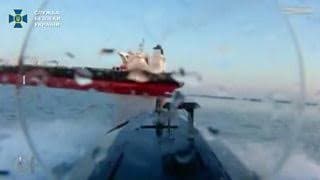
Ukraine's military has ramped up its naval operations, releasing video evidence of drone strikes targeting Russian tankers in the Sea of Azov. This escalation follows recent attacks on Russia's land corridor to Crimea, with Ukrainian officials stating that the latest strikes are part of a broader strategy to impose a 'logistics lockdown' on the region. The goal is to choke off supplies and disrupt the movement of goods into and out of the occupied territory.
Robert Brovdi, commander of Ukraine's drone force, reported that at least 36 ships have been struck and set ablaze over the past four days. Many of these vessels are part of what is referred to as Russia's 'shadow fleet'—commercial oil tankers operating under the radar. While the exact number of ships affected remains uncertain, Brovdi emphasized that the attacks have been relentless, with daily strikes reported between July 6 and July 9.
The Sea of Azov has seen a notable presence of tankers, particularly near the northeastern coast of Crimea, where the Kerch port features an onshore oil loading facility. Satellite imagery analyzed by BBC Verify indicates a decrease in the number of tankers in the area following the recent attacks on Kerch port, suggesting that Ukraine's strategy is having an immediate impact on Russian maritime operations.
In a recent statement, Russian regional governor Yuri Slyusar confirmed that two empty tankers were attacked in Taganrog Bay, with reports indicating they continued to burn the following day. Brovdi noted that two tankers targeted earlier in the week were transporting approximately 7,000 tons of fuel from Taganrog to Crimea, highlighting the significance of these strikes in disrupting fuel supplies.
Beyond the tankers, Ukraine has also targeted a passenger ferry named SKS One and a bulk carrier in Kerch port, as evidenced by images circulating on social media. The article underscores that leaving the Sea of Azov does not guarantee safety from Ukrainian drone strikes, with reports of an attack on a sanctioned tanker named Blue near Yalta, in occupied Crimea.
These maritime attacks coincide with ongoing strikes on Russian oil refineries, which have led to significant fuel shortages across Russia, including major cities like Moscow and St. Petersburg. Ukrainian President Volodymyr Zelensky has framed these operations as a direct response to Russia's military actions, asserting that targeting oil refineries serves as a form of punishment for Russia's continued aggression.
The broader implications of these strikes on Russia's naval and logistical capabilities are becoming increasingly apparent. Brovdi claimed that attacks on 12 tankers occurred in a single night, and Russian pro-war sources have not disputed the authenticity of the footage released by Ukraine. This suggests a growing acknowledgment of the effectiveness of Ukraine's maritime strategy in the ongoing conflict.
As the situation evolves, the international community continues to monitor the developments in the Black Sea region, with the potential for further escalations in naval engagements as both sides adapt to the changing dynamics of the conflict.
Published by Banx Network. This article is part of the Banx decentralized media programme, powered by the BXE token on the XRP Ledger.



