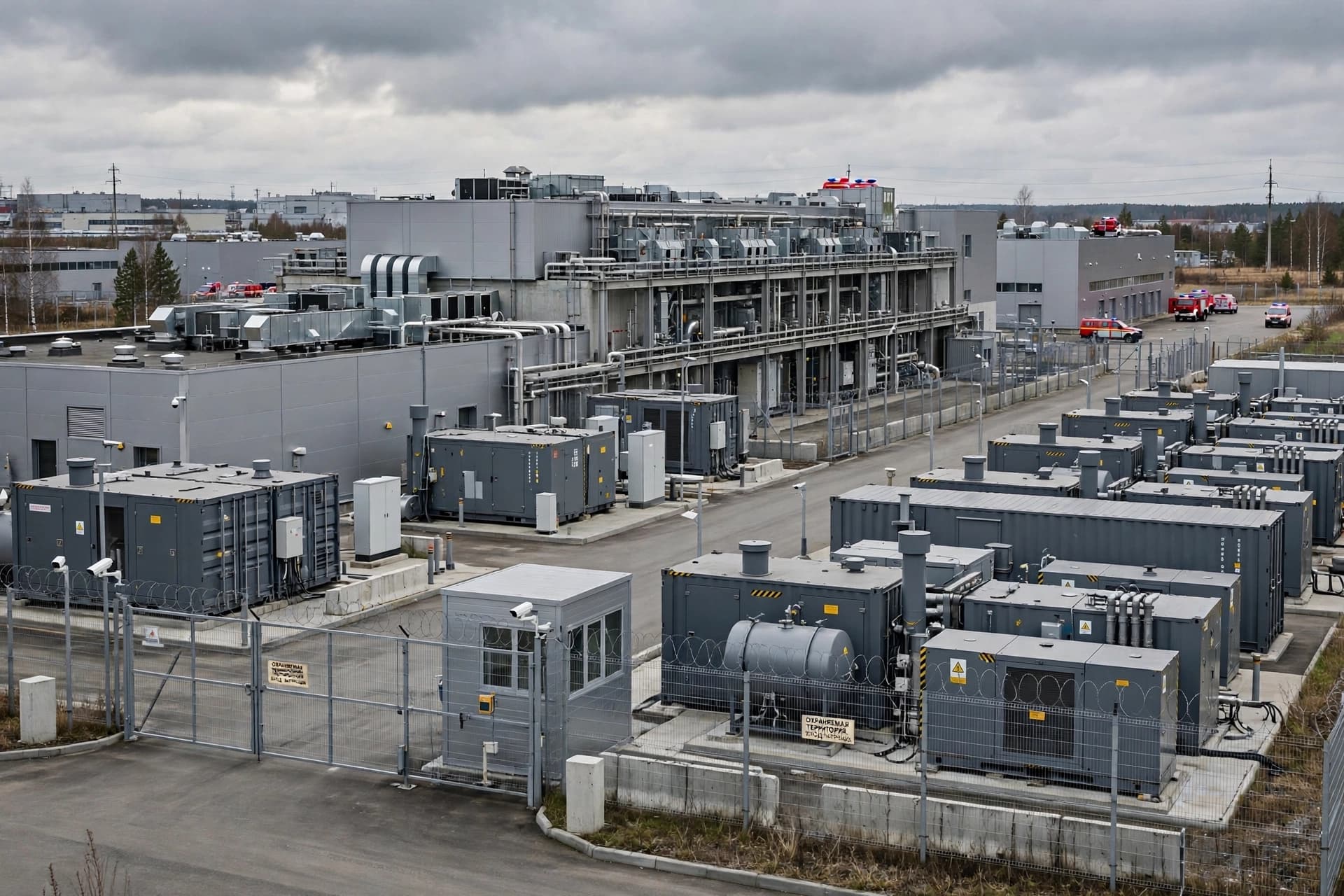
In the modern world, much of daily life appears to float somewhere beyond physical reach. Messages travel instantly, payments move between accounts, and artificial intelligence answers questions through screens. Yet these experiences depend on buildings filled with servers, power systems, cooling equipment, and specialized computer chips. When those facilities are damaged, the digital world can suddenly reveal its physical foundations.
In October 2026, a series of Ukrainian drone attacks damaged several major data centers in Russia, according to reporting by the Associated Press. Facilities associated with technology companies including Yandex, Sberbank, and VKontakte were among those affected. The incidents disrupted parts of Russia’s digital infrastructure and raised concerns about the vulnerability of services increasingly concentrated in large computing facilities. AP News
Yandex, one of Russia’s largest technology companies, reported that a drone attack struck its data center in Sasovo on October 8. The incident caused a fire and forced the company to suspend operations at the site while it worked to restore affected services. The facility hosted tens of thousands of servers, making it an important part of the company’s computing infrastructure. Yandex said its core consumer services were not affected at the time, although some cloud services experienced problems. Investing.com
The damage extended beyond a single company. According to AP, other attacks during October affected facilities linked to Sberbank and VKontakte. The resulting disruptions reportedly touched several types of digital activity, including cloud computing, online shopping, banking services, ride-hailing, geolocation, and virtual assistants. Some court proceedings were also postponed after institutions experienced difficulties accessing digital systems and databases. The precise effects varied by facility and service. AP News
Data centers have become essential infrastructure because they allow organizations to store information and run applications at scale. A single facility may support numerous services, including systems used by businesses, public institutions, and individual customers. Companies often distribute workloads across multiple locations to maintain continuity if one site becomes unavailable. However, redundancy can only reduce disruption when alternative facilities have enough capacity and can be reached through functioning networks.
Yandex said it was restoring services by using other facilities, illustrating the importance of having backup capacity. Even so, rebuilding a damaged data center can be complicated. Beyond replacing servers, operators may need to repair electrical systems, inspect cooling equipment, restore network connections, and verify that data and applications remain intact. Where specialized hardware has been destroyed, replacement can take longer, especially when supplies are limited or procurement is complicated by international restrictions. Investing.com +1
The attacks also raised questions about Russia’s ambitions to strengthen its domestic technology industry. Local cloud services, AI models, and digital platforms rely on computing infrastructure capable of handling large volumes of data. Advanced AI development can be particularly demanding because training and operating sophisticated models require powerful processors, stable electricity, and reliable access to computing resources. Damage to facilities containing specialized chips could therefore affect more than immediate online services; it could also complicate longer-term research and development. AP News
The wider implications remain difficult to measure. A service interruption does not necessarily mean that information has been permanently lost, and damage at one site does not automatically bring an entire national network to a halt. Companies can redirect workloads, restore systems, and replace equipment. Yet these responses require time and resources, and the concentration of computing capacity in a limited number of locations can leave organizations exposed when those facilities are disrupted.
The October incidents demonstrated that digital resilience depends on more than software security and sophisticated AI models. It also requires protected buildings, reliable power, alternative computing capacity, and recovery plans that work under difficult conditions. For Russia’s technology companies, restoring affected facilities and maintaining dependable services will remain practical priorities as investigations and repairs continue. The events offered a reminder that even the most advanced digital ambitions rest on physical infrastructure that must be maintained and protected.
Image Disclaimer
The images are AI-generated conceptual representations of data centers and digital infrastructure. They do not depict actual attack scenes, identifiable facilities, or verified photographs of the reported incidents.
Published by Banx Network. This article is part of the Banx decentralized media programme, powered by the BXE token on the XRP Ledger.