
Key Highlights
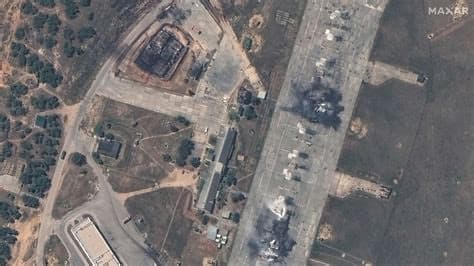
- Strike Location:Ukraine's SBU targeted the Saky military air base in Crimea.
- Aircraft Affected:Russian Su-30 and Su-30SM fighter jets were reportedly in hangars during the strike.
- Operational Impact:The SBU aims to diminish Russian combat capabilities through ongoing strikes.
Ukraine's Security Service (SBU) has confirmed that it executed a strike on the Saky military air base, located in Russian-occupied Crimea. This operation specifically targeted the airfield's infrastructure, focusing on hangars that house aviation equipment. The SBU's Alpha unit carried out the strike as part of a broader campaign to influence military operations in the region.
According to the SBU, multiple drone strikes successfully hit the hangars at the Saky air base. Reports indicate that Russian fighter jets, including the Su-30 and Su-30SM models, were present in two of the hangars at the time of the attack. The SBU noted that a fire was observed in one of the hangars, which they believe contained an Su-30SM, serving as evidence of the strike's success.
The SBU has emphasized that this operation is part of its ongoing strategy to reduce the combat capabilities of Russian forces. By targeting critical infrastructure in both frontline areas and occupied territories, the SBU aims to disrupt Russian military operations significantly. The agency has stated that it will continue to conduct strikes to weaken the enemy's operational effectiveness.
This strike comes amid heightened tensions in the region, as Ukraine continues to assert its military capabilities against Russian forces. The Saky air base has been a strategic location for Russia, and the successful targeting of its infrastructure could have implications for future military engagements.
As the conflict continues, the SBU's operations reflect Ukraine's commitment to countering Russian aggression and maintaining its sovereignty. The international community is closely monitoring these developments, as they could influence the broader geopolitical landscape in Eastern Europe.
Published by Banx Network. This article is part of the Banx decentralized media programme, powered by the BXE token on the XRP Ledger.



