
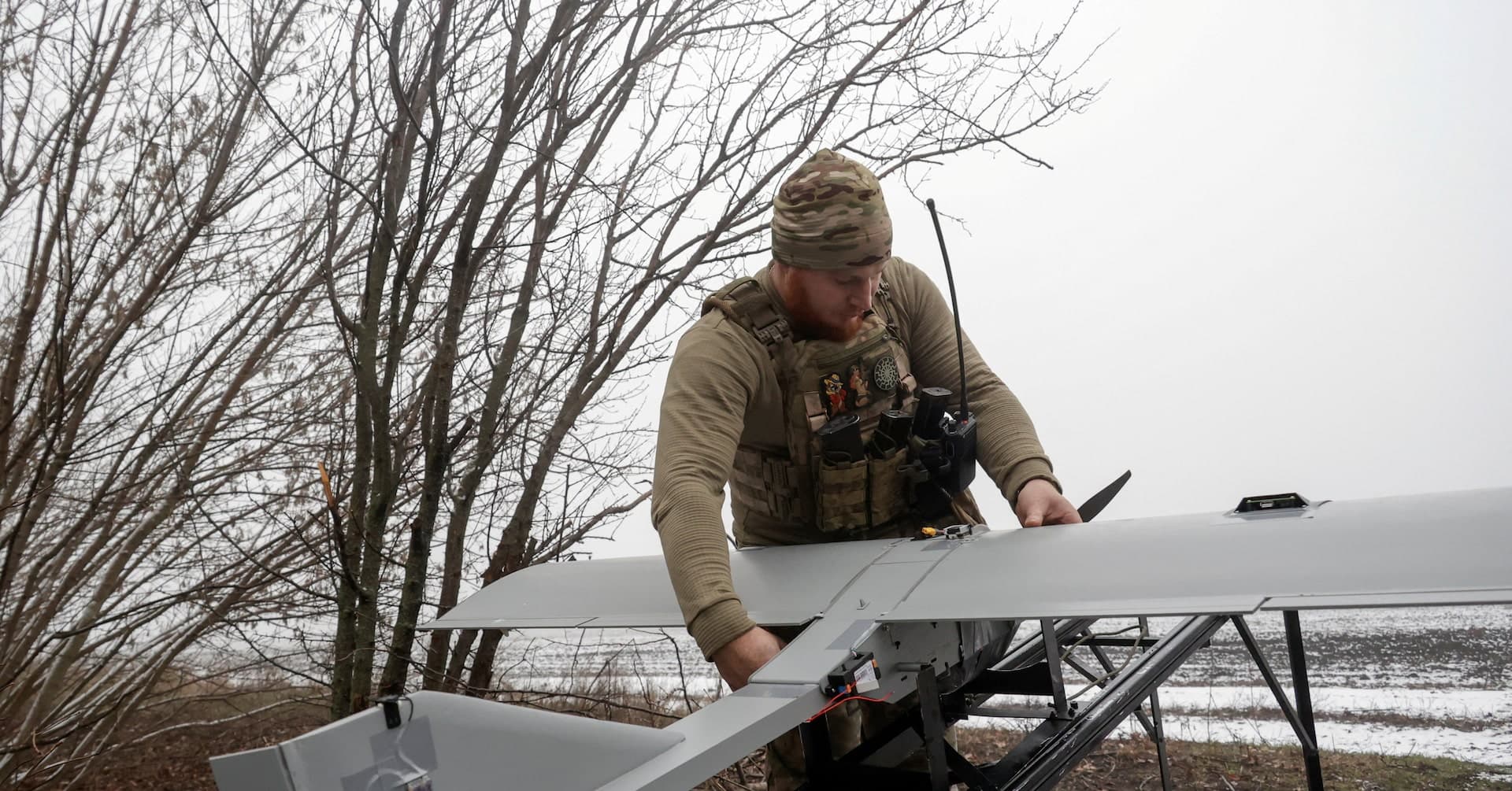
Ukraine's Deputy Secretary of the National Security and Defence Council, Davyd Aloian, has announced that the country could see its defence exports reach several billion dollars in 2026. This estimate follows the recent approval of numerous applications from defence sector manufacturers to export military equipment and services, reflecting a significant shift in Ukraine’s military export policy after a hiatus since Russia's invasion in February 2022.
Earlier this month, a state commission approved most of the 40 applications from defense producers, indicating a renewed focus on developing Ukraine's domestic armaments industry, particularly in drones and missiles. Aloian stated, "Taking into account finished products, spare parts, components, and services, the total export potential amounts to several billion dollars," emphasizing that this figure is now "significantly higher" than pre-war export levels.
While optimism abounds regarding export potential, Aloian tempered expectations by stressing that Ukraine's immediate military needs must take priority. As Russian forces continue their advance in the eastern regions, he underscored that the primary focus remains on bolstering Ukraine's defence capabilities before exporting surplus equipment.
In terms of international interest, several countries, including Germany, the UK, the US, and several nations in the Middle East and Asia, have expressed strong interest in acquiring Ukraine's advanced military technologies. Aloian indicated that one Middle Eastern country, with a longstanding history of arms trade with Ukraine, is particularly keen on opportunities in the drone and heavy equipment sectors.
With an eye on long-term sustainability, Ukraine is also considering the introduction of a tax on defence exports, believing that this revenue could be redirected to meet its own military funding needs. Although no final decision has been made regarding this tax, Aloian views it as a necessary measure to justify a resumption of arms exports while enhancing military capabilities domestically.
Importantly, while arms exports are on the horizon, Aloian clarified that none of the approved applications involve the export of ready-to-use weapons. Instead, they primarily focus on reimporting materials for Ukrainian forces and supporting collaborative defense programs, such as the Ukraine-US FrankenSAM program, aimed at integrating Western missile technology with existing Soviet systems.
Overall, this strategic pivot towards bolstering Ukraine's defense exports represents a crucial step in recovering from past limitations imposed by the conflict, while also positioning the country as a potential player in the global arms market.
Published by Banx Network. This article is part of the Banx decentralized media programme, powered by the BXE token on the XRP Ledger.
.jpg&w=3840&q=75 "Man Tapes Ears to His Head in Bizarre Attempt to Enter Poland With False Passport")

