
Key Highlights
- Ukraine ranks 55th in the latest Press Freedom Index, surpassing the US and six EU countries.
- Moldova also shows significant progress, reaching 31st place in the rankings.
- The EU urges Ukraine to reform its media environment to enhance independence.
In the latest Press Freedom Index published by Reporters Without Borders (RSF) on April 30, 2026, Ukraine has made notable strides, climbing to the 55th position globally. This advancement places Ukraine ahead of the United States and six EU nations, including Italy (56th), Malta (67th), Bulgaria (71st), Hungary (74th), Cyprus (80th), and Greece (86th). This ranking reflects a significant upward trend in a global landscape where press freedoms have generally deteriorated.
Despite this improvement, the Ukrainian government faces scrutiny from the European Union for its media practices. Critics point to the state-controlled media environment, particularly through the TV Marathon initiative, which consolidates major news channels under state leadership. The EU has called on Ukraine to implement reforms aimed at reducing undue media influence and establishing a more independent regulatory framework for journalism.
RSF attributes Ukraine's rise in the index to a vibrant media landscape and proactive investigative journalism, which has played a crucial role in enhancing transparency in political affairs. However, the safety of journalists remains a pressing concern. RSF reported a troubling increase in attacks on journalists in the United States, which saw its ranking drop seven spots to 64th in the index due to these incidents.
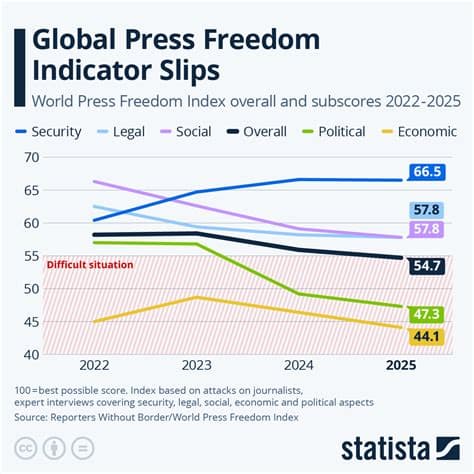
The overall situation for media freedom worldwide remains dire, with 100 of the 180 countries monitored experiencing declines. Moldova's remarkable advancement to 31st place, categorized as 'satisfactory', marks it as the best performer among EU candidate nations. In stark contrast, countries like Belarus (165th), Azerbaijan (171st), and Russia (172nd) highlight the significant media freedom challenges in the Eastern European region.
The contrasting developments in Ukraine and Moldova underscore the escalating pressure on freedom of expression, particularly when compared to neighboring countries where restrictive laws criminalize journalistic work. RSF's conclusion emphasizes that while both Ukraine and Moldova are making progress, substantial work remains to improve their media freedom status. The European Commission has acknowledged these advancements, recognizing their importance in aligning with EU standards that prioritize press freedom as a fundamental democratic value.
Published by Banx Network. This article is part of the Banx decentralized media programme, powered by the BXE token on the XRP Ledger.



