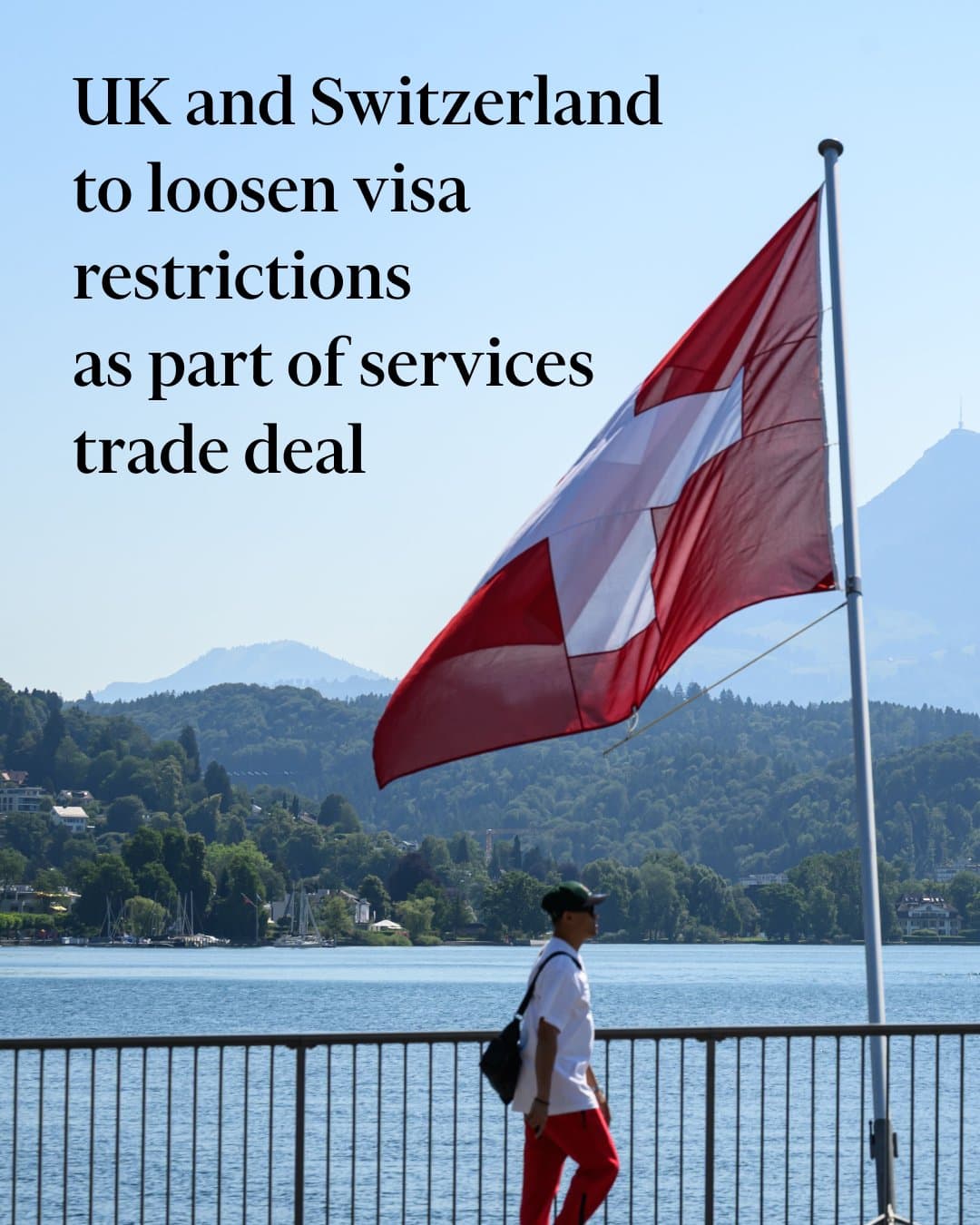
Key Highlights
- New Agreement:The UK and Switzerland have signed a trade deal easing visa restrictions for professionals.
- Visa Duration:Qualified professionals can work in each other's countries for up to 90 days without a traditional work visa.
- Economic Impact:The agreement aims to enhance economic cooperation and cross-border investment between the two nations.
The United Kingdom and Switzerland have reached a significant milestone in their economic relationship by agreeing to relax visa restrictions for professionals as part of a new services trade agreement. This landmark deal allows qualified professionals, including lawyers and accountants, to work in each other's countries for up to 90 days per year without the need for a traditional work visa. This change is expected to facilitate greater economic cooperation and enhance the flow of skilled labor between the two nations.
The agreement underscores the increasing importance of services in modern economies. Unlike the trade of physical goods, which can be transported across borders, services often require skilled professionals to travel internationally to provide their expertise directly to clients and businesses. By reducing administrative barriers, both the UK and Swiss governments aim to foster greater cross-border investment and commercial activity, which is vital for their economies.
Professional services are a major contributor to both the British and Swiss economies. Sectors such as financial services, legal advice, consulting, engineering, and accounting generate billions in economic activity annually while supporting international business operations. The ability to move professionals more freely allows firms to deploy specialists more efficiently, particularly when serving multinational clients who require immediate and expert assistance.
Moreover, the agreement is poised to enhance collaboration between financial institutions based in London and Zurich, two of Europe's leading financial centers. Banks, insurance companies, and investment firms often need legal, regulatory, and accounting professionals to navigate complex cross-border transactions, including mergers and acquisitions. The easing of visa restrictions is expected to streamline these processes, making it easier for firms to operate across jurisdictions.
Business organizations have largely welcomed this development, arguing that simplified travel requirements will reduce compliance costs and enable firms to respond more swiftly to client needs. This arrangement is particularly beneficial for short-term assignments, which previously necessitated more extensive immigration procedures, thus allowing businesses to operate more flexibly in a competitive global market.
While the agreement facilitates travel for certain professionals, it is important to note that it does not grant unrestricted access to each country's labor market. Participants must still adhere to relevant professional licensing rules, employment regulations, and tax requirements where applicable. This ensures that while mobility is enhanced, regulatory standards are maintained.
The deal also reflects a broader trend in international trade agreements, which are increasingly focusing on services rather than solely on goods. As digital commerce and knowledge-based industries continue to expand, professional mobility has become a critical component of international economic cooperation. If successfully implemented, this agreement could serve as a model for future services trade partnerships between other advanced economies looking to enhance competitiveness while upholding regulatory standards.
Published by Banx Network. This article is part of the Banx decentralized media programme, powered by the BXE token on the XRP Ledger.