
Key Highlights
- Ongoing Trials:Uganda resumes court cases against government critics, including Kizza Besigye.
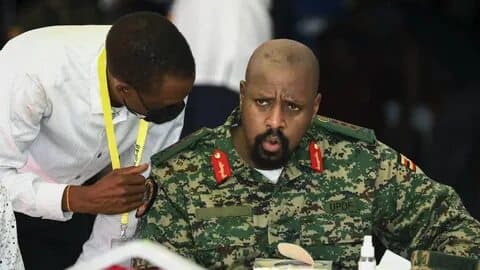
- Crackdown on Media:General Muhoozi Kainerugaba orders shutdown of independent media outlets.
- Political Tensions:Analysts note a shift in power dynamics favoring Kainerugaba.
Uganda is witnessing a significant escalation in the crackdown on dissent as the government resumes court cases against prominent critics. The trials are set to continue this Tuesday, with President Yoweri Museveni remaining notably silent while his son, General Muhoozi Kainerugaba, consolidates power. This situation has raised alarms among human rights advocates and political analysts alike.
Kizza Besigye, a veteran opposition leader and a long-time critic of Museveni, is scheduled to appear in a Kampala court facing treason charges. Besigye has been in detention since his controversial abduction from Kenya in 2024, an incident that sparked international condemnation. His lawyer, Erias Lukwago, is also embroiled in legal troubles after being arrested earlier this month, reportedly on orders from Kainerugaba, further illustrating the government's aggressive stance against dissent.
The crackdown extends beyond political figures to independent media. Recently, Kainerugaba ordered the closure of several outlets linked to Uganda's leading independent media group, which publishes the Daily Monitor and operates NTV Uganda. These actions have been framed as necessary for security investigations, yet they have drawn criticism for undermining press freedoms. Kainerugaba's rhetoric against the media has intensified, suggesting a broader strategy to control the narrative within the country.
Analysts are increasingly concerned about the implications of Kainerugaba's actions, viewing them as indicative of a shift in Uganda's power dynamics. His behavior on social media, characterized by threats and inflammatory remarks toward critics, raises questions about his intentions and ambitions. Observers note that he appears to be positioning himself as a potential successor to his father, Museveni, when the long-serving president eventually steps down.
The political landscape in Uganda has become increasingly hostile for opposition figures. Many have faced harassment, arbitrary detention, or have been forced into exile. In this context, Besigye remains one of the most prominent challengers to Museveni, having contested against him in multiple elections. His ongoing legal battles, coupled with the scrutiny faced by his allies and rights groups, underscore the precarious situation for political dissenters in Uganda.
As the trials unfold, the international community is watching closely, with calls for accountability and respect for human rights growing louder. The treatment of Besigye and his legal team reflects a disturbing trend of arbitrary detention and abuse, as highlighted by organizations like Amnesty International. The outcome of these trials could have significant implications for the future of political freedoms in Uganda and the broader East African region.
Published by Banx Network. This article is part of the Banx decentralized media programme, powered by the BXE token on the XRP Ledger.



