Key Highlights
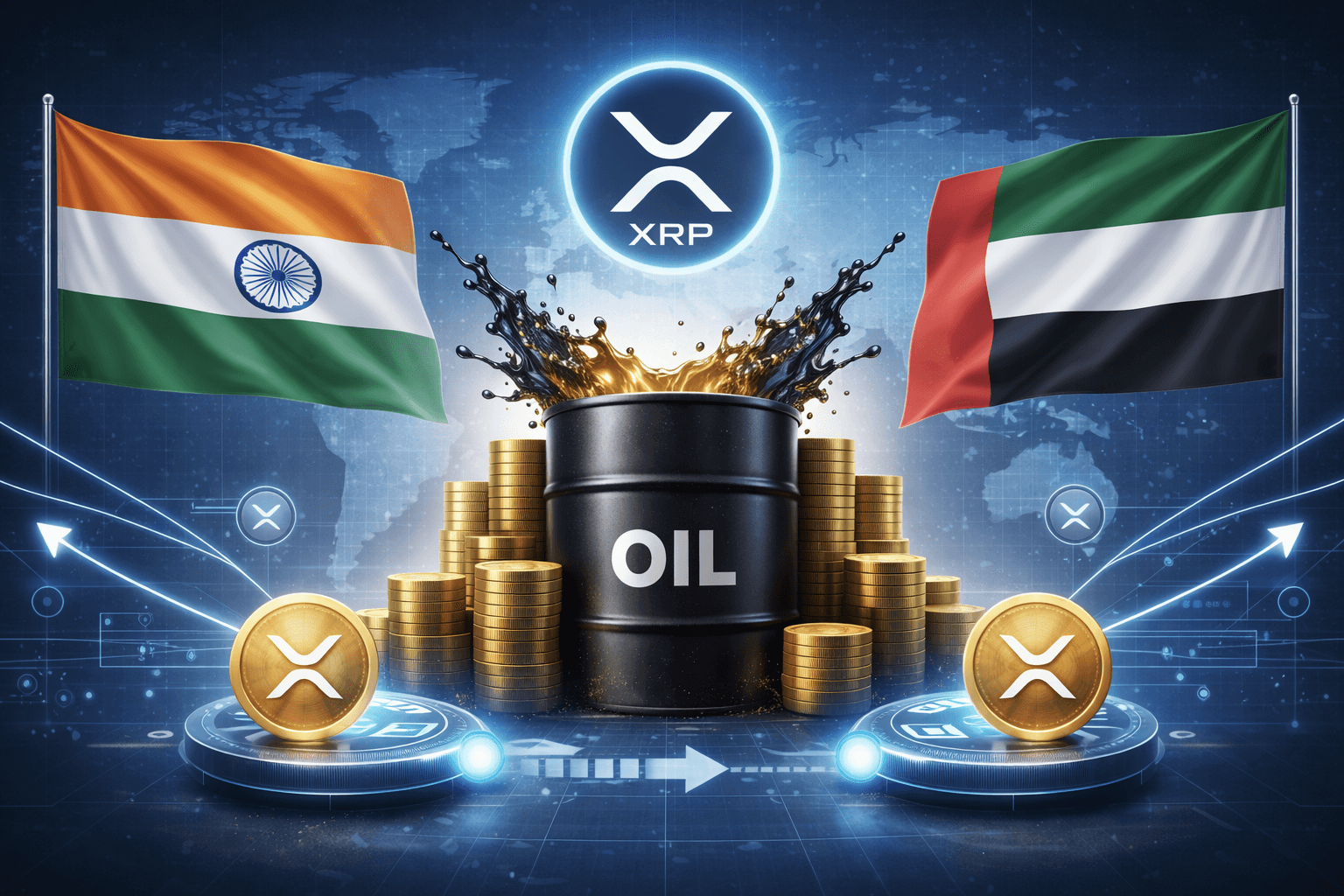
- Historic Trade:India and the UAE complete an oil transaction using XRP.
- Bypassing the Dollar:The deal marks a significant shift away from the petrodollar system.
- Rising Prices:The transaction occurs amid increasing global oil prices and market volatility.
As global oil prices climb and energy markets remain volatile, a significant development involving blockchain technology and commodity trade is drawing attention across financial and crypto communities. According to a report published by CryptoRank News, India and the United Arab Emirates have completed a crude oil transaction that bypassed the U.S. dollar, utilizing the XRP Ledger as part of the settlement process. This innovative deal reportedly allowed both countries to pay in their respective local currencies while the transaction was processed through the XRP Ledger system.
The move comes at a time when oil prices are rising globally due to geopolitical tensions and tightening supply. As energy costs increase, the ability to settle large international payments faster and more efficiently becomes increasingly valuable for both oil producers and importers. The XRP Ledger, known for its speed and efficiency, offers a promising alternative to traditional banking systems, which often involve lengthy settlement times and high transaction costs.
For decades, oil trade has largely been conducted through the petrodollar system, where transactions are settled in U.S. dollars through traditional banking networks. However, some countries are increasingly exploring alternatives that reduce dependence on the dollar. The CryptoRank report explains that India and the UAE processed the oil trade through the XRP Ledger system, which can enable faster settlement and lower transaction costs compared to conventional banking infrastructure.
Both nations are also connected to broader economic initiatives pushing toward de-dollarization, particularly among countries aligned with BRICS economic cooperation. The goal is to allow trade to occur through local currencies or alternative financial systems rather than relying exclusively on the U.S. dollar. This shift could have profound implications for global trade dynamics, especially in the energy sector.
As oil prices increase, the size and frequency of international payments grow dramatically. Large energy transactions often involve billions of dollars moving between countries, sometimes taking days to settle through multiple correspondent banks. Blockchain settlement systems like the XRP Ledger are designed to move value globally in seconds. During periods of high oil prices and financial volatility, faster settlement can reduce currency risk, banking delays, and transaction costs.
For major energy buyers like India and exporters like the UAE, experimenting with blockchain infrastructure could potentially create more efficient global trade rails for commodities. The reported XRP-based oil settlement represents more than just a single trade; it reflects a broader trend where countries are exploring alternative payment systems for global commerce, particularly for strategic resources such as oil.
Whether this development becomes a widely adopted model or remains an early experiment remains to be seen. However, as oil prices continue rising and financial systems evolve, blockchain-based settlement networks are increasingly entering conversations around the future of international trade. If similar deals continue to appear in global energy markets, this moment may later be remembered as an early example of how digital payment infrastructure began intersecting with one of the world’s most valuable commodities: oil.
Published by Banx Network. This article is part of the Banx decentralized media programme, powered by the BXE token on the XRP Ledger.