

Key Highlights
- UAE and India are exploring blockchain for oil trade settlements.
- Recent transactions bypassed the U.S. dollar, using local currencies.
- This shift reflects a growing trend of de-dollarization in global markets.
DUBAI / NEW DELHI — The United Arab Emirates (UAE) and India are making significant strides in the energy sector by exploring blockchain-based payment systems to settle oil transactions. This development marks a notable departure from the traditional reliance on the U.S. dollar, which has long dominated global oil trade.
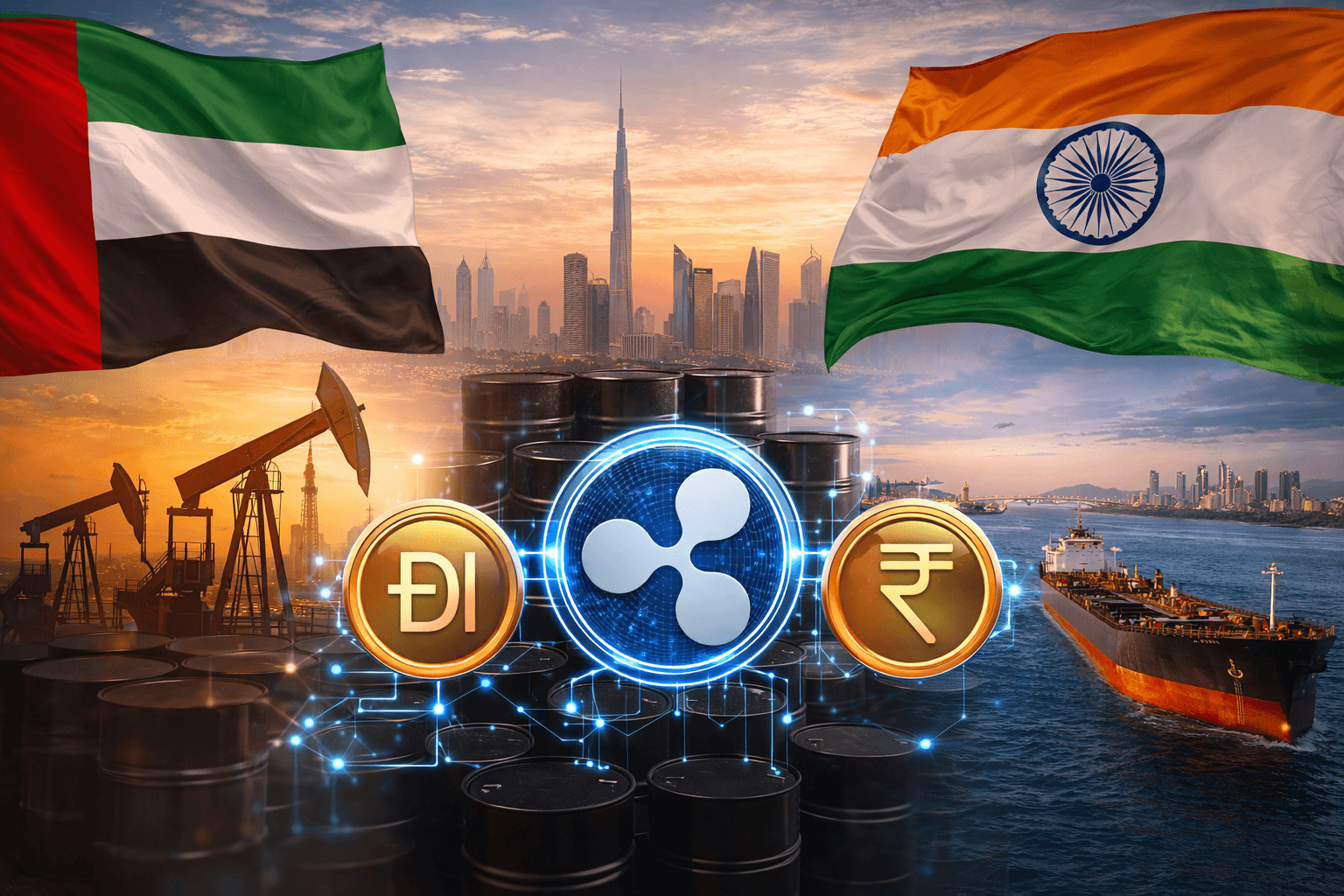
Recent reports indicate that a crude oil transaction between the two nations was successfully executed without the involvement of the U.S. dollar. Instead, payments were settled using local currencies, facilitated by blockchain technology linked to the XRP Ledger, which is part of Ripple’s payment ecosystem. This innovative approach allows India to pay for oil imports from the UAE directly in its own currency, streamlining the settlement process and reducing transaction costs associated with currency conversion.
The move is part of a broader global trend towards “de-dollarization,” where countries are increasingly seeking alternatives to the U.S. dollar in international trade. Factors such as exchange-rate volatility, the risks associated with U.S. sanctions, and high settlement costs have prompted governments and financial institutions to explore local currencies and alternative payment systems. This shift could significantly alter the landscape of global trade, particularly in energy markets.
The UAE has been at the forefront of blockchain and digital asset innovation, actively pursuing partnerships with technology firms to enhance its financial infrastructure. The Dubai International Financial Centre (DIFC) Innovation Hub has emerged as a key player in the regional fintech ecosystem, fostering advancements in digital finance and payment solutions.
Despite the promising developments, analysts caution that while blockchain networks like the XRP Ledger are being considered for settlement infrastructure, there has been limited official confirmation from either the UAE or Indian governments regarding a formal partnership with Ripple for oil trade transactions. Some reports suggest that the blockchain technology may have been utilized primarily in the backend of the payment process rather than as a front-facing solution.
Nevertheless, this transaction signals a significant shift in financial dynamics within global energy markets. If similar arrangements gain traction, experts believe they could accelerate the adoption of blockchain-based payment systems and local currencies in international commodity trade. For India, which ranks as the world’s third-largest oil importer, and the UAE, a leading energy exporter in the Middle East, these innovations could fundamentally reshape the future of cross-border payments in the energy sector.
As the world continues to evolve towards more decentralized financial systems, the implications of such transactions could extend beyond oil trade, potentially influencing various sectors reliant on international trade and finance. The exploration of blockchain technology in this context not only highlights the adaptability of these nations but also sets a precedent for others considering similar paths in their economic strategies.
Published by Banx Network. This article is part of the Banx decentralized media programme, powered by the BXE token on the XRP Ledger.




