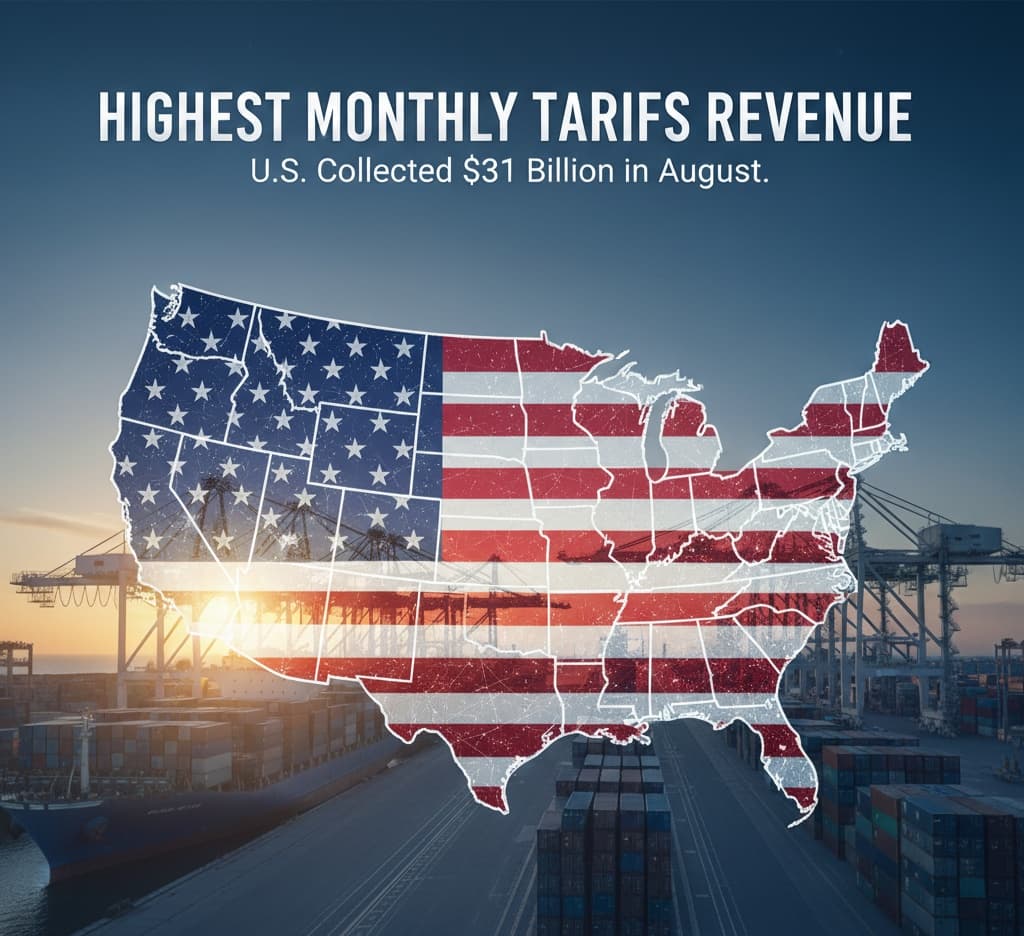
Tariff Revenue Hits Record $31B: A Mixed Bag for Trump's Trade War
In August, the U.S. Treasury reported a staggering $31 billion in tariff revenue – the highest monthly total this year. This milestone has been touted by some as proof that America is "getting tough" on trade partners like China. However, economists and business leaders warn that these tariffs come with a hefty price tag for American consumers.
The reality is that every dollar collected through tariffs ultimately comes from importers and, subsequently, from consumers who foot the bill through higher prices. Washington counts this revenue as a boon, but households feel it as inflation – a hidden tax on everyday purchases. As shoppers scan their receipts at Walmart or Home Depot, they're not just paying for goods; they're also financing the Trump administration's trade war.
The Boomerang Effect: Tariffs' Unintended Consequences
History has shown that tariffs don't only target rival countries but often rebound and affect domestic industries. Businesses pass on costs to downstream consumers, farmers lose export markets, and global supply chains adapt to U.S. policies. The U.S.-China trade war is a prime example of this phenomenon.
Supporters of the administration's strategy argue that the record tariff revenue demonstrates America's resolve in its trade negotiations. Nevertheless, experts caution against confusing tariffs with actual economic gains. Tariffs can be a valuable tool in negotiations, but they are not an end in themselves.
Assessing the True Costs: Will Tariff Revenue Boost U.S. Workers and Consumers?
The real measure of success lies not in the Treasury's collection numbers but in whether American workers and consumers emerge stronger after the trade war dust settles. The jury is still out on this question. While some industries, like agriculture, have seen benefits from tariffs, others – such as manufacturing and retail – face significant headwinds.
As policymakers continue to debate the merits of Trump's trade war strategy, one thing is clear: the true costs of these tariffs must be taken into account. The record $31 billion haul in August serves as a sobering reminder that the consequences of this policy extend far beyond Washington's scoreboards and economic metrics.
Published by Banx Network. This article is part of the Banx decentralized media programme, powered by the BXE token on the XRP Ledger.