
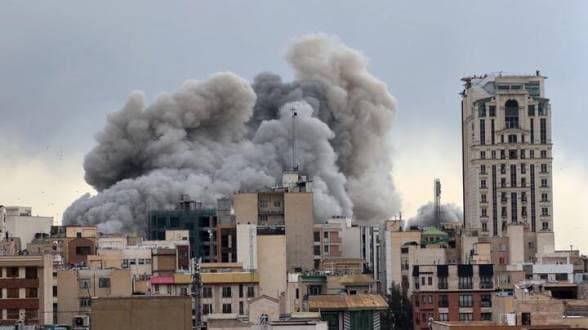
Key Highlights
- U.S. Central Command (CENTCOM) has initiated new military strikes against Iran.
- The strikes target Iranian military capabilities, including surveillance and air-defense systems.
- The actions are a response to ongoing threats to U.S. forces and commercial shipping in the region.
U.S. Central Command (CENTCOM) has confirmed that U.S. forces have begun a new wave of self-defense strikes against multiple targets in Iran. This decision comes directly from the Commander in Chief and is framed as a necessary response to what CENTCOM describes as Iran's persistent aggression and threats directed at U.S. military personnel and international commercial vessels operating in regional waters.
The military operations involve assets from the U.S. Marine Corps, Air Force, and Navy, which have deployed precision munitions aimed at specific Iranian military targets. According to CENTCOM, these targets include Iranian military surveillance capabilities, communication systems, and air-defense installations. However, the command has not disclosed detailed information regarding the exact locations or nature of the strikes in its initial public statement.
Despite the military actions, CENTCOM has reassured that commercial vessel transits through the region are continuing as normal, with U.S. forces remaining vigilant and prepared to respond to any further threats. This indicates a dual focus on maintaining security for both military and commercial interests in the strategically vital waters surrounding Iran.
The escalation of military action follows a series of incidents that have raised tensions between the U.S. and Iran. U.S. officials have repeatedly expressed concerns over Iran's activities in the region, which they claim threaten not only American forces but also the safety of international shipping lanes crucial for global trade.
In recent months, there have been multiple confrontations involving Iranian forces and U.S. military assets, leading to heightened military readiness on both sides. The U.S. has emphasized its commitment to protecting its interests and allies in the region, which has historically been a flashpoint for conflict.
As the situation develops, analysts will be closely monitoring the implications of these strikes on U.S.-Iran relations and the broader geopolitical landscape in the Middle East. The potential for further escalation remains a concern, particularly as both nations navigate a complex web of alliances and enmities in the region.
Published by Banx Network. This article is part of the Banx decentralized media programme, powered by the BXE token on the XRP Ledger.



