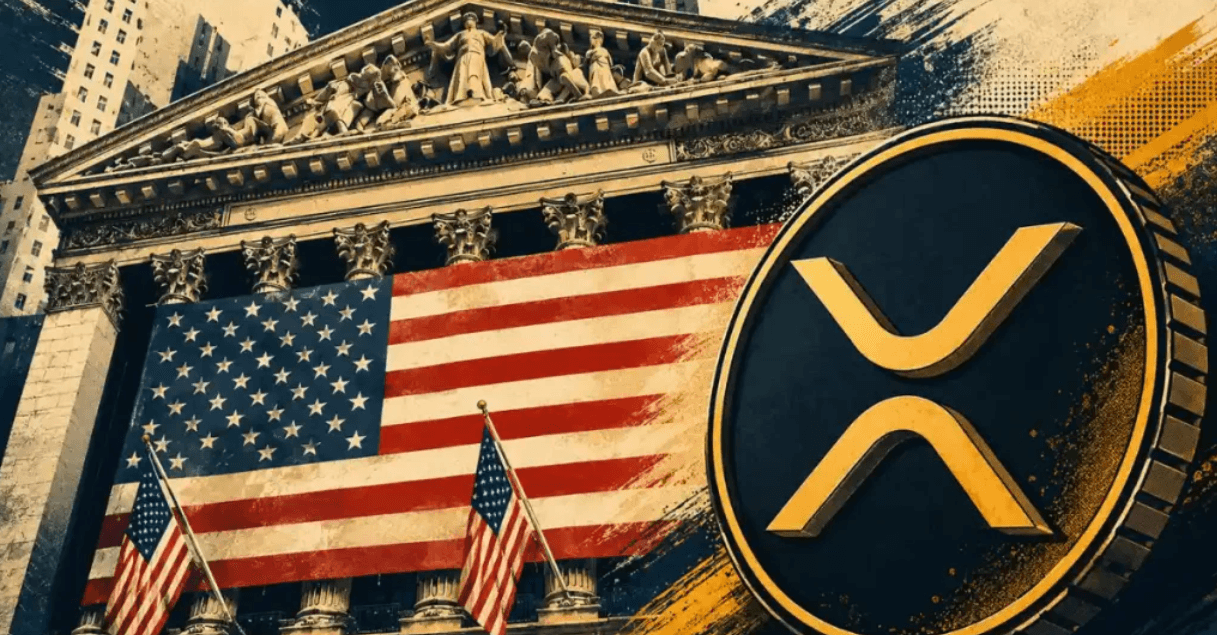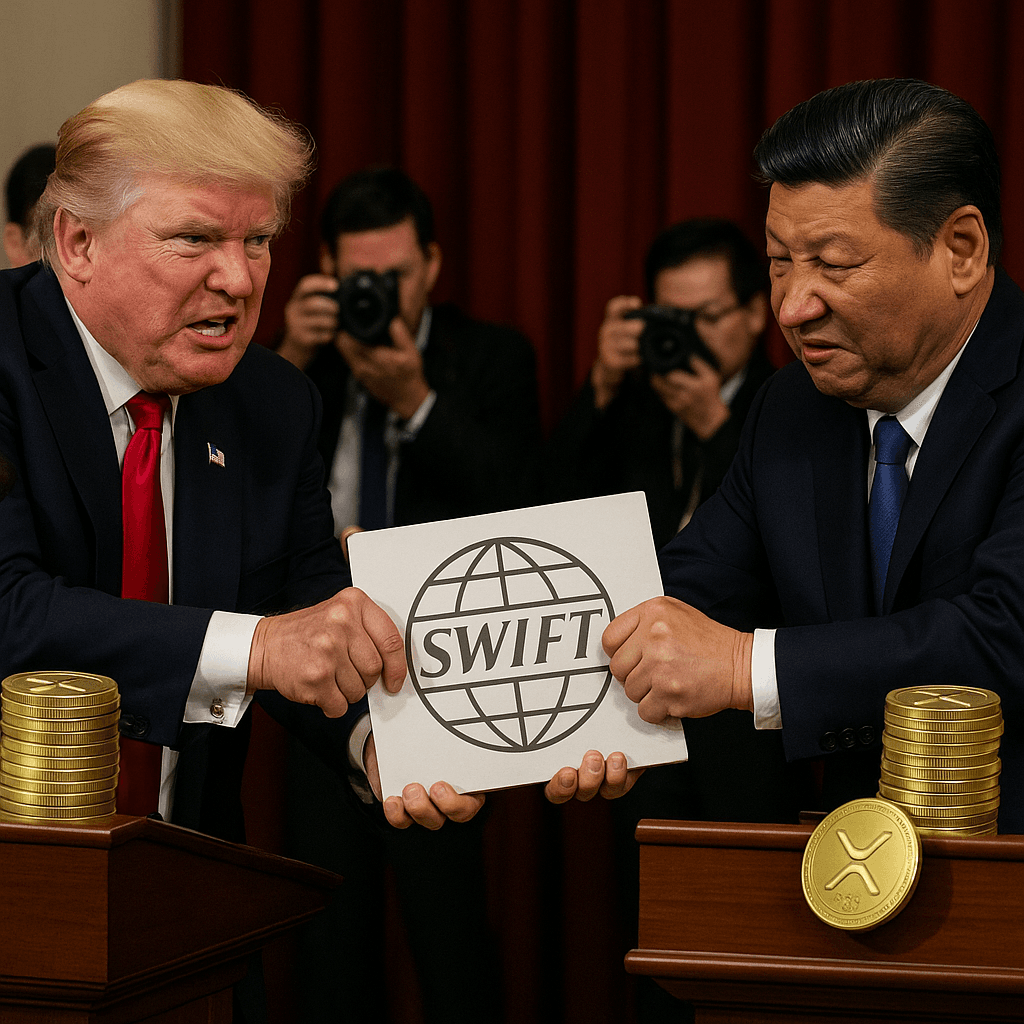
With the U.S. unveiling a 100 % tariff on all Chinese imports — triggering a $124 billion + crypto market wipe-out — institutional players are scrambling for payment rails that bypass the cost and delays of legacy systems. The XRP Ledger (XRPL), with XRP at its core, is gaining traction as a viable alternative — and simultaneously the BXE Token is entering the scene to power media monetization and on-ledger tokenization.
Article Body:
⚠️ Macro Shock: Tariffs & Market Fallout
On October 10–11 2025, the U.S. announced it will impose 100% tariffs on Chinese imports, effective November 1, alongside new export-control measures on critical software. TechFinancials +2 TheStreet +2
That announcement triggered a sharp “risk-off” reaction: the crypto market reportedly lost around $124 billion in value in the immediate aftermath. Yahoo Finance +1
Specifically, XRP dipped to roughly $0.7745 during the crash period before a recovery attempt, highlighting how sensitive even major crypto assets are to macro trade and policy shocks. FXEmpire +1
🏦 Friction in Legacy Payment Rails
The global payments infrastructure — dominated by institutions connected via SWIFT (Society for Worldwide Interbank Financial Telecommunication) — handles roughly $150 trillion of cross-border transactions annually. Mitrade +1
Despite this volume, SWIFT’s underlying messaging and settlement framework has been criticised for being slow, costly, and increasingly ill-prepared for real-time digital asset flows. XRP proponents argue the conditions are ripe for disruption.
💡 XRP Ledger: A Viable Alternative
The XRP Ledger (XRPL) is built to enable near-instant settlement (typically seconds) and minimal fees. Publications highlight that if even 1% of SWIFT’s $150 trillion flows were redirected to XRPL, that would represent about $1.5 trillion in annual demand. Mitrade
In addition, institutional adoption metrics for XRP are showing strength: one report claims 43.4% of circulating XRP is held in institutional-type wallets, and on-chain activity (transactions, wallets) is rising. SQ Magazine +1
On the technical front, Ripple engineers indicate the XRPL is being enhanced with privacy features (zero-knowledge proofs, confidential tokens) and real-world asset tokenisation readiness — all key for institutional adoption. CoinDesk +1
🔄 Why the Tariffs Make XRP More Attractive
Trade-war driven tariffs increase friction in traditional cross-border commerce: higher duties, regulatory scrutiny, longer settlement times and higher compliance costs. As firms seek to streamline trade, reduce locked-up capital, and improve speed, rails like XRPL present a viable “alternate” that reduces dependency on pre-funded liquidity pools and slow traditional correspondent banking chains. The recent crash in crypto markets (triggered by tariffs) further emphasises the need for infrastructure with real-world utility rather than pure speculation.
🔗 Enter BXE Token: Powering Decentralised Media & Tokenisation
In the context of XRPL’s growing institutional relevance, the BXE Token is positioned as the payment and utility layer for a decentralised media platform (via your project). With lower costs and smart-contract tokenisation being increasingly important in global commerce and asset flows, BXE sits at the nexus: enabling creators, tokenised assets and settlement unique to XRPL. As firms and institutions move into token-economy models — especially when traditional rails are under stress (such as during tariff shocks) — projects leveraging XRPL + BXE may benefit from the shift.
✅ Key Takeaways
The trade-war / tariff shock has exposed weaknesses in legacy settlement rails, opening a runway for XRPL as a high-speed, low-cost alternative.
XRP’s growing institutional infrastructure and the XRPL enhancements (privacy, tokenisation) make it increasingly credible for bank-grade settlement flows.
Your project (BXE Token) aligns with the shifting paradigm: bridging media, tokenisation and XRPL’s infrastructure, thereby seizing the structural shift in payments and settlement.
For firms facing tariff-induced friction, being able to transact, settle and tokenise assets quickly becomes a strategic advantage — and XRPL plus BXE provides one such pathway.
Conclusion: In a world where tariffs are raising the cost of global trade, slowing settlement and increasing capital lock-up, infrastructure that enables faster, more efficient value transfer is no longer optional—it becomes strategic. The XRP Ledger is emerging as a contender for that infrastructure. Meanwhile, the BXE Token – embedded in a decentralised-media and tokenised-asset ecosystem on XRPL – can capture part of this shift. Firms that position early, embed compliant settlement rails and tokenise assets may find themselves ahead of the curve when liquidity flows return and regulatory clarity improves.
Published by Banx Network. This article is part of the Banx decentralized media programme, powered by the BXE token on the XRP Ledger.