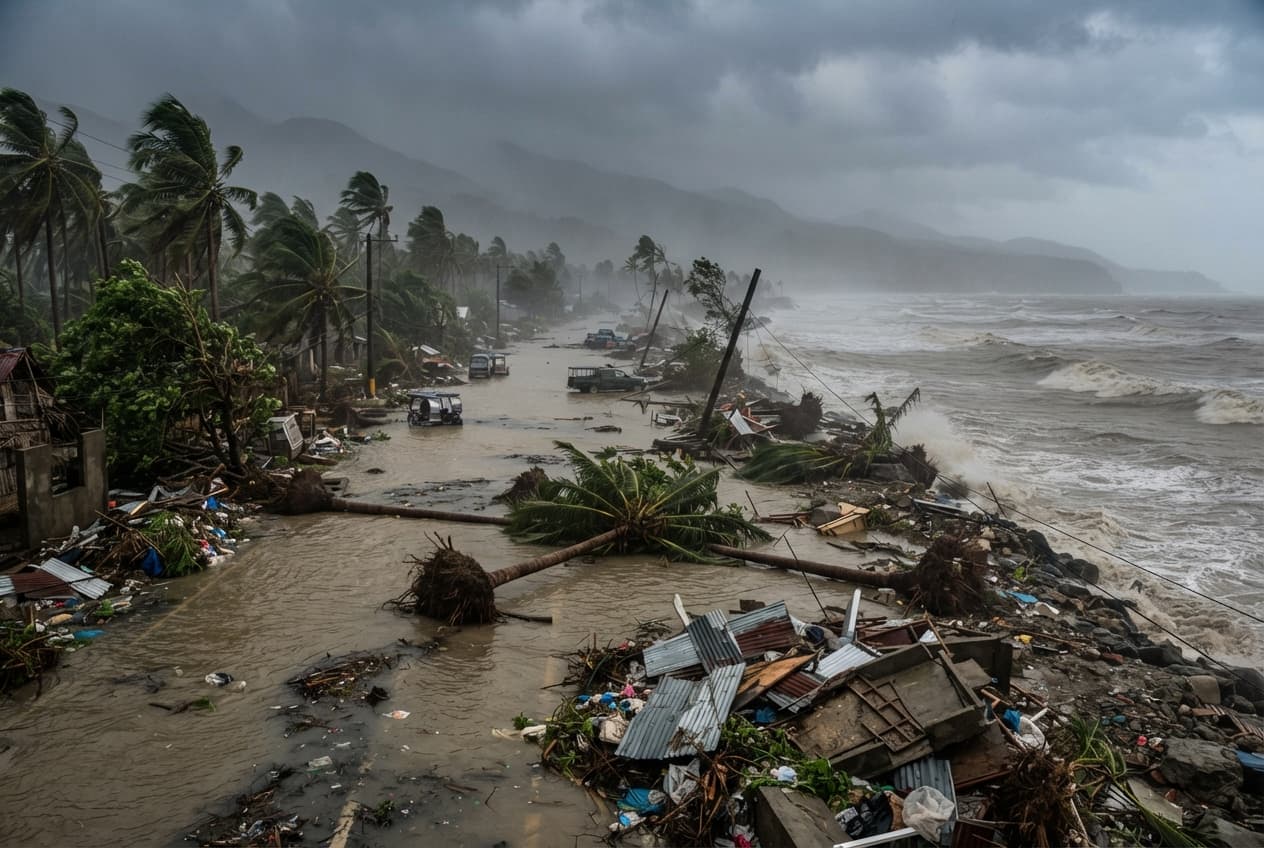
Tuguegarao, Philippines—Violent gale-force winds and torrential downpours battered the northern terrain as Typhoon Ragasa swept directly across vulnerable coastal and interior sectors of Luzon. Municipal rescue teams registered multiple fatalities following massive earth slips that buried hillside dwellings in remote upland communities.
Meteorological tracking positioned the system's core directly over the northern provinces, driving destructive storm surges onto exposed shorelines. Upland farming villages lost communication links as high-voltage transmission towers toppled under extreme wind loading. Civil defense units mobilized clearing details to open blocked mountain passes choked with fallen timber and debris.
Evacuation centers filled rapidly as provincial governors ordered mandatory transfers for residents living near unstable slopes and coastal flood zones. Coast guard detachments restricted maritime transit across regional ports, stranding commercial cargo vessels and fishing fleets in safe harbors. Emergency response convoys prepositioned food packs and potable water supplies ahead of the system's peak intensity.
Local hospital administrators activated backup diesel generators after commercial grid connections failed during the height of the storm. Medical personnel treated patients suffering from trauma injuries caused by flying debris and structural failures. Provincial disaster risk reduction management councils coordinated aerial reconnaissance flights to assess interior valley damage.
"The intensity of these wind fields combined with saturated topsoils has created widespread geotechnical hazards across the entire cordillera range," a provincial civil defense director reported from the regional emergency operations center. "Our immediate priority is opening arterial tracks to reach isolated villages cut off by major landslides."
Engineers inspected bridge approaches for scour damage caused by rapidly swelling river channels overflowing their banks. Agricultural extension offices initiated preliminary assessments covering flattened rice crops and damaged orchard plantations across the lowlands.
Relief teams continue pushing through secondary road blocks to deliver emergency rations to communities stranded in high-altitude areas.
Published by Banx Network. This article is part of the Banx decentralized media programme, powered by the BXE token on the XRP Ledger.