
Key Highlights
- Typhoon Maysak made landfall in Quang Ninh, Vietnam, causing severe damage.
- Over 200mm of rain has led to significant flooding and power outages.
- Emergency teams are on standby to assist affected residents and clear debris.
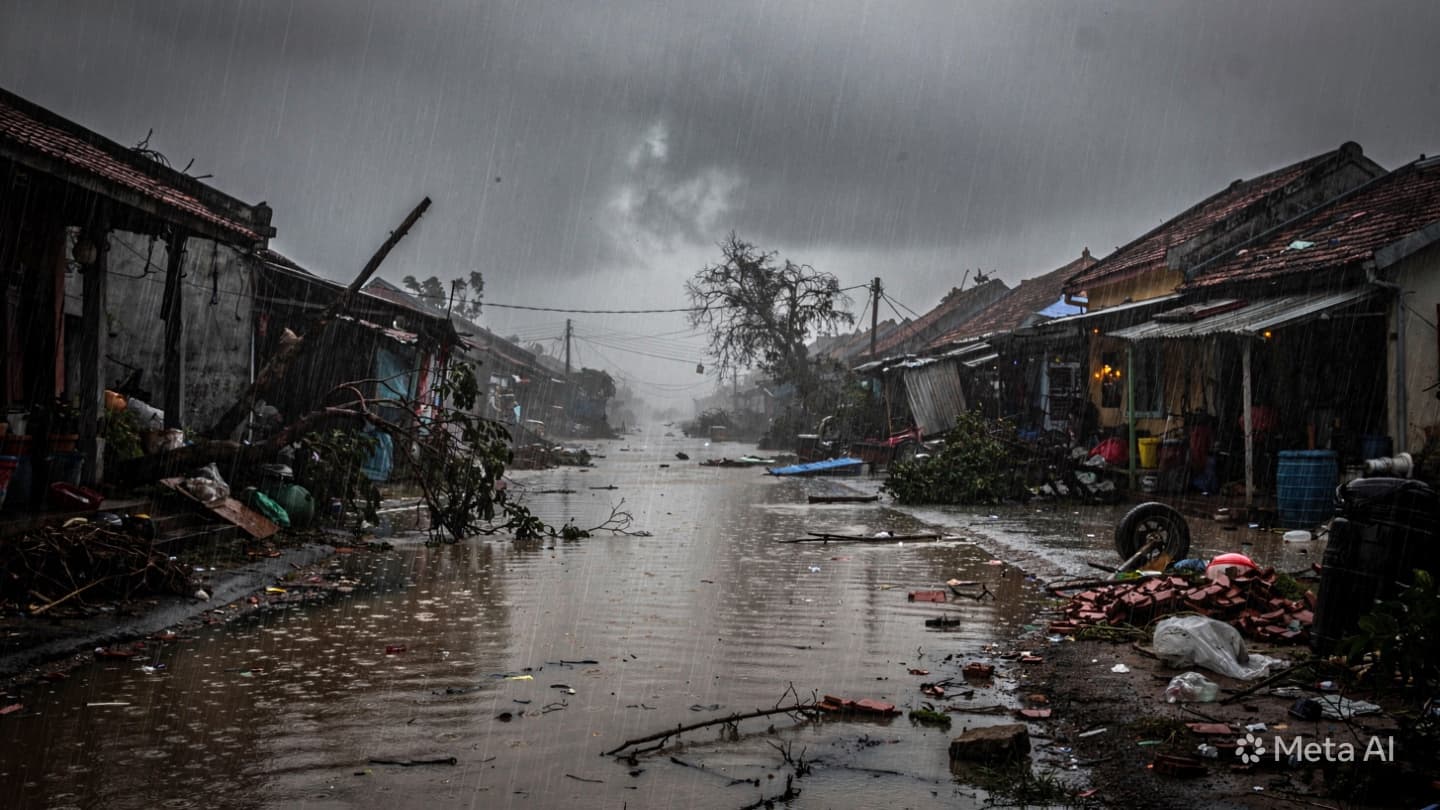
Typhoon Maysak made landfall in Quang Ninh, Vietnam, early this morning, unleashing violent winds and torrential rain that have already resulted in substantial structural damage across the province. Classified as Typhoon No. 1 for the season, the storm prompted local authorities to deploy emergency response teams to safeguard coastal infrastructure. Reports indicate that power lines are down in multiple districts, leaving thousands of residents without electricity.
Local disaster management officials confirmed that the storm's circulation has wreaked havoc on several piers and low-lying coastal neighborhoods. Fishing vessels that failed to reach sheltered harbors are currently unaccounted for, raising concerns about a potential increase in the death toll. Rescue workers are encountering extreme challenges navigating flooded streets to reach stranded families, complicating their efforts to provide assistance.
In response to the crisis, the Ministry of Agriculture and Environment has declared a state of emergency for the Northeast region. Torrential rain, with measurements exceeding 200mm in several areas, has triggered localized flooding that threatens to breach primary seawalls. Tourists still present on islands near the landfall site are being sheltered in reinforced concrete buildings until the winds subside, ensuring their safety amid the chaos.
Structural engineers have issued warnings that the intensity of the gusts could compromise older buildings and temporary residential structures. The storm is expected to track inland toward the southern Guangxi province, but heavy rainfall is anticipated to persist across the northern region until the end of July 5th. Emergency teams remain on twenty-four-hour standby, prioritizing the clearance of debris from main thoroughfares to facilitate access for rescue vehicles and medical supply trucks to isolated villages.
The maritime sector has been effectively paralyzed, with all commercial transport and tourism activities at sea suspended forty-eight hours prior to landfall. Residents in flood-prone river mouths are being evacuated to higher ground as water levels continue to rise toward alarming thresholds. The storm is currently weakening into a tropical depression as it moves inland, but the threat of post-storm flooding remains critical.
Water management boards are actively releasing water from dams to prevent uncontrolled spills, as the impact of this typhoon on the region's agricultural sector is expected to be catastrophic. Recovery teams are poised to conduct a full aerial survey of the hardest-hit areas as soon as visibility improves. The local government has pledged to initiate immediate repairs once wind speeds drop to safe levels, with the primary focus remaining on saving lives in the most severely affected zones.
Published by Banx Network. This article is part of the Banx decentralized media programme, powered by the BXE token on the XRP Ledger.



