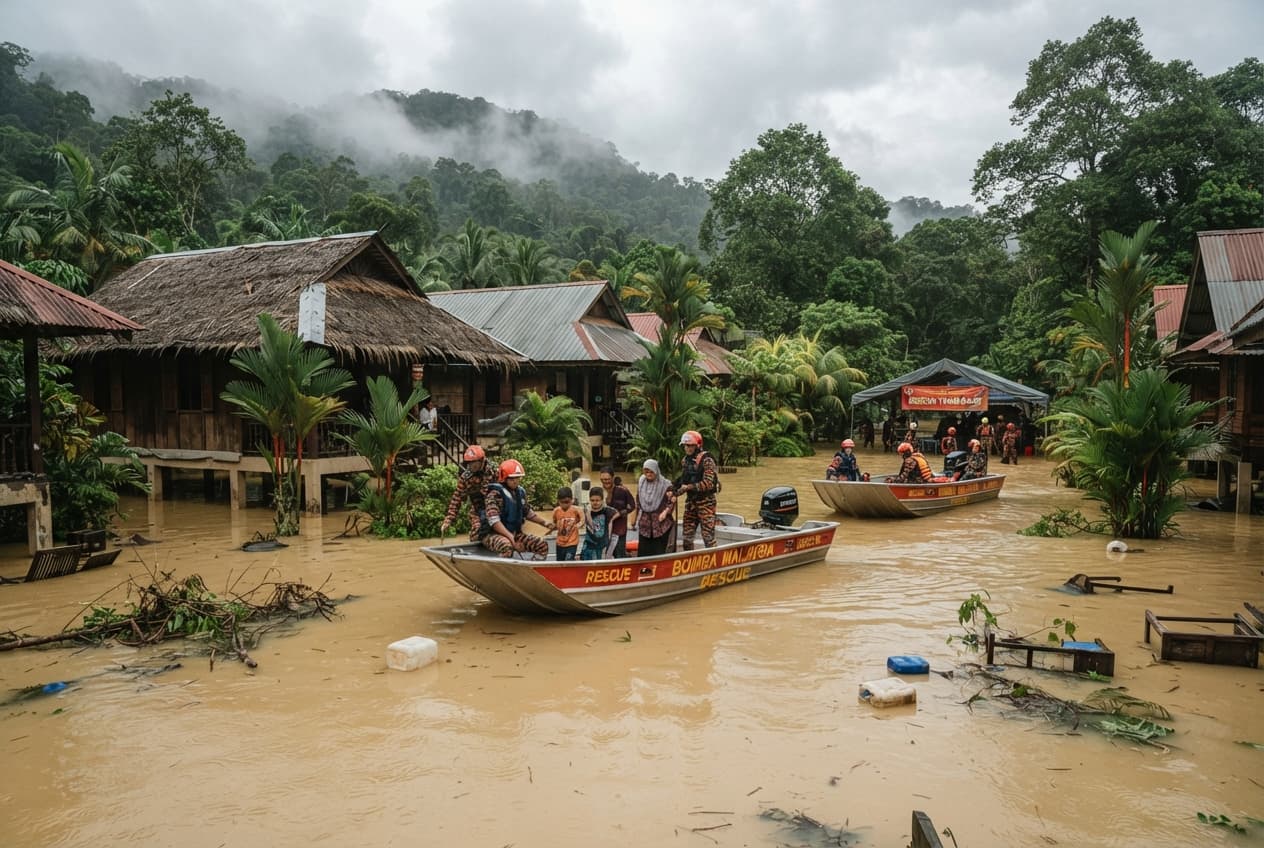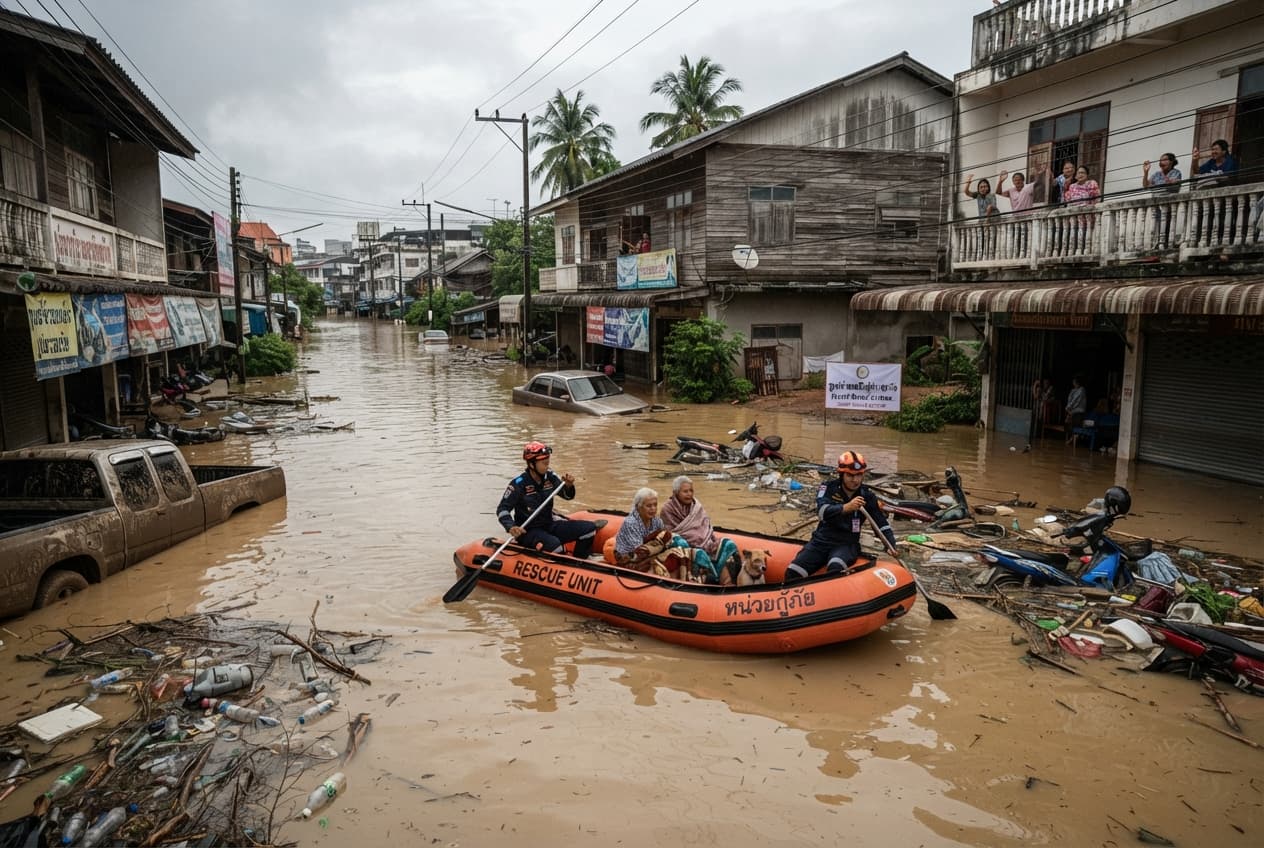
Manila, Philippines—A powerful typhoon made landfall across the central Philippines early Monday, leaving at least nine people dead and thousands displaced by severe flooding. Sustained winds tore roofs from homes while torrential rains caused widespread power outages across multiple provinces. Emergency services struggled to reach isolated communities cut off by fallen trees and deep floodwaters.
Local disaster management teams confirmed that fatalities occurred due to structural collapses, flash floods, and flying debris during the height of the storm. Coastal villages bore the brunt of the impact as storm surges pushed inland past sea walls. Evacuation centers filled quickly over the weekend as residents fled low-lying coastal zones ahead of the impact.
National weather bureaus tracked the eye of the storm as it cut a destructive path westward across the island group. Wind speeds exceeded hazardous thresholds, grounding all maritime transport and halting commercial flights indefinitely. Utility crews remain unable to deploy personnel for power restoration until gale-force winds subside completely.
"Our primary focus right now is clearing blocked arterial roads so medical supplies can reach cut-off municipalities," a national civil defense spokesperson stated during an afternoon briefing. Local governments activated emergency funds to secure immediate food packs for displaced families sheltered in schools and gymnasiums. Heavy rainfall warnings remain active as the storm core progresses toward open western waters.
Agricultural sectors reported devastating losses across rice and corn fields submerged under stagnant floodwaters. Farmers watched helplessly from elevated ground as seasonal harvests vanished overnight beneath rising brown currents. Initial economic damage estimates point toward severe disruptions in regional supply chains lasting several weeks.
Search and rescue units utilized rubber boats to extract stranded residents trapped on rooftops in deeply flooded interior towns. Local hospitals operated on emergency generator power following grid failures caused by downed high-voltage transmission towers. Medical teams treated dozens of patients for lacerations, fractures, and waterborne ailments.
Presidential palace officials announced emergency response funds would be disbursed immediately to the worst-hit provinces. Local mayors criticized the slow delivery of heavy clearing machinery required to clear mudslides blocking mountain passes. Relief logistics remain heavily constrained by damaged bridges and washed-out approach spans.
Engineers began inspecting structural integrity assessments on key bridges once the eye cleared the eastern coast. Meteorological agencies warned that secondary rain bands would continue dumping heavy precipitation over saturated mountain slopes. Relief operations will scale up significantly once weather clearances permit aerial reconnaissance flights.
Published by Banx Network. This article is part of the Banx decentralized media programme, powered by the BXE token on the XRP Ledger.