
Key Highlights
- Four confirmed deaths reported due to Typhoon Kalmaegi.
- Dozens of residents remain unaccounted for in remote areas.
- Extensive damage to agriculture and infrastructure noted across northern provinces.
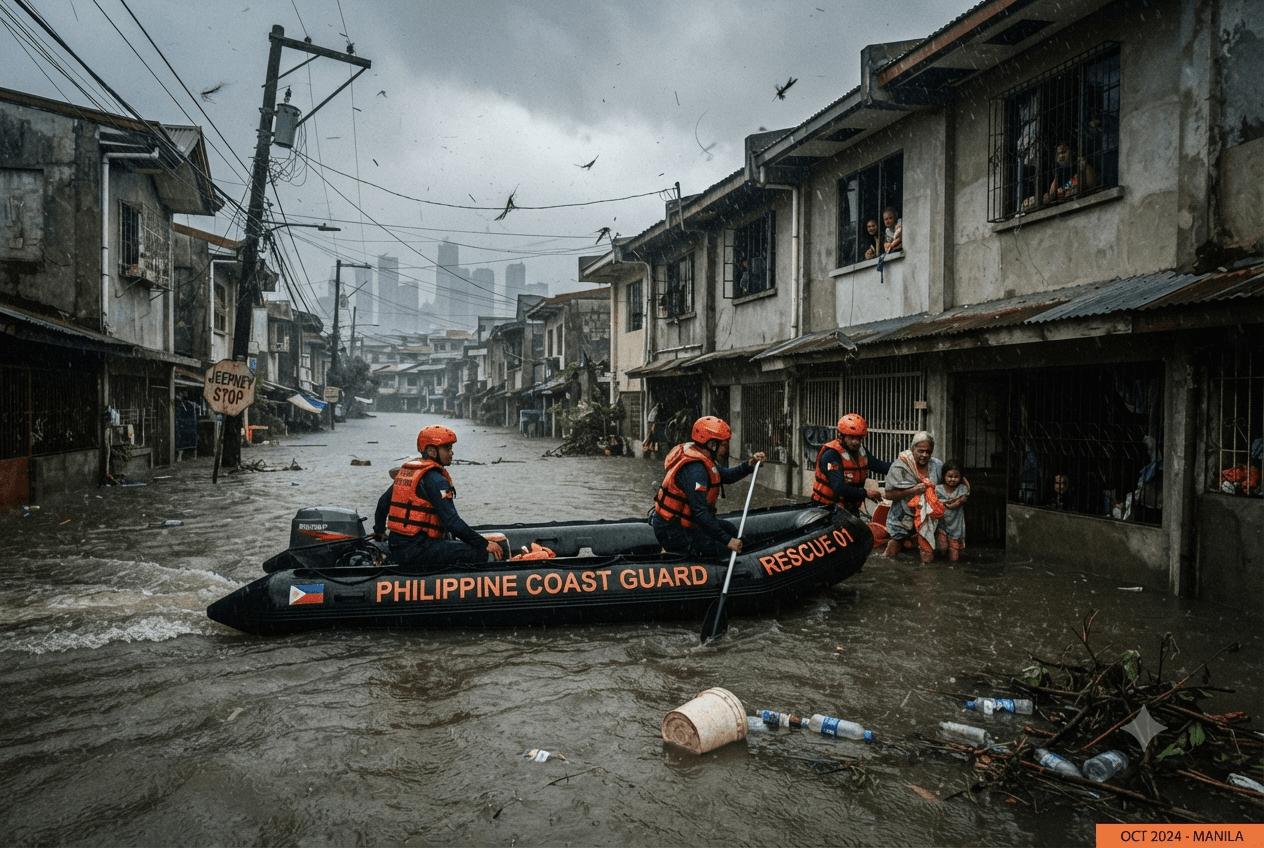
Typhoon Kalmaegi has wreaked havoc across the northern provinces of the Philippines, leading to severe flooding and significant destruction. As the storm surge crashed over coastal seawalls before dawn, residents found themselves battling waist-deep brown water that surged through their neighborhoods. Eyewitness accounts describe how typhoon-force winds and torrential rains transformed rural roads into rushing rivers, forcing many to seek refuge on rooftops as floodwaters quickly engulfed their homes.
Provincial disaster management councils have confirmed four fatalities, with reports indicating that dozens of individuals remain unaccounted for, particularly in remote mountain villages. Search and rescue teams have been deployed, utilizing inflatable rafts and ropes to navigate the swollen river branches, which have been obstructed by uprooted trees and debris. Medical personnel have set up triage posts in elevated school buildings to provide care for those injured during the storm, particularly from structural collapses.
The agricultural sector has suffered extensive damage, with reports indicating that lowland rice paddies and cornfields have been severely impacted just as they were approaching the harvest season. Irrigation canals have breached their banks in multiple locations, inundating farming communities with thick layers of silt. In response, local authorities have begun distributing emergency food packs and clean drinking water to thousands of displaced residents, many of whom have lost their homes and livelihoods.
Communication lines have been disrupted, with cellular towers losing power during the height of the storm surge, complicating rescue efforts. Provincial leaders have convened emergency briefings to coordinate the distribution of relief funds and prioritize rescue operations. Meanwhile, central government agencies have initiated airlifts of emergency supplies to isolated island communities that have been cut off due to rough seas.
As the storm system continues its slow progression toward the South China Sea, independent meteorological groups are closely monitoring its path. Cleanup crews have begun the arduous task of clearing mud and debris from municipal market stalls as floodwaters gradually recede from downtown streets. The recovery process is expected to be lengthy, with many communities facing significant challenges in rebuilding after this devastating natural disaster.
Published by Banx Network. This article is part of the Banx decentralized media programme, powered by the BXE token on the XRP Ledger.



