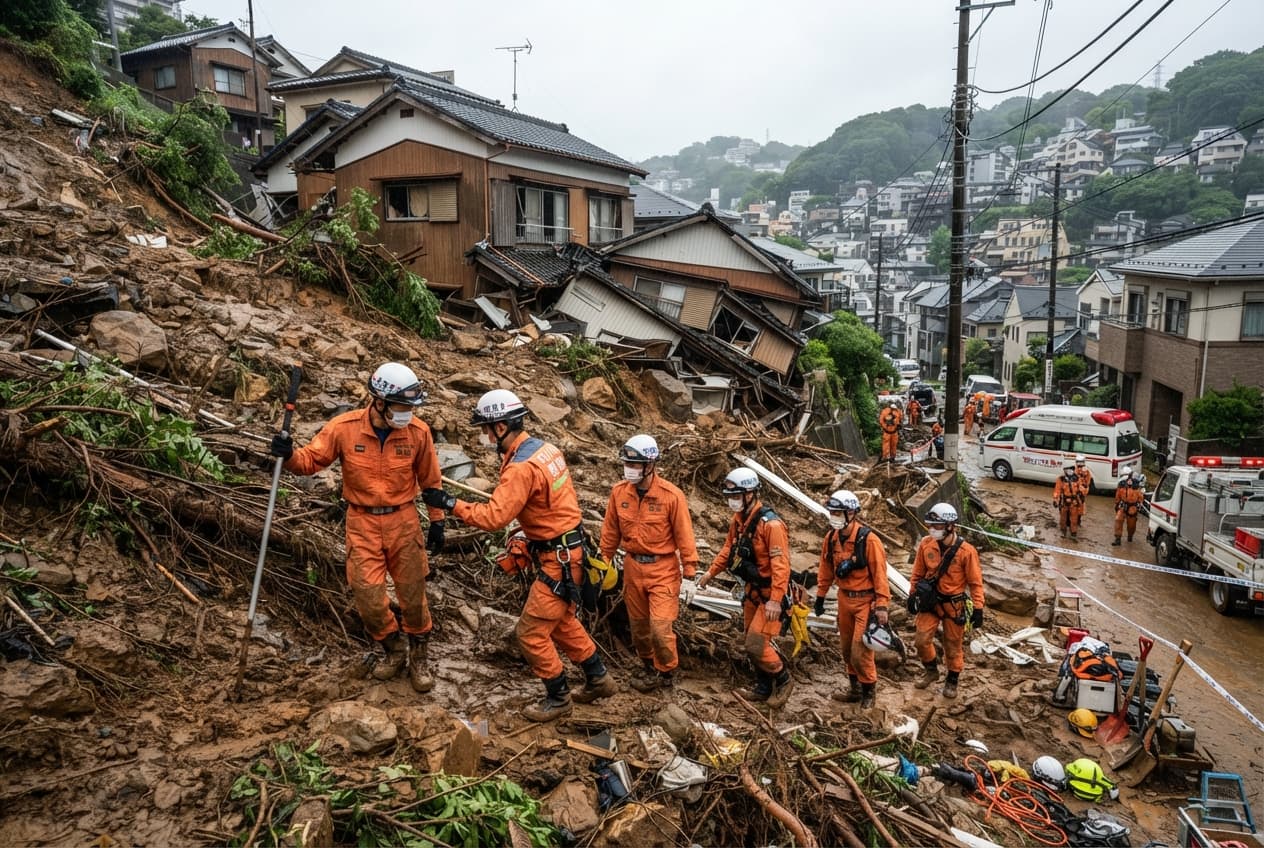
Tokyo, Japan—Typhoon Dujuan slammed into eastern Japan, leaving at least four people dead and twenty-two others injured as heavy rain and fierce winds crippled regional transport networks. The storm made landfall early in the week, battering coastal prefectures with unprecedented rainfall rates that overwhelmed local drainage systems and triggered destructive landslides. Emergency services struggled to reach isolated communities cut off by fallen trees and deep floodwaters.
Local disaster management officials confirmed that the fatalities occurred across multiple prefectures where mudslides overwhelmed residential structures. Search and rescue teams deployed heavy equipment to clear blocked roads and search for missing residents. Hospitals in affected districts admitted dozens of patients suffering from storm-related trauma and exposure.
Utility companies reported widespread power outages affecting thousands of households as wind gusts downed high-voltage transmission lines. Repair crews faced hazardous conditions as persistent rain hampered outdoor restoration efforts. Municipal authorities opened emergency shelters for displaced residents whose homes suffered structural compromise.
Transportation networks experienced total paralysis during the height of the weather event. Railway operators suspended bullet train services and local commuter lines across the capital region. Commercial airlines cancelled hundreds of domestic and international flights, stranding thousands of travelers at major terminals.
Government ministries mobilized Self-Defense Force personnel to assist with disaster relief and emergency supply distribution. Prime Minister officials held emergency cabinet meetings to coordinate rescue logistics and assess infrastructural damage. Financial markets reacted cautiously to reports of disrupted industrial supply chains in the affected manufacturing zones.
Local residents expressed frustration over delayed evacuation warnings as rising water levels caught neighborhoods unprepared. Environmental analysts pointed to changing climate patterns as a compounding factor behind the intensity of recent seasonal typhoons. Meteorological agencies maintained high alert levels for secondary disasters as saturated hillsides remained unstable.
Engineers began inspecting compromised river embankments and damaged bridges as floodwaters slowly receded. Agricultural cooperatives reported extensive damage to ripening rice crops and flooded greenhouses across fertile farming districts. Economic losses from the storm are expected to run into billions of yen once full assessments conclude.
Rescue operations continued late into the night under floodlights as teams probed deep layers of mud for unaccounted individuals. Authorities urged citizens to avoid non-essential travel and stay away from swollen riverbanks and steep slopes. Recovery efforts remain constrained by ongoing weather volatility across the region.
Published by Banx Network. This article is part of the Banx decentralized media programme, powered by the BXE token on the XRP Ledger.