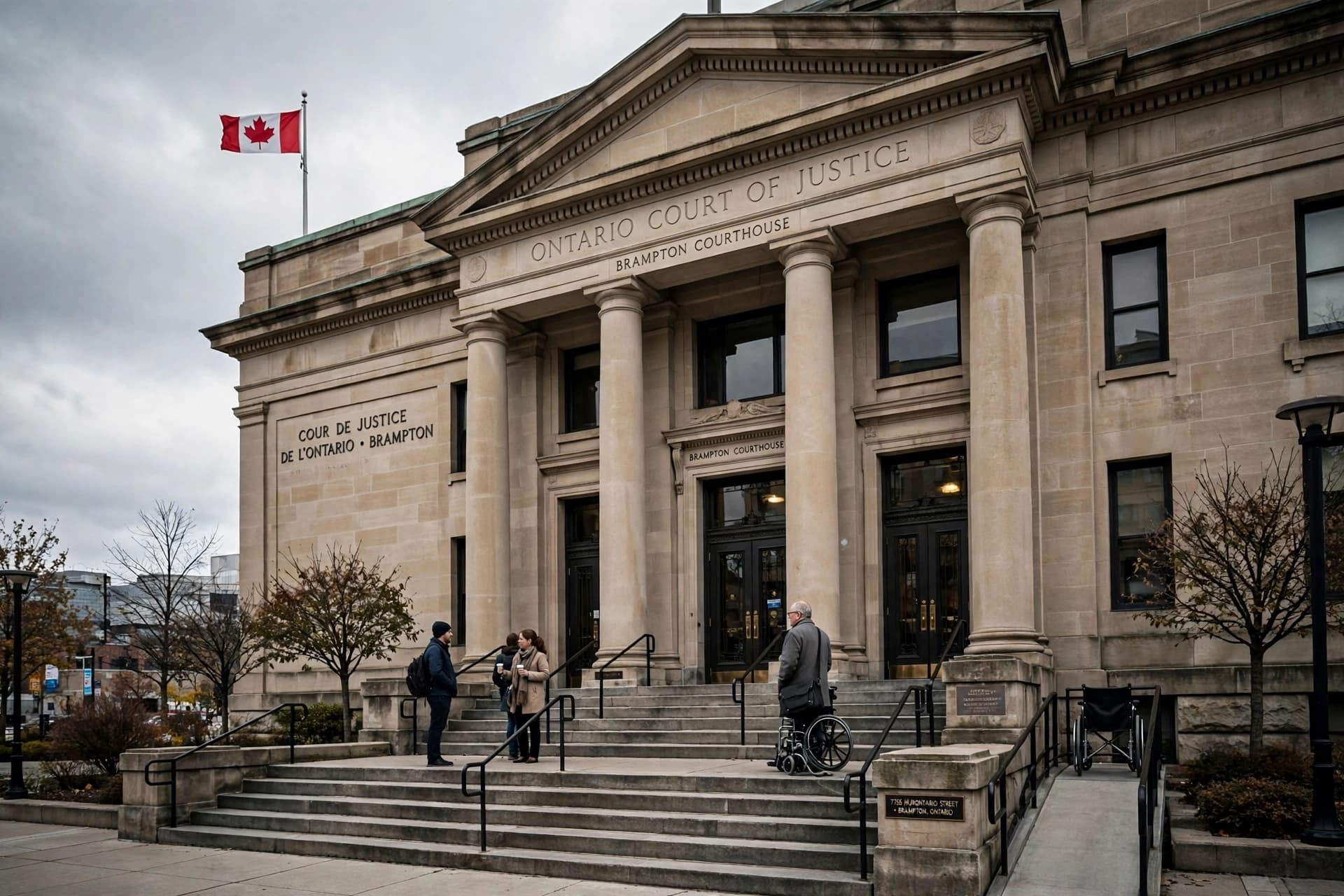
There are trials that unfold as exercises in procedure, and there are trials that ask the court to hold two versions of reality at once. In a Brampton courtroom this week, the second kind took the stand. Richard Neil, 67, is accused of sexually assaulting three children in three Ontario cities during the 1990s. He has pleaded not guilty to seventeen charges. On Monday, after the Crown closed its case, he rose to testify in his own defense .
The allegations span a narrow stretch of years. In August 1992, an eight-year-old boy told police a man lured him into a wooded area near Idlewood Park in Kitchener, tied him to a tree, and assaulted him. A DNA-led investigation known as Project Woodland later linked that attack to two others: a ten-year-old boy in Brampton in 1994, and a fifteen-year-old girl in Oakville in 1995 . Neil was arrested in British Columbia in March 2024.
His lawyer, Leo Adler, framed the defense with a careful distinction. "The issue isn't and hasn't been 'did this happen,'" he told jurors. "The issue has been, from the start, who is the individual responsible" . The Crown's case, built over days of testimony from police officers, DNA experts, fingerprint analysts, and witnesses to the aftermath, rests on the state's assertion that the answer to that question is the man now seated in the witness box.
What the defense will offer in response remains to be heard in full. What is already clear is the shape of the task before the jury: to weigh not only evidence but memory, the passage of three decades, and the quiet authority of scientific testimony against the direct account of a man who says he did not do what he is accused of. The courtroom has heard from the children, now adults, through police videos describing what happened to them . It has heard from the people who examined the traces left behind. Now it hears from the accused.
Trials of this nature carry a weight that extends beyond the individuals in the room. They ask the justice system to do what it was built for—to hold a space where competing accounts can be spoken, tested, and weighed with care. For the complainants, the act of testimony is its own kind of threshold. For the accused, the presumption of innocence is not a formality but a foundation.
The trial continues in Brampton. The jury will decide.
The image accompanying this article is AI-generated and does not depict any person or event in this case.
Sources: CTV News Vancouver Island, CBC News
Published by Banx Network. This article is part of the Banx decentralized media programme, powered by the BXE token on the XRP Ledger.