
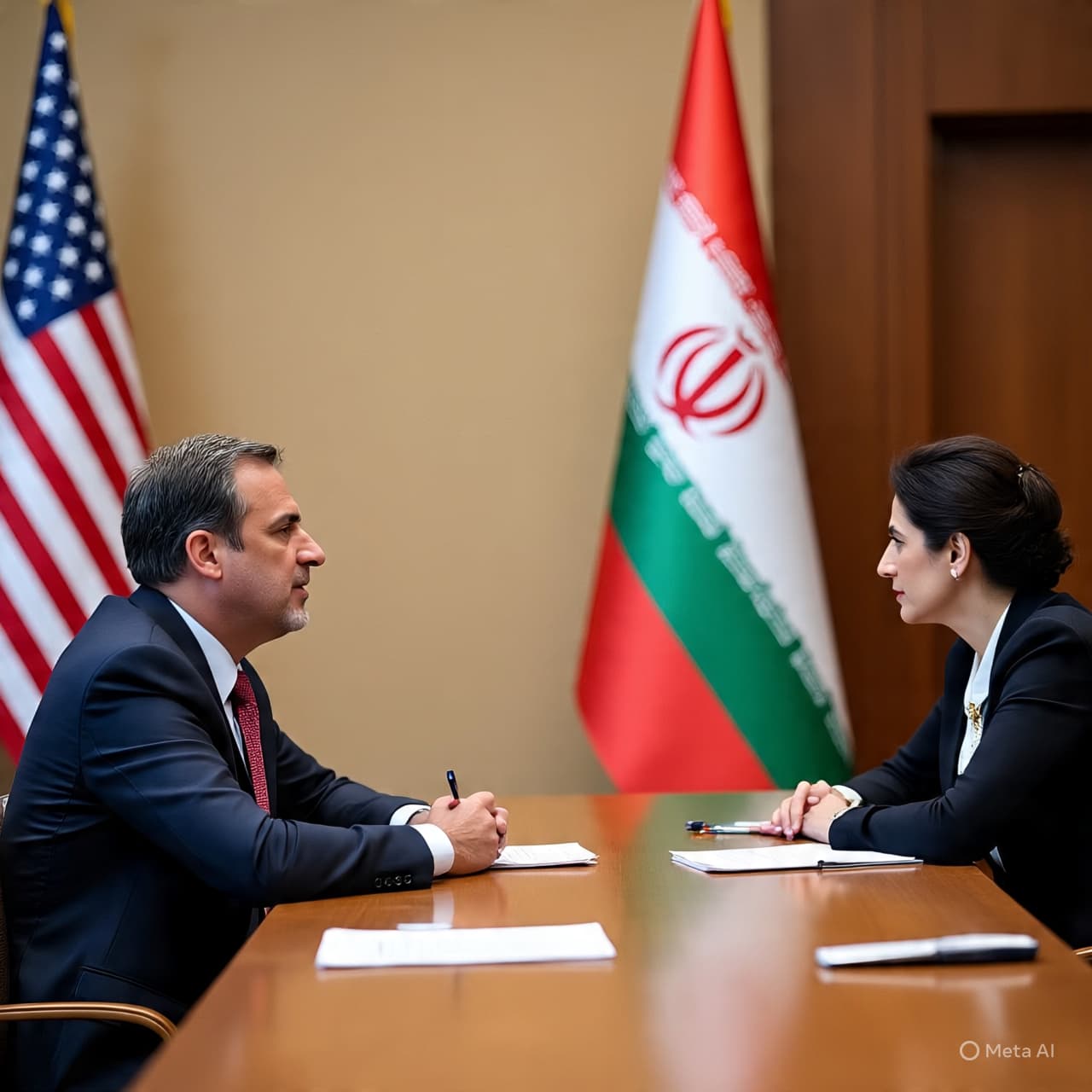
Key Highlights
- U.S. and Iran prepare for ceasefire talks amid ongoing tensions.
- Israel initiates negotiations with Lebanon, acknowledging Hezbollah's role.
- Parallel diplomatic efforts may influence regional stability and security.
In the Middle East today, the landscape of diplomacy resembles two tides converging on a shoreline, each carrying its own force and uncertainty. As the United States and Iran gear up for renewed ceasefire discussions, a parallel development unfolds with Israeli Prime Minister Benjamin Netanyahu authorizing negotiations with Lebanon. These simultaneous movements suggest a cautious shift from confrontation to conversation in a region long marked by conflict.
The upcoming talks between Washington and Tehran are framed as an effort to stabilize a fragile pause in hostilities. While specific details remain scarce, officials from both sides have indicated a willingness to engage, focusing on de-escalation and the broader architecture of a potential ceasefire. This initiative carries both promise and complexity, given the multifaceted nature of the ongoing conflict.
Simultaneously, Israel's decision to open negotiations with Lebanon introduces a second track of diplomacy that closely intersects with the first. The Israel-Lebanon front has been characterized by repeated exchanges, often involving Hezbollah, a group closely aligned with Iran. By authorizing these talks, Netanyahu appears to recognize the necessity of addressing this dimension directly. However, this decision does not necessarily indicate an immediate cessation of hostilities; rather, it reflects an attempt to manage tensions alongside diplomatic engagement.
In navigating these overlapping diplomatic efforts, the challenge for the United States lies in aligning its approach to both Iran and Lebanon. A ceasefire agreement with Iran that overlooks developments in Lebanon risks being perceived as incomplete. For Iran, the connection is more direct; stability may hinge on a broader understanding that includes its regional allies, particularly Hezbollah.
This dynamic raises a critical question: can separate negotiations yield a shared outcome? The answer may depend on how each party defines success. For Washington, progress might be measured in reduced tensions and sustained dialogue. For Israel, it may involve security assurances along its northern border. For Iran, recognition of its role and influence within the region could be paramount.
Amid these discussions, the broader region watches with cautious attention. Neighboring countries and global powers recognize that these developments carry implications beyond immediate borders. Energy markets, security alliances, and humanitarian conditions remain intricately linked to the trajectory of events in the Middle East.
Despite ongoing tensions, there are signs of restraint among multiple actors willing to engage in talks. This suggests an awareness of the costs associated with escalation, introducing a degree of balance into an otherwise volatile environment. However, the path forward remains narrow, as diplomatic efforts often require time, patience, and a willingness to navigate ambiguity—all of which are currently in short supply.
As preparations for talks continue and negotiations with Lebanon begin to take shape, the region finds itself in a phase of cautious movement. While a resolution is not yet in sight, the presence of multiple diplomatic channels indicates that, even amid tension, the pursuit of stability persists. Officials have indicated that discussions are expected to proceed in the coming days, with the ceasefire remaining fragile and the outcomes uncertain. Yet, the ongoing dialogue offers a glimmer of hope for a more peaceful future in the region.
Published by Banx Network. This article is part of the Banx decentralized media programme, powered by the BXE token on the XRP Ledger.



