

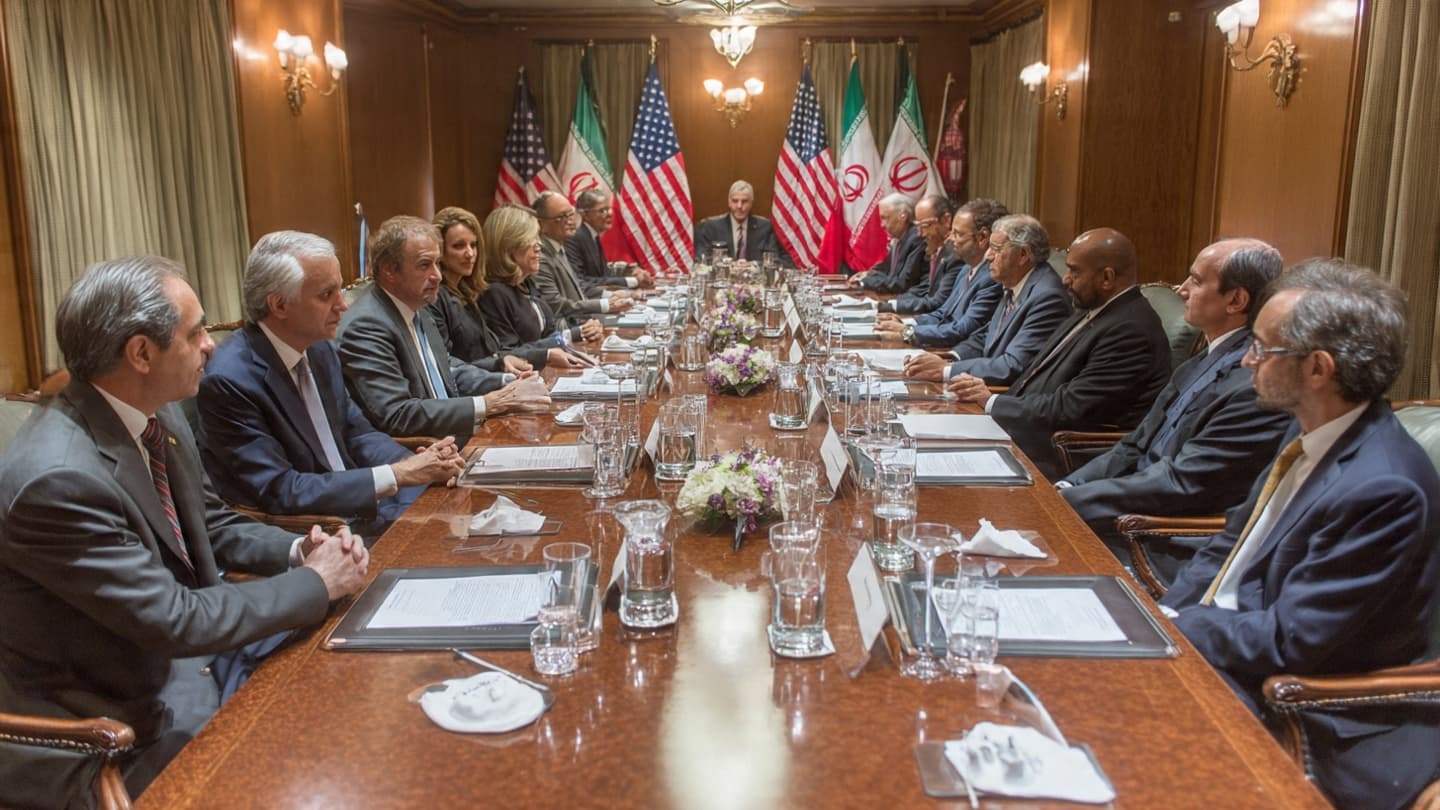
Key Highlights
- Preliminary Agreement:The U.S. and Iran have reached a preliminary agreement aimed at reducing tensions.
- Diplomatic Step:This development is seen as a significant step in international diplomacy.
- Regional Implications:The agreement could have far-reaching effects on global trade and energy markets.
The horizon of international diplomacy often resembles a sea at dawn—calm in appearance, yet carrying traces of storms that only recently passed. In recent days, that horizon appeared slightly brighter as the United States and Iran announced a preliminary agreement aimed at reducing tensions and creating a pathway toward ending a period of confrontation that has drawn global attention. While many details remain under discussion, the development has been welcomed as a notable diplomatic step.
For years, relations between Washington and Tehran have been shaped by cycles of disagreement, sanctions, regional security concerns, and complex negotiations. These issues have extended far beyond bilateral relations, influencing energy markets, maritime security, and political calculations across the Middle East and beyond. The new agreement is seen as a potential turning point in this long-standing conflict.
According to officials involved in the talks, the preliminary framework focuses on de-escalation measures designed to reduce the risk of direct confrontation. The agreement also seeks to establish mechanisms that can encourage continued dialogue between both sides, even when disagreements persist. This approach reflects a growing recognition that sustained communication is essential for managing conflicts and preventing escalation.
Observers note that diplomacy often advances in stages rather than dramatic breakthroughs. Initial agreements are commonly viewed as foundations upon which more comprehensive arrangements can later be constructed. In that sense, the current development may represent an opening chapter rather than a final resolution. The cautious optimism surrounding this agreement is tempered by the understanding that many hurdles remain.
Regional governments are closely monitoring the process. Stability in the Gulf region carries significant implications for global trade, particularly energy shipments that move through strategic maritime routes connecting producers and consumers around the world. The agreement could potentially stabilize energy markets that have been volatile due to geopolitical tensions.
Financial markets have also responded to the news. Energy traders and investors generally view reduced geopolitical risk as a positive signal, particularly after months of uncertainty that affected commodity prices and broader economic sentiment. The initial reactions from the markets suggest that stakeholders are hopeful for a more stable geopolitical landscape.
Despite the encouraging tone, analysts caution that substantial challenges remain. Long-standing disputes concerning security, nuclear activities, and regional influence are unlikely to disappear quickly. Diplomatic momentum will depend on sustained engagement and continued political willingness from both sides. The complexities of the U.S.-Iran relationship mean that while this agreement is a step forward, it is not a panacea for the underlying issues.
The agreement also highlights the enduring role of negotiation in international affairs. Even during periods of deep disagreement, communication channels can serve as bridges that prevent tensions from escalating further and create opportunities for practical cooperation. The ability to engage in dialogue, even amidst conflict, is a hallmark of effective diplomacy.
For now, the preliminary agreement stands as a significant diplomatic development. Whether it evolves into a broader and more lasting settlement will depend on future negotiations, but many governments and international observers view the current moment as a constructive step toward greater regional stability. The world will be watching closely as the U.S. and Iran navigate this complex landscape in the coming months.
Published by Banx Network. This article is part of the Banx decentralized media programme, powered by the BXE token on the XRP Ledger.




