In the vast nursery of the Milky Way, where stars are born and planets gather around them, astronomers have long wondered whether the architectures we observe are written at birth or shaped by the long, slow work of time. A new study suggests the answer lies somewhere in between—and that the parent star may hold more influence than anyone realized.
An international team led by the Italian National Institute for Astrophysics (INAF) analyzed 300 of the best-characterized multiplanet systems among the more than 1,000 known in our galaxy . Their findings, published in Nature Astronomy, reveal that these systems fall into two distinct families, each with its own architecture, dynamical history, and stellar host .
The first family consists of wide, massive systems, often with total planetary masses between two and ten times that of our own solar system . Their planets orbit stars more massive than the sun, with lower concentrations of elements heavier than hydrogen and helium. These systems show evidence of violent histories—giant collisions, planetary ejections, and the gravitational turbulence that comes from instability .
The second family is more compact and lower-mass. Its members are composed of planets with comparable masses and sizes, a configuration researchers call "peas in a pod" . They orbit stars with mass and metallicity equal to or lower than the sun, at distances often much tighter than Mercury's orbit . Their dynamical histories appear calmer, more like our own solar system .
"There is a genetic link between planetary systems and their stars, and that, depending on the star around which they are born, this link also determines their fate," said Diego Turrini, a researcher at INAF and co-first author of the paper . The study suggests that even modest variations in the environment where planets form—arising from different properties of the parent star—can determine whether a system will be characterized by stability or by phases of marked instability and giant impacts .
The researchers tested their conclusions through numerical simulations of planetary system evolution under different initial conditions. "The scenarios that best reproduce the dynamical properties of the family of wide and massive systems are those in which the systems are unstable from birth," said Danae Polychroni, an INAF researcher who supervised that part of the study . The greater abundance of planet-forming material around their host stars causes these systems to be born too large, preventing them from remaining stable .
One of the challenges was determining whether the two families were real or merely an illusion created by the limits of current observational techniques. "At the end of the path, it became clear that selection effects acted as the tip of the iceberg, revealing the existence of much deeper structural diversities between these systems," said Camilla Danielski, a researcher at the University of Valencia and co-first author .
The findings could have implications for the search for life beyond our solar system. By understanding how stellar properties shape planetary architectures and dynamical histories, astronomers may better identify systems where potentially habitable planets like Earth are most likely to survive and remain stable . In the quiet architecture of the "peas-in-a-pod" family, there may be lessons about the conditions that allow worlds to persist—and perhaps, to nurture life.
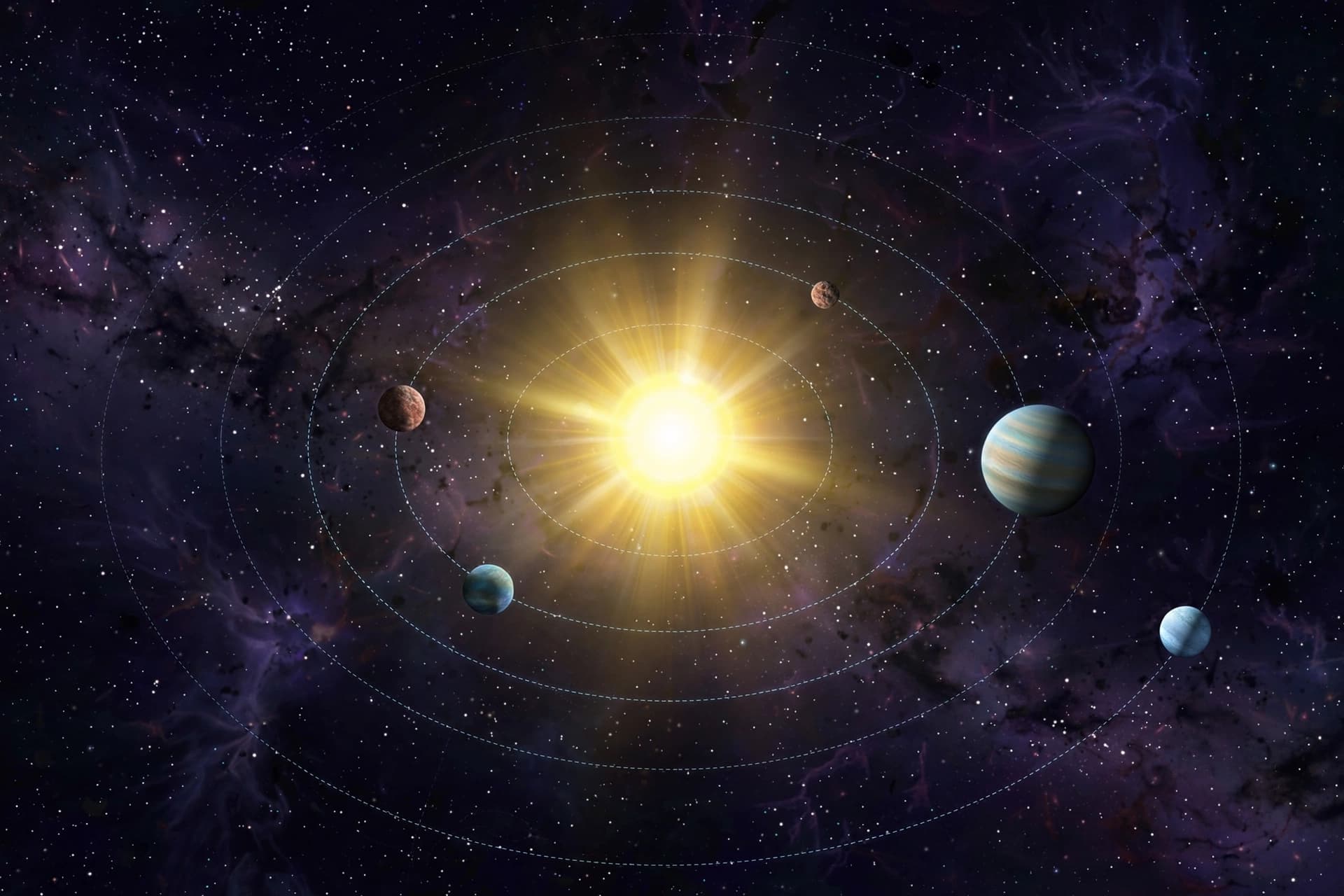
AI Image Disclaimer: This article's image is AI-generated and does not represent actual astronomical observations.
Sources: Space.com, Nature Astronomy, INAF (Italian National Institute for Astrophysics), Le Scienze, bdnews24.com
Published by Banx Network. This article is part of the Banx decentralized media programme, powered by the BXE token on the XRP Ledger.