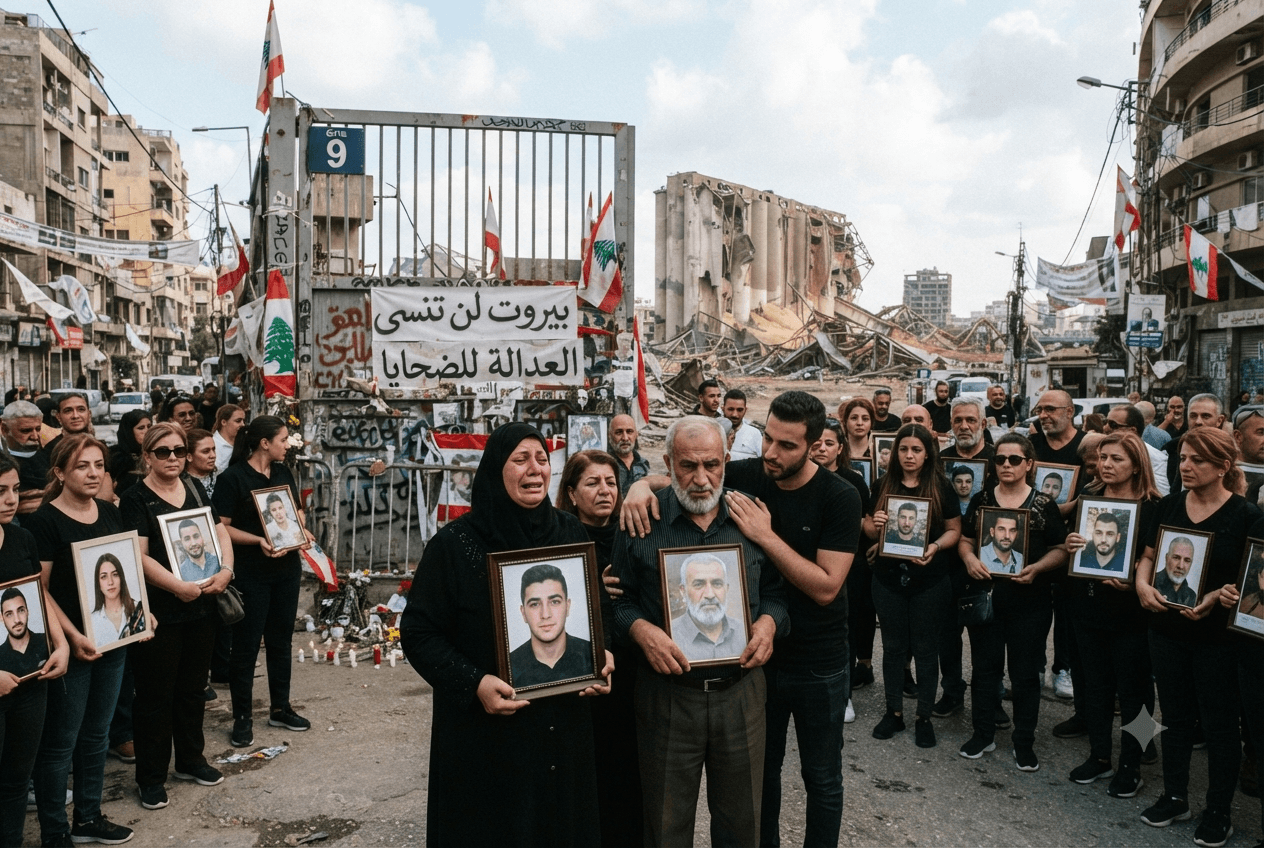
Beirut, Lebanon—Mourners gathered outside the heavily damaged port gates under a heavy cloud of political tension. Sirens wailed across the capital to mark the exact minute of the disaster six years ago. Families of the victims hoisted framed photographs of their lost relatives above barricades of razor wire. Riot police stood shoulder to shoulder blocking access to the parliamentary administrative sector.
The official judicial investigation remains frozen due to continuous political interference and legal challenges. Relatives shouted slogans demanding the immediate removal of immunity for senior state officials. Banners stretched across nearby buildings accused the ruling elite of obstructing justice for years. International observers watched from the sidelines as demonstrators burned tires in frustration.
Foreign governments issued diplomatic statements urging Lebanese authorities to restart the stalled legal proceedings. Justice ministry officials promised renewed cooperation with independent magistrates reviewing the case files. Families rejected empty political promises and demanded public indictments before the end of the year. Courts have yet to hold a single high-ranking official legally responsible for the ammonium nitrate storage.
Heavy steel silos at the blast site continue to loom over the ruined landscape. Experts warned that structural instability threatens to bring down the remaining concrete remnants. Citizen groups fought attempts by municipal authorities to demolish the iconic disaster landmark. Preservation advocates insist the ruins must remain intact as a permanent monument to negligence.
Memorial services extended from the port terminal to local neighborhood squares across the city. Religious leaders offered prayers during somber gatherings attended by survivors with permanent physical injuries. Medical expenses for the wounded continue to drain household finances amid a severe national economic crisis. State insurance payouts have failed to cover basic rehabilitation costs for disabled victims.
Anger spilled into the streets as younger activists confronted security forces near government headquarters. Tear gas canisters hissed into the humid afternoon air to disperse the angry crowds. Protesters responded by hurling stones and chanting anti-establishment slogans against political leaders. Several demonstrators sustained injuries during minor skirmishes with riot police units.
International human rights organizations released joint reports condemning Lebanon's systemic culture of impunity. Legal experts argued that domestic courts lack the independence required to prosecute powerful political figures. Families pledged to take their fight for justice to international tribunals if local courts fail. The political establishment continues to issue defensive statements while dodging accountability questions.
Evening commemorations concluded with a synchronized release of red flares over the Mediterranean harbor. Mourners lit hundreds of candles spelling out the names of the dead along the concrete wavebreakers. Police maintained a tight perimeter around government buildings as night fell over the fractured city. The investigation remains stalled indefinitely with no clear trial date in sight.
Published by Banx Network. This article is part of the Banx decentralized media programme, powered by the BXE token on the XRP Ledger.