

Key Highlights
- Two former employees of Libya's Ministry of Health sentenced to prison.
- Over 86 million Libyan dinars unlawfully disbursed.
- Court orders recovery of misappropriated funds and financial penalties.
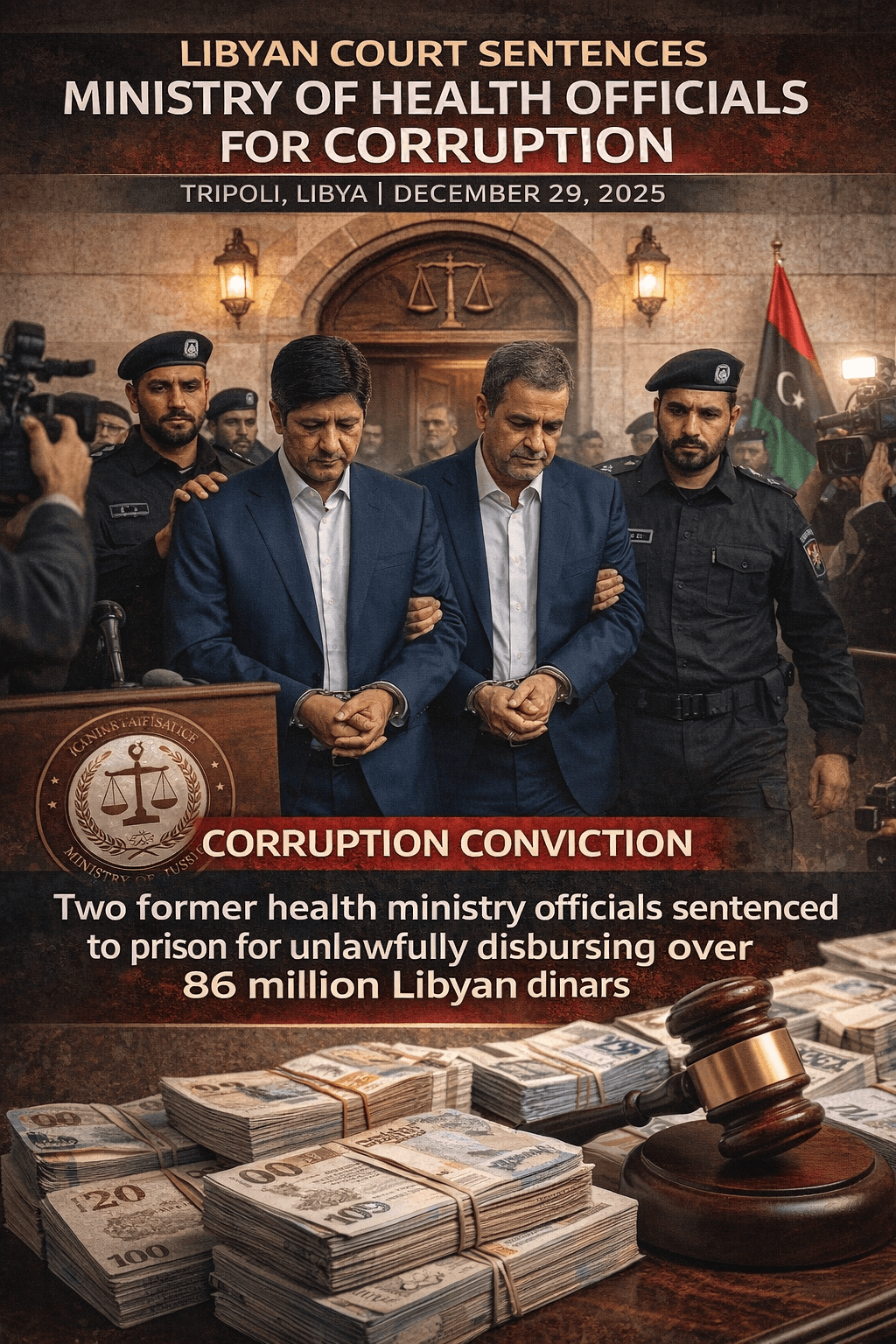
TRIPOLI, Libya — A Libyan court has sentenced two former employees of the Ministry of Health to prison for their involvement in the unlawful disbursement of more than 86 million Libyan dinars, authorities announced on Monday, December 29, 2025. This ruling underscores the ongoing efforts to combat corruption within the Libyan government.
According to judicial officials, the defendants were found guilty of abusing their positions and violating financial and administrative regulations. They authorized and facilitated the release of public funds without proper legal basis or documentation, which is a serious breach of trust and responsibility. The court's decision reflects a commitment to accountability in public service.
Investigations revealed that the disbursed amounts exceeded 86 million dinars and were transferred through irregular procedures, leading to significant losses for the public treasury. The court ruled that the actions constituted serious financial misconduct, emphasizing the importance of safeguarding public resources.
In addition to prison sentences, the court ordered the recovery of the misappropriated funds and imposed financial penalties in accordance with existing anti-corruption laws. The defendants were also barred from holding public office in the future, reinforcing the message that corruption will not be tolerated in Libya.
The case was initiated following an investigation by oversight and anti-corruption bodies, which uncovered discrepancies during an audit of ministry expenditures. This investigation is part of broader efforts to combat corruption and strengthen accountability within state institutions, a critical issue in Libya's ongoing transition to stability.
Libyan officials have reaffirmed their commitment to pursuing cases of financial abuse, stressing that no individual is above the law. Protecting public funds remains a top priority, especially in a country where corruption has historically undermined governance and public trust.
The ruling comes amid renewed calls for transparency and reform in Libya’s public sector, particularly in ministries responsible for essential services such as healthcare. As the government seeks to restore faith in public institutions, this case serves as a reminder of the challenges that lie ahead in the fight against corruption.
Published by Banx Network. This article is part of the Banx decentralized media programme, powered by the BXE token on the XRP Ledger.




