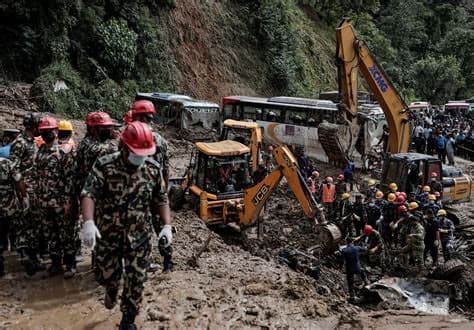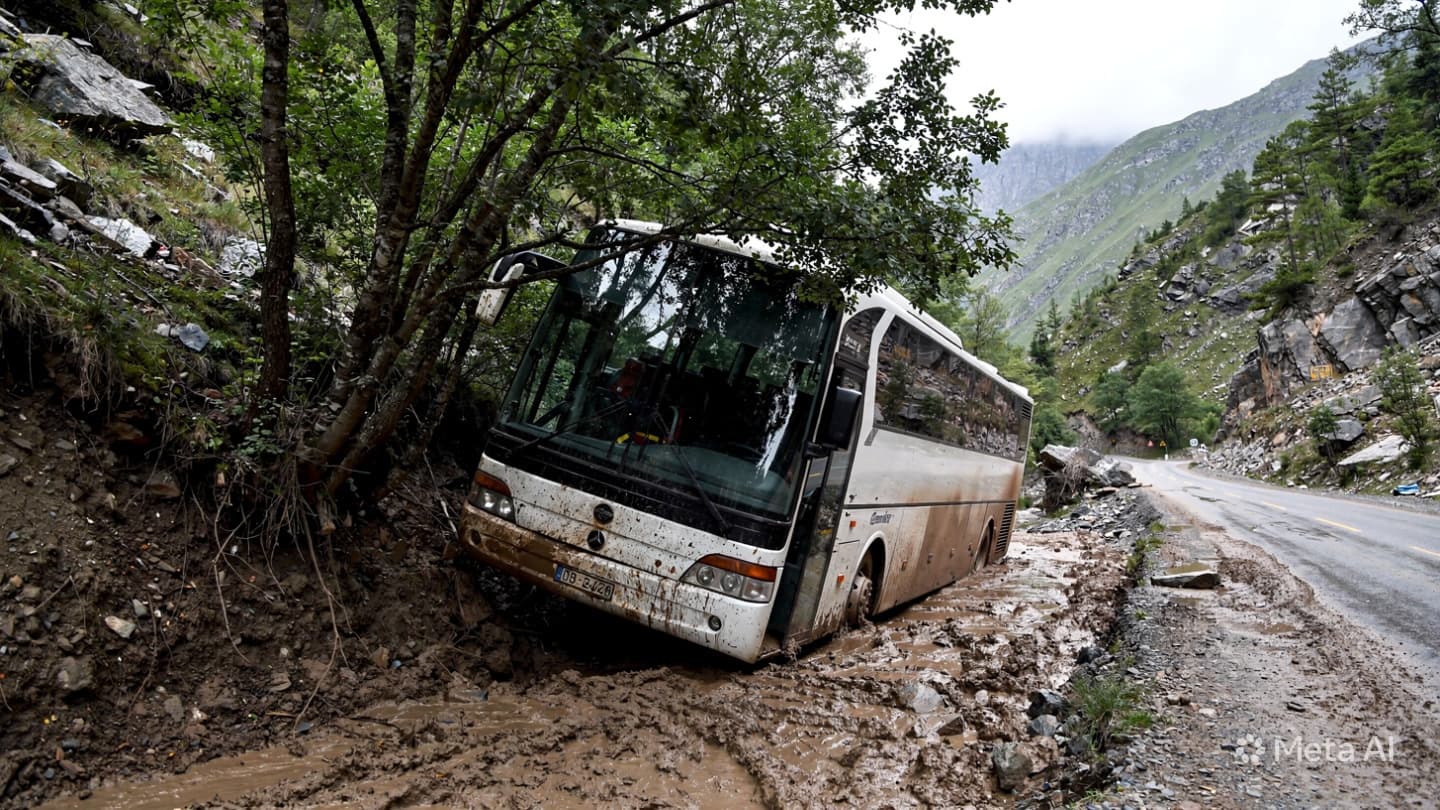
Medellín, Colombia—A sudden mudslide triggered by days of continuous torrential rainfall slammed into an intercity passenger bus today in rural Antioquia, knocking the vehicle off a narrow mountain road and leaving two commuters dead. The public transport vehicle was navigating a steep incline along a regional transit corridor when a large mass of saturated earth, boulders, and uprooted trees detached from the cliffside above. The heavy debris struck the midsection of the moving bus, pushing it over the un-reinforced road shoulder and down a twenty-meter rocky embankment.
Surviving passengers who managed to crawl out of the shattered upper windows initiated emergency calls before local rescue teams could locate the remote coordinate. Heavy mud deposits and secondary rockfalls along the highway delayed the arrival of conventional ambulances from the nearest municipality by more than ninety minutes. Local farmers utilized ropes and machetes to descend the slippery slope, working alongside emergency responders to stabilize the rolling frame of the bus against large trees.
Civil defense officials confirmed that two passengers, a male and a female occupant seated on the impact side of the vehicle, died from severe crush trauma during the initial roll. Rescue crews utilized specialized hydraulic stabilization blocks to prevent the vehicle from sliding further into a deep river canyon at the base of the ravine. Fourteen injured commuters were extracted using canvas stretchers and hauled up the steep mud face to the highway level.
The injured survivors were moved to regional hospitals in Medellín, where four remain under observation for internal abdominal injuries and severe concussion symptoms. The bus driver survived the descent with a fractured clavicle and minor lacerations, providing an official statement to highway transit police regarding the velocity of the impact. The remaining passengers were treated for shock and minor abrasions before being cleared by medical staff.
The regional highway authority closed the entire mountain road corridor to public transit, trapping dozens of commercial cargo trucks and private vehicles along the vulnerable ridge network. Geological engineers dispatched to the sector stated that the upper slopes remain highly unstable, with fresh water channels actively cutting through the remaining topsoil layer. Heavy machinery has been deployed to clear the tons of mud blocking the tarmac, but progress is slow due to persistent rain.
Local community leaders expressed extreme frustration with the slow pace of infrastructure spending along this notorious mountain route, which experiences seasonal mudslides annually. They emphasized that multiple petitions for the construction of reinforced concrete retaining walls along the high-risk curves had been ignored by regional transit planners. The current lack of physical protection exposes daily commuters to significant environmental hazards during the rainy season.
The bodies of the two deceased commuters were transferred to the municipal morgue for official legal processing and identification by relatives traveling from neighboring towns. Transport company executives arrived at the transit terminal to assist authorities with the passenger manifest details and insurance documentation.
Highway patrol units intend to keep the route sealed until a full geological assessment confirms the risk of secondary earth movements has dropped to safe operational levels. Commuters are being advised to utilize long detours through the valley floor, despite the extra hours required to complete the journey.
Published by Banx Network. This article is part of the Banx decentralized media programme, powered by the BXE token on the XRP Ledger.

.jpg&w=3840&q=75 "US Declares Drought Disaster for Parts of Puerto Rico as Dry Conditions Persist")