The night sky has long served as a quiet meeting place between humanity and the universe. Across generations, people have looked upward not only for answers but also for moments of wonder. As two meteor showers reach their peak, observers around the world have another opportunity to witness the delicate movement of cosmic dust becoming brief streaks of light across the darkness.
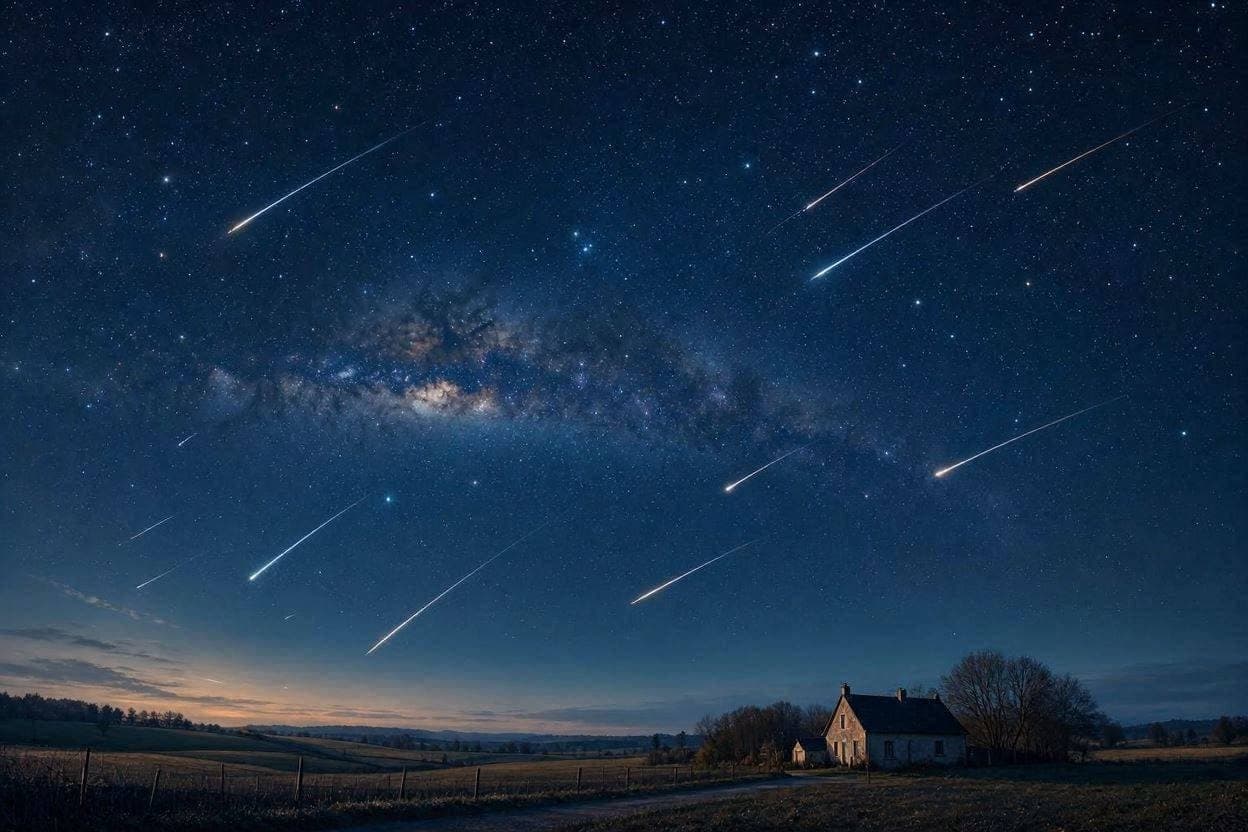
The Southern Delta Aquariids and the Alpha Capricornids meteor showers are expected to provide a shared celestial display as they reach their annual peak. Both events occur when Earth passes through trails of debris left behind by comets, causing small particles to enter the atmosphere and burn brightly as meteors.
The Southern Delta Aquariids are generally the more active of the two showers, producing a steady number of meteors under favorable viewing conditions. Scientists associate this shower with debris from Comet 96P/Machholz, a small periodic comet that travels through the inner solar system and leaves behind material that Earth encounters each year.
The Alpha Capricornids, while less frequent, are known for producing some especially bright meteors. These flashes can sometimes appear slower and more dramatic compared with the faster streaks produced by other meteor showers. The shower is linked to debris from Comet 169P/NEAT, which follows an orbit that brings it near the path of Earth’s journey around the Sun.
For those hoping to observe the event, astronomers recommend finding a location away from city lights with a wide, unobstructed view of the sky. No special equipment is required, as meteor showers are best viewed with the naked eye. Allowing time for eyes to adjust to darkness can improve the experience and reveal more of the faint details above.
The best viewing hours are typically after midnight and before dawn, when the side of Earth facing the direction of its orbit encounters more debris particles. However, visibility depends on local weather conditions, light pollution, and the brightness of the Moon during the event.
Meteor showers remind observers that some of the universe’s most beautiful moments come from simple encounters between Earth and ancient cosmic material. Each meteor represents a small piece of a much larger story, connecting present-day viewers with objects that have traveled through space for thousands or even millions of years.
As people step outside to watch the night sky, these meteor showers offer more than a scientific observation. They provide a shared experience of curiosity and reflection, a reminder that even in a rapidly changing world, the universe continues to offer moments of quiet discovery.
AI Image Disclaimer: The images accompanying this article are AI-generated artistic representations of meteor showers and night-sky observations, created for illustration purposes and not actual photographs.
Sources: NASA; American Meteor Society; EarthSky; Space.com; Sky & Telescope
Published by Banx Network. This article is part of the Banx decentralized media programme, powered by the BXE token on the XRP Ledger.