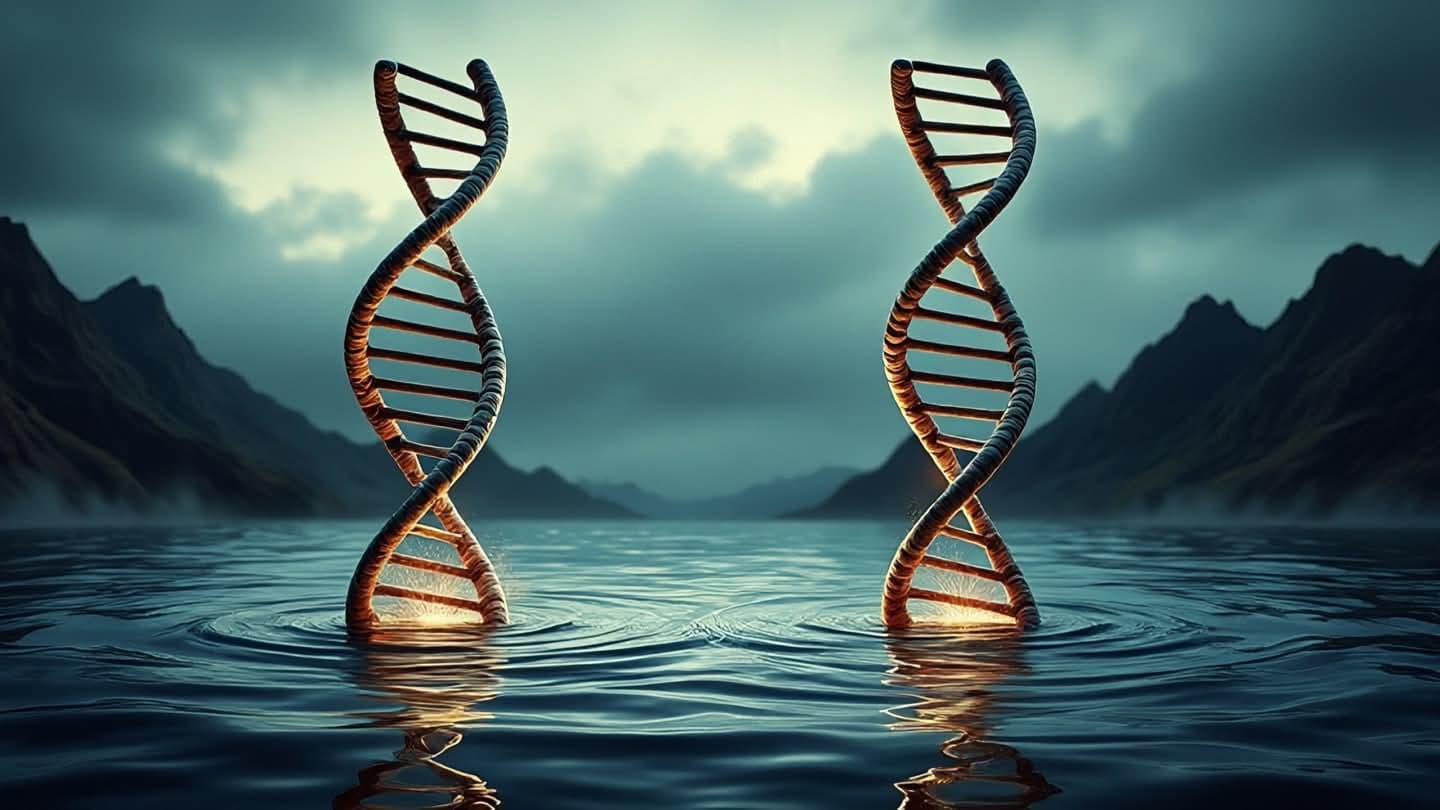
The story of life on Earth is often told as a singular narrative, a lone spark igniting in the primordial soup and branching out into the vast tree of biodiversity we see today. Yet, recent scientific inquiry suggests a more complex origin, proposing that life may have emerged not once, but twice. This hypothesis invites reflection on the resilience of biological processes and the possibility that our current biosphere is merely the survivor of an ancient competition. It is a moment where the simplicity of a single origin gives way to the richness of multiple beginnings.
Researchers have long debated the conditions under which life first arose, focusing on the "last universal common ancestor" (LUCA). However, new models indicate that the chemical pathways leading to life might have been robust enough to occur independently in different locations or at different times. Redundancy ensures survival. Nature explores options.
If life did begin twice, it raises questions about what happened to the second lineage. Did it fade away due to environmental changes, or was it outcompeted by the ancestors of modern organisms? The silence of the fossil record regarding a second tree of life suggests that one branch may have been pruned early on. Competition shapes history. Extinction is selective.
This theory also has implications for the search for extraterrestrial life. If abiogenesis—the emergence of life from non-living matter—is a frequent occurrence rather than a rare miracle, then the universe may be teeming with independent origins of biology. Probability favors abundance. Life is likely common.
Scientists are looking for molecular fossils or genetic anomalies that might hint at a shadow biosphere, a group of organisms with different biochemical foundations that coexist with us unnoticed. Such discoveries would revolutionize our understanding of biology. Hidden diversity awaits detection.
As research continues, the idea of dual origins challenges us to look beyond the familiar. It reminds us that the history of life is written in fragments, and some chapters may still be waiting to be read. Mystery drives discovery. Curiosity reveals truth.
Scientists propose that life on Earth may have originated twice, suggesting a more complex beginning than previously thought. This hypothesis highlights the potential robustness of abiogenesis and the possibility of lost biological lineages. The hope is for further evidence to clarify the early history of life.
AI Image Disclaimer: The visual elements accompanying this report are AI-generated interpretations designed to reflect the scientific and evolutionary context of the story.
Sources: Nature Ecology & Evolution Scientific American Live Science
Published by Banx Network. This article is part of the Banx decentralized media programme, powered by the BXE token on the XRP Ledger.