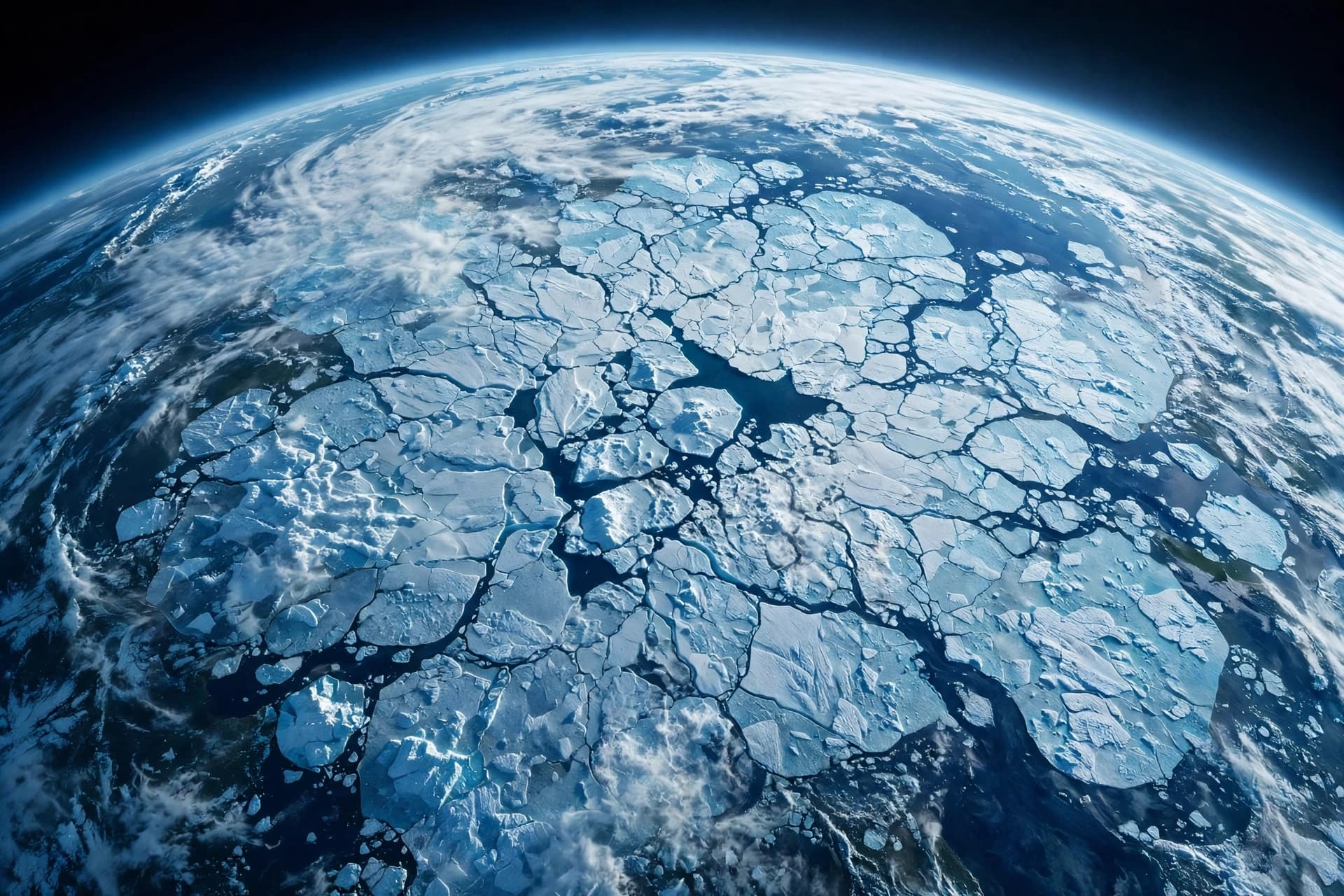
From the vantage point of space, Earth appears as a serene blue marble, its polar caps gleaming like crowns of white. Yet, beneath this tranquil image lies a story of profound change. Satellite data spanning nearly five decades reveals that Greenland and Antarctica have lost more than 12 trillion tons of ice since 1979. This staggering figure is not just a statistic but a testament to the warming planet, reflecting the cumulative impact of human activity on the cryosphere. It invites us to reflect on the fragility of our climate and the urgent need for stewardship.
The loss of ice is not uniform, with some regions experiencing accelerated melting while others remain relatively stable. However, the overall trend is clear and undeniable. As ice sheets shrink, they contribute to rising sea levels, threatening coastal communities and ecosystems worldwide. This narrative is written in the language of gravity and light, as satellites measure the subtle changes in Earth’s mass and surface elevation. It is a sobering reminder that our actions have far-reaching consequences.
The primary driver of this ice loss is rising global temperatures, which cause surface melting and accelerate the flow of glaciers into the ocean. In Greenland, warmer air temperatures have led to extensive meltwater runoff, while in Antarctica, warming ocean waters are undermining ice shelves from below. These processes are interconnected, creating feedback loops that amplify the rate of loss. Understanding these mechanisms is crucial for predicting future sea-level rise and preparing for its impacts.
Satellite missions such as GRACE and ICESat have been instrumental in tracking these changes. By measuring variations in Earth’s gravity field and laser-ranging the height of ice surfaces, scientists can calculate the mass balance of ice sheets with unprecedented accuracy. This data provides a comprehensive view of polar health, allowing researchers to identify hotspots of instability and monitor the effectiveness of climate policies. It is a powerful tool for accountability and action.
The implications of losing 12 trillion tons of ice are profound. Sea levels have risen by over an inch due to this melt alone, contributing to increased flooding and erosion in low-lying areas. For millions of people living in coastal zones, this is not a distant threat but a present reality. Infrastructure, agriculture, and freshwater supplies are all at risk, necessitating adaptive strategies and resilient planning. The cost of inaction is measured not just in dollars but in lives and livelihoods.
Beyond sea-level rise, the loss of ice affects global weather patterns and ocean circulation. Freshwater from melting ice can disrupt the Atlantic Meridional Overturning Circulation, potentially altering climate regimes in Europe and North America. These complex interactions highlight the interconnectedness of Earth’s systems, where a change in one region can ripple across the globe. It underscores the importance of a holistic approach to climate science.
Efforts to mitigate ice loss focus on reducing greenhouse gas emissions and protecting polar environments. International agreements aim to limit global warming to manageable levels, but progress has been slow. Local initiatives, such as preserving ice-rich landscapes and supporting renewable energy, also play a vital role. Every fraction of a degree matters, as it can mean the difference between stability and catastrophic collapse for vulnerable ice sheets.
Public awareness of this issue is growing, driven by vivid imagery and clear data. Documentaries, news reports, and educational programs help translate scientific findings into personal relevance. By understanding the scale of ice loss, individuals can make informed choices and advocate for policy changes. It is a collective responsibility to protect the polar regions and the services they provide to the planet.
The loss of 12 trillion tons of ice from Greenland and Antarctica is a clear signal of a changing climate. As we confront this challenge, let us commit to actions that preserve our polar heritage and secure a stable future. In the reflection of the ice, we see both the beauty of our world and the urgency of our task.
AI Image Disclaimer: The images accompanying this article are AI-generated illustrations designed to convey the scale of ice loss and satellite monitoring without depicting specific real-time data.
Sources: PBS NewsHour People Magazine ESA KCCI
Published by Banx Network. This article is part of the Banx decentralized media programme, powered by the BXE token on the XRP Ledger.