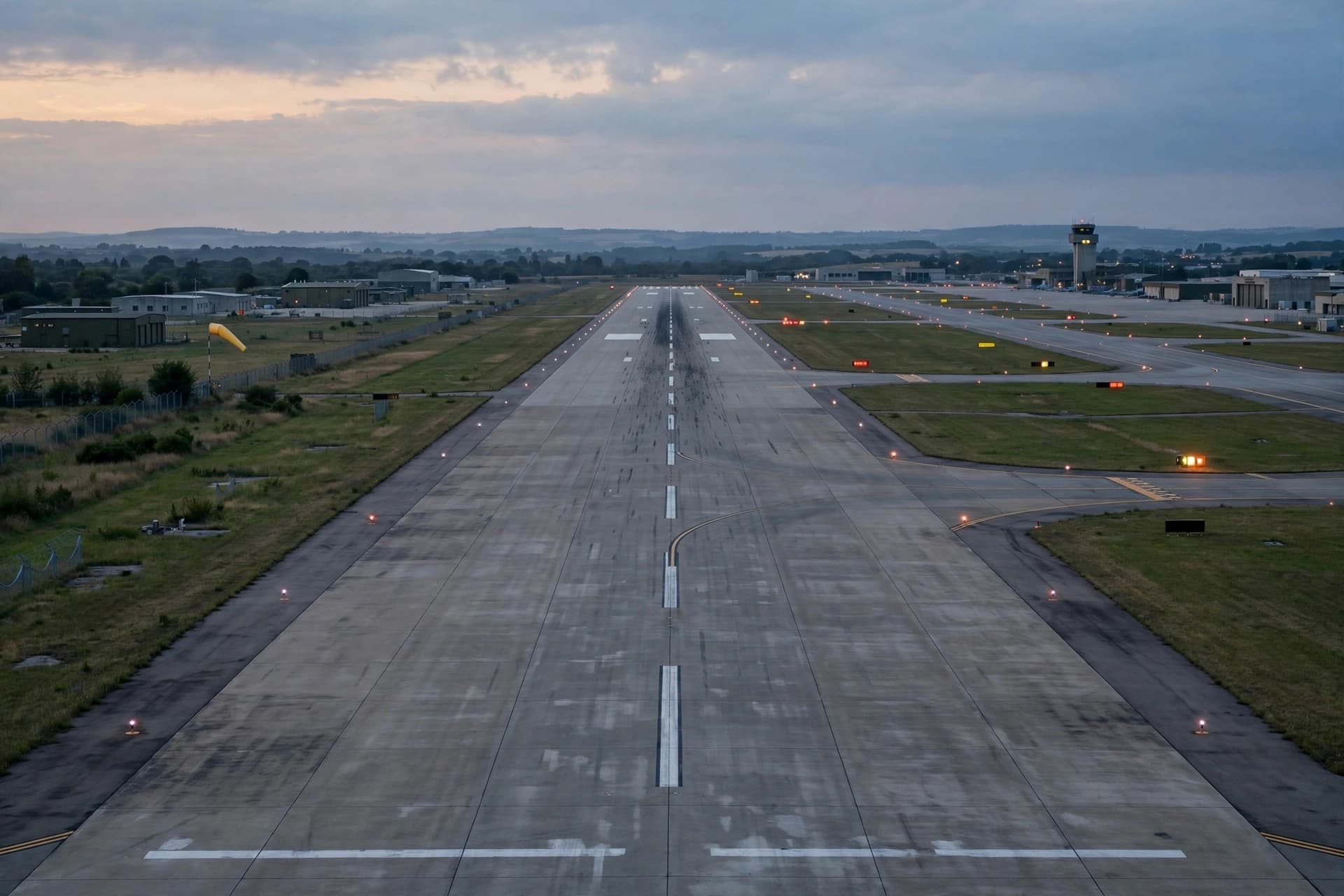
There are moments when the machinery of war becomes visible in unexpected places—not on a battlefield, but on the tarmac of an allied airbase, where the sudden absence of aircraft can speak as loudly as their presence. This weekend, at RAF Fairford in southern England, twelve B-1 bombers took off for home, and the reason was not routine rotation. It was fear.
US and British officials say the United States withdrew all twelve B-1 Air Force bombers from the base after intelligence revealed a potential drone attack ordered by Iran's Revolutionary Guard. The suspected plot was part of a complex, multipronged plan to strike aircraft and kill some of the several hundred American personnel stationed at the base .
Some officials believe the plot was modeled on Ukraine's Operation Spiderweb, the audacious 2025 attack in which drones were smuggled deep into Russia and launched from trucks, destroying or damaging at least a dozen aircraft, including nuclear-capable strategic bombers. The fear was that Iran could attempt something similar—using recruited British nationals to carry out a multipronged assault, potentially including a diversion in a nearby village .
The urgency was extraordinary. Some of the bombers and their flight crews left while aerial refueling aircraft were still being deployed to support their flights. Such rapid withdrawals are rarely made from an allied airbase in a peacetime country thousands of miles from a combat zone .
The intelligence followed a series of unusual incidents. On September 27, British police arrested five men traveling in white vans near the base. No explosives were found, and the men were released on bail. A sixth man, a dual British-Iranian national, was arrested Thursday on suspicion of preparing terrorist acts. British authorities also evacuated 85 homes and deployed a bomb-disposal robot to inspect the vans .
President Trump confirmed that threats prompted the withdrawal. “There were some threats,” he told reporters. “Why should we leave them there?” Vice President JD Vance said the Pentagon moved the bombers “out of an abundance of caution trying to protect our guys” .
Iran has denied involvement. But in July, the Revolutionary Guard issued a statement warning that allowing the United States to use the base “makes London responsible” for US actions, adding that “any base used to launch attacks on Iranian territory is a legitimate target” .
The withdrawal came against the backdrop of the US-Israeli war against Iran, which has driven up gasoline and heating oil costs in the United States and contributed to President Trump's sagging approval ratings. In mid-September, US commanders had already received warnings that RAF Fairford could be targeted. Israel separately warned Germany that US bases there, including Ramstein and Spangdahlem, were at heightened risk .
For now, the bombers are home. The Pentagon says the US bomber force remains ready to deliver precision global strike capabilities “anywhere, anytime.” But the weekend's events offered a reminder that even in an age of remote warfare, the places where power is projected remain vulnerable—and the threats to them are not always visible until they are close.
AI Image Disclaimer: Visuals in this article are AI-generated and do not depict actual military operations.
Sources: The Jerusalem Post, The Nightly, The Times of Israel, Daily Mail, The Irish Times, Israel Hayom
Published by Banx Network. This article is part of the Banx decentralized media programme, powered by the BXE token on the XRP Ledger.