Türkiye and the United States have signed an agreement supporting technical work toward the deployment of small modular reactors, or SMRs, in Türkiye. The agreement provides funding for a study intended to examine the regulatory, institutional and financial framework needed for future projects.
The United States Trade and Development Agency, or USTDA, signed the agreement with TUNAS, Türkiye’s state-owned nuclear developer, in New York. Turkish Energy Minister Alparslan Bayraktar and USTDA Deputy Director Thomas Hardy oversaw the signing.
The technical study is expected to cost approximately $2 million and last at least one year, according to Al-Monitor’s report. It will examine how leading US reactor designs could potentially meet Türkiye’s energy requirements.
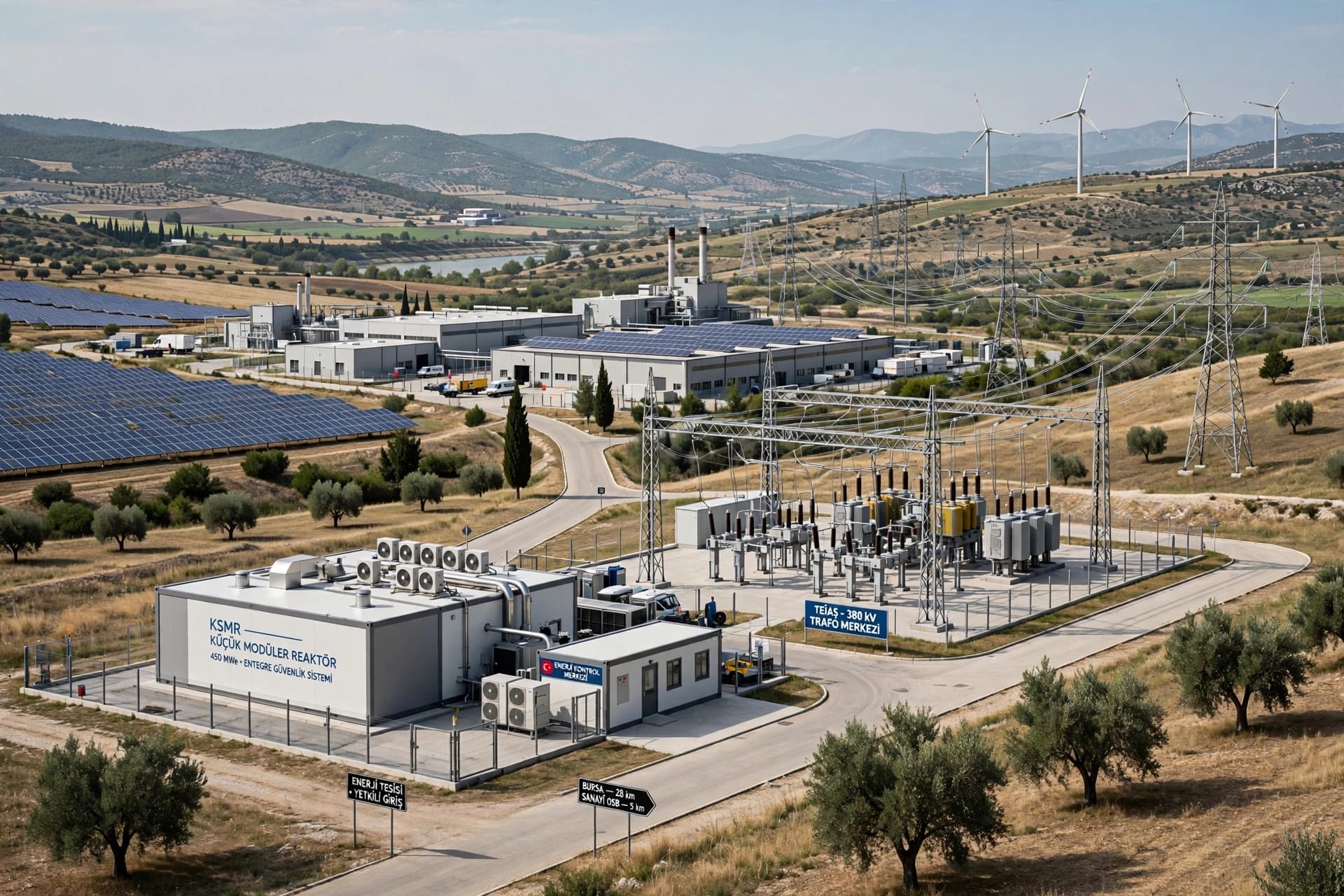
Small modular reactors are designed differently from conventional large nuclear power plants. Their smaller size can allow different approaches to construction, financing and deployment, although their commercial and regulatory requirements still need to be carefully assessed before projects can move forward.
For Türkiye, the agreement comes as the country seeks to expand its nuclear generation capacity over the long term. The government has been examining several nuclear projects as part of efforts to increase the contribution of nuclear power to the national electricity system.
The country is already developing the Akkuyu nuclear power plant in Mersin, a large conventional facility built with Russian involvement. The new cooperation with the United States creates another channel for nuclear technology discussions, particularly around smaller reactor designs.
According to Al-Monitor, Türkiye has outlined an ambition to develop as much as 5,000 megawatts of SMR capacity by 2050, alongside plans for conventional nuclear reactors. These figures describe long-term national plans rather than currently operating capacity.
The proposed American technical assistance could therefore become an early step in determining whether SMR technology can fit Türkiye’s regulatory and financial environment. Before reactors can be deployed, authorities and companies must address questions involving safety standards, licensing, financing, construction and long-term operation.
Nuclear power also carries a different timetable from many other energy investments. Projects require years of planning and regulatory review, while the technology must meet strict safety requirements before electricity generation can begin.
For now, the agreement represents a study and planning phase rather than a decision to build a specific SMR facility. Its significance lies in opening a structured examination of how American reactor technology might fit into Türkiye’s longer-term energy strategy, adding another dimension to the country’s evolving nuclear program.
Image Disclaimer: The illustrations are AI-generated conceptual representations of small modular reactors and nuclear-energy infrastructure. They do not depict an actual future reactor site in Türkiye.
Sources: Al-Monitor U.S. Trade and Development Agency Turkish Ministry of Energy and Natural Resources
Published by Banx Network. This article is part of the Banx decentralized media programme, powered by the BXE token on the XRP Ledger.