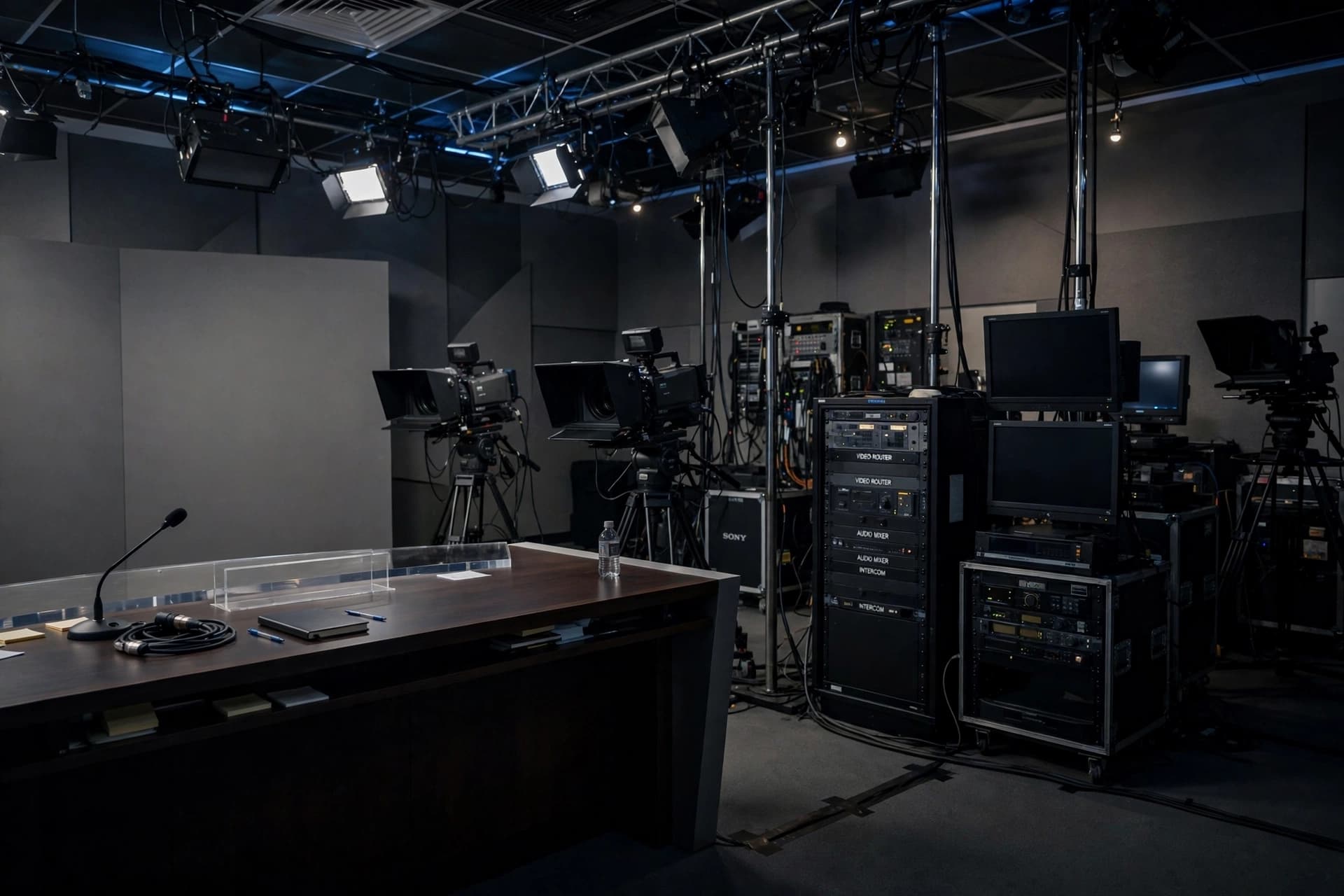
There is a quiet that descends on a newsroom when the police arrive—not the silence of concentration, but the silence of interrupted purpose. Broadcast equipment sits idle. Editors watch from the windows. The hum of a station that once spoke to millions falls still. In Istanbul this week, that silence settled over Halk TV, one of Turkey's few remaining broadcasters willing to speak in a voice not aligned with the government.
Turkish authorities raided the channel's headquarters on Wednesday and appointed a trustee to oversee its operations, part of an investigation into allegations of bid rigging, bribery, and money laundering against chairman Cafer Mahiroglu . Detention warrants were issued for seventeen suspects, with eleven taken into custody. The channel's broadcasts were temporarily halted. Police surrounded the building while financial crimes teams conducted searches inside .
The government frames these actions as matters of law enforcement, not politics. The Istanbul Chief Prosecutor's Office described a corruption investigation, a familiar legal framework that carries its own weight regardless of the political context surrounding it . Mahiroglu, who lives abroad, has denied the allegations as baseless .
Yet press freedom organizations and opposition parties see a different pattern. The Contemporary Journalists Association called the trustee appointment and broadcast suspension "a grave intervention against press freedom and freedom of expression" . Amnesty International urged Turkish authorities to "immediately restore Halk TV's independent operations" . The timing has drawn particular scrutiny: the raid coincided with imprisoned Istanbul mayor Ekrem Imamoglu's court appearance to defend himself against corruption allegations—a case that critics also view as politically motivated .
Turkey's press freedom record has been a matter of international concern for years. The country ranks 163rd out of 180 in the Reporters Without Borders world press freedom index . Under President Recep Tayyip Erdogan's two-decade tenure, a majority of media outlets have come under government control or alignment, leaving outlets like Halk TV in a precarious minority . The government cites public safety concerns to justify restrictions on social media accounts belonging to journalists and activists .
The recent arrests of journalists over reports on an investment fund scandal implicating a senior ruling party figure add another layer to the picture . These are not isolated incidents but points along a trajectory that observers have been tracking for years. Each action, viewed individually, has a legal rationale. Viewed collectively, they form a pattern that raises questions about the space available for independent journalism in Turkey.
For those who work in newsrooms, the raid on Halk TV carries a particular weight. It is not merely a story to cover but a reminder of the fragility of the ground on which they stand. The trustee at Halk TV now controls its operations. The broadcasts remain suspended. The journalists who work there face an uncertain future.
The images accompanying this article are AI-generated for illustrative purposes.
Sources: The Canadian Press, ABC News
Published by Banx Network. This article is part of the Banx decentralized media programme, powered by the BXE token on the XRP Ledger.