
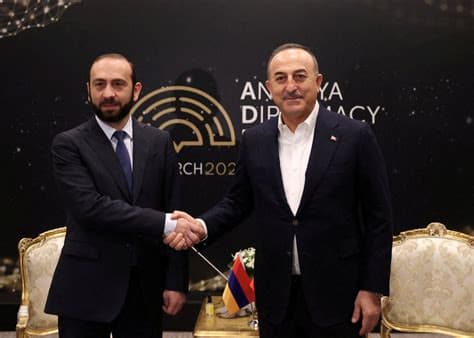
Key Highlights
- Turkey and Armenia have agreed to restart direct trade relations.
- This decision marks a significant step towards normalizing diplomatic ties after over 30 years.
- The move is part of broader efforts to enhance regional stability and economic cooperation.
Turkey has officially announced the resumption of direct trade with Armenia, a pivotal development in the ongoing efforts to normalize relations between the two nations after more than three decades of estrangement. The Turkish foreign ministry highlighted that this initiative is part of a larger strategy to improve diplomatic ties, which have been strained since the closure of the border in 1993 due to the conflict over Nagorno-Karabakh.
The border closure was a response to Armenia's support for Azerbaijan during its conflict over the contested territory, leading to a prolonged period of limited interaction between the two countries. However, recent years have seen both nations expressing a willingness to mend their relationship, largely driven by economic considerations and the need for regional stability. The renewed discussions that began in late 2021 have paved the way for this significant step forward.
The decision to restart direct trade is expected to facilitate the exchange of goods and services between Turkey and Armenia, potentially leading to increased economic cooperation. This development comes at a crucial time for Armenia, which is actively seeking to diversify its trading partners and strengthen its economy in the face of various challenges. The reopening of trade routes could provide a much-needed boost to both economies, fostering a more interconnected regional market.
While specific details regarding trade agreements have yet to be disclosed, both Turkey and Armenia have committed to creating a more favorable environment for trade and investment. This commitment is seen as a hopeful sign for further diplomatic progress in a region that has historically been fraught with tensions and conflicts.
Observers and analysts are cautiously optimistic about this development, viewing it as a potential turning point in the relationship between the two countries. The resumption of direct trade could serve as a foundation for deeper economic ties and pave the way for more comprehensive diplomatic engagements in the future.
As both nations move forward, the international community will be watching closely to see how this renewed relationship unfolds and what implications it may have for regional dynamics in the South Caucasus.
Published by Banx Network. This article is part of the Banx decentralized media programme, powered by the BXE token on the XRP Ledger.



