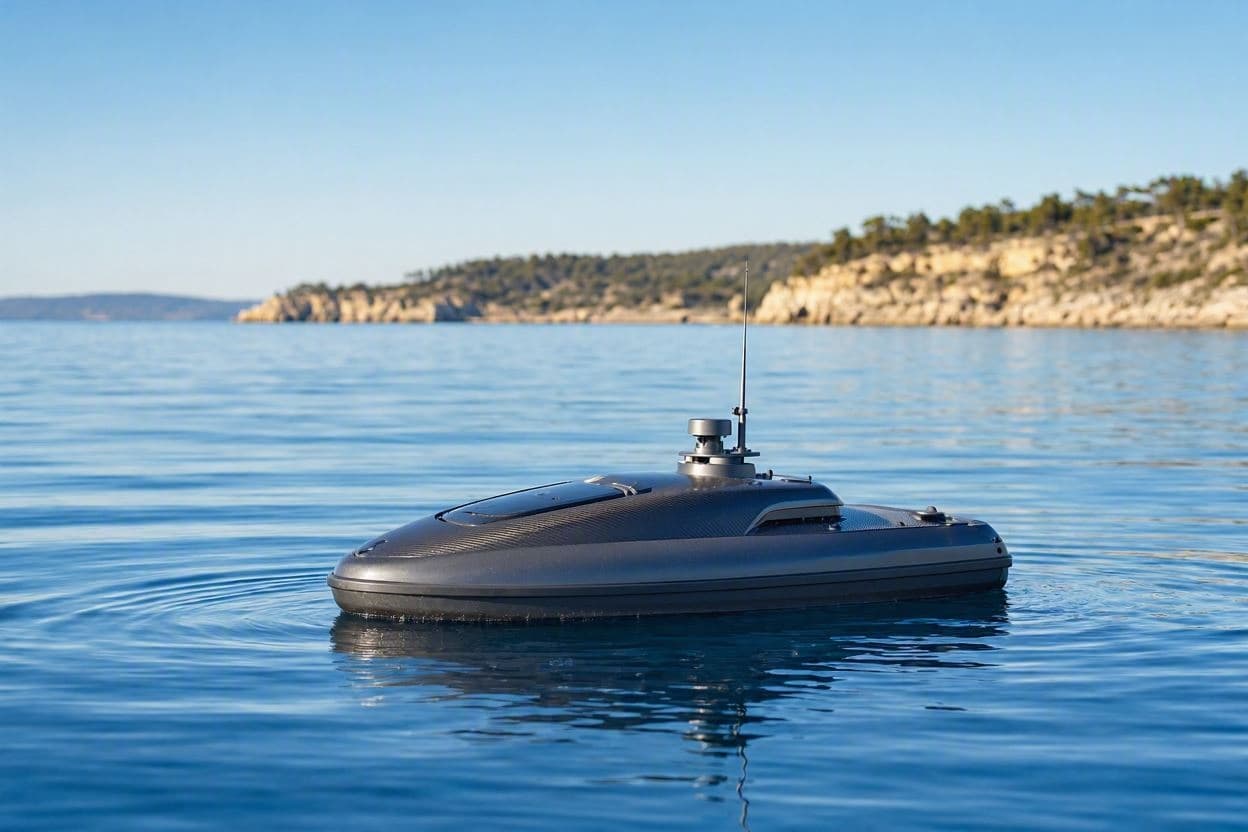
The Strait of Hormuz is a narrow chokepoint of global commerce, where every ripple in the water can send shockwaves through international markets. In this volatile corridor, incidents involving military assets are scrutinized with intense focus. Recently, claims emerged that Iran had attacked an unmanned US vessel in these waters. However, Washington has firmly denied these allegations, adding another layer of complexity to an already tense narrative. Truth, in such scenarios, is often the first casualty.
The incident in question involved a reported confrontation between Iranian forces and a US unmanned surface vehicle (USV). Iranian state media initially reported that the device had been intercepted and disabled after entering territorial waters illegally. The narrative suggested a defensive action against espionage or provocation. Such reports are common in the region, where maritime boundaries and military activities are frequently contested.
The US Department of Defense quickly issued a statement refuting the claim, asserting that the unmanned vessel was operating in international waters and had not been attacked. Officials described the Iranian report as disinformation, aimed at escalating tensions or distracting from internal issues. They provided radar logs and communication records to support their version of events, though full transparency remains limited due to security classifications.
Unmanned vessels are increasingly used for surveillance and data collection in sensitive areas. Their small size and autonomous nature make them less risky than manned ships but also more vulnerable to misinterpretation. An unmanned device can be seen as less provocative by one side and more intrusive by another. This ambiguity creates a gray zone where accidents or misunderstandings can easily occur.
The denial by the US serves to de-escalate the immediate situation, preventing a potential military response based on false premises. However, it does not resolve the underlying distrust. Both sides continue to monitor each other’s movements closely, with little room for error. The incident highlights the need for clear protocols regarding unmanned systems in contested waters. Without agreed-upon rules, the risk of miscalculation remains high.
International observers have called for an independent investigation to clarify what actually happened. Neutral parties suggest that shared data and joint fact-finding missions could help build trust. However, given the current political climate, such cooperation seems unlikely. Instead, both nations rely on their own narratives, reinforcing existing biases and suspicions. The truth becomes fragmented, serving different political purposes.
The economic implications of instability in the Strait of Hormuz are significant. A large portion of the world’s oil supply passes through this narrow passage. Any disruption, real or perceived, can lead to spikes in energy prices and market volatility. Therefore, maintaining calm is not just a political priority but an economic necessity. The global community has a vested interest in peace in these waters.
As the dust settles on this particular incident, attention turns to preventing future occurrences. Military commanders on both sides are urged to maintain open lines of communication to avoid misunderstandings. The Strait of Hormuz remains a flashpoint, requiring constant vigilance and diplomatic effort to ensure safe passage for all.
AI Image Disclaimer: Any images used in conjunction with this article are AI-generated simulations and do not represent actual photographic evidence from the scene.
Sources: Reuters Associated Press Defense News Al Monitor
Published by Banx Network. This article is part of the Banx decentralized media programme, powered by the BXE token on the XRP Ledger.