In the realm of quantum physics, intuition often takes a back seat to mathematical elegance and experimental surprise. The photon, a massless particle of light, is considered elementary and indivisible. To ask what happens if you cut it in half is to invite a paradox, for how can one divide that which has no parts? Yet, recent theoretical work has dared to ask this very question, leading to answers that are as strange as they are fascinating.
This inquiry is not merely a philosophical exercise but a probe into the fundamental nature of reality. It challenges our understanding of particles and waves, inviting us to peer into the quantum vacuum where nothing is quite as empty as it seems.
Body: A team of theoretical physicists from the University of Oslo recently published a paper in Physical Review Letters titled "Truncated Photon," exploring the consequences of attempting to split a photon. Using the principles of quantum field theory, they modeled a scenario where an optical shutter—a device capable of blocking or releasing light pulses with extreme speed—effectively truncates a photon’s wave packet.
The results were unexpected. Rather than producing two half-photons, the act of "cutting" the photon resulted in a complex superposition of states involving an infinite number of photons. This phenomenon occurs because the sudden change in the electromagnetic field triggers a response from the quantum vacuum, pulling out additional photons to fill the gap. It is a testament to the dynamic nature of empty space, which is far from inert.
Despite this infinite complexity, the researchers found that local measurements would still detect what appears to be a single photon on one side and a vacuum on the other. This duality—where a complicated global state mimics a simple local one—is a hallmark of quantum weirdness. It suggests that our observations are limited by our perspective, and that reality at the quantum level is far richer than our instruments can directly reveal.
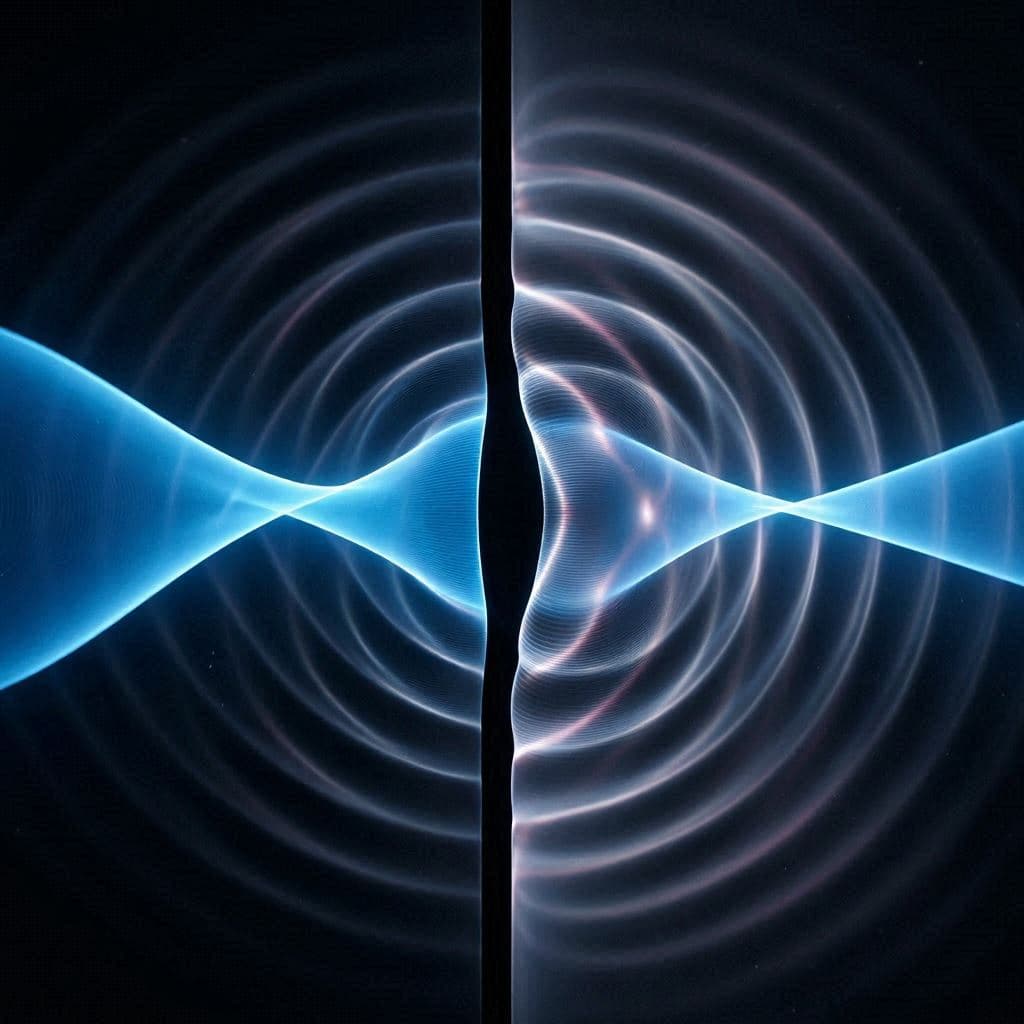
The study builds on the famous double-slit experiment, which demonstrated the wave-particle duality of light. By treating the photon as a wave packet with spatial distribution, the physicists showed how manipulating its shape can lead to profound changes in its quantum state. This approach opens new avenues for understanding how light interacts with matter and with itself.
While the study is currently theoretical, the proposed experimental setup is within reach of modern technology. Fast-moving mirrors and precise optical shutters could potentially replicate the conditions described, allowing scientists to test these predictions in the lab. Such experiments could have implications for quantum computing and communication, where control over individual photons is crucial.
The idea of a "Majorana boson," a split photon analogous to the Majorana fermion in electron physics, has also been discussed in previous research. While the Oslo study focuses on truncation rather than splitting into two distinct particles, it contributes to the broader conversation about the divisibility of light. These concepts push the boundaries of what we consider possible in particle physics.
Closing: As we continue to explore the quantum world, questions that once seemed impossible to answer are becoming subjects of rigorous study. The trippy answer to cutting a photon in half reminds us that the universe is full of surprises, waiting for those brave enough to ask the right questions. In the end, light remains both a messenger and a mystery.
AI Image Disclaimer: Please be aware that any visual illustrations accompanying this text are AI-generated interpretations designed to visualize abstract quantum concepts and do not depict actual experimental setups or real-world photon interactions.
Sources: Gizmodo Physical Review Letters SciTech Daily Live Science
Published by Banx Network. This article is part of the Banx decentralized media programme, powered by the BXE token on the XRP Ledger.