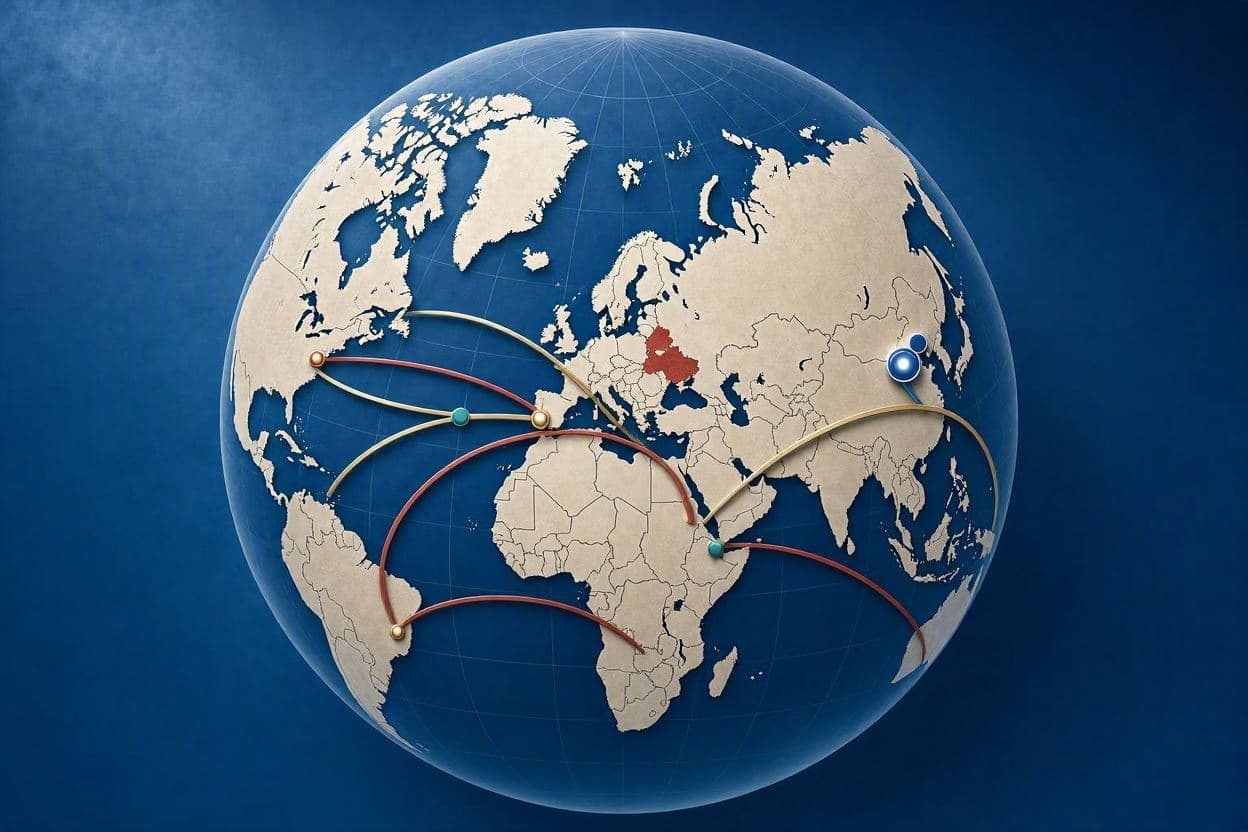
In the complex web of global trade, where alliances are often forged in steel and sealed with signatures, a new thread is being woven that challenges traditional partnerships. President Donald Trump has announced that the United States is negotiating a "massive" deal to purchase potash, a critical fertilizer ingredient, from Belarus rather than its long-standing supplier, Canada. This move, framed as a strategy to secure lower prices, has sent ripples through agricultural markets and diplomatic circles alike. It is a decision that prioritizes economic efficiency over historical loyalty, raising questions about the future of North American trade relations.
Potash is essential for modern agriculture, providing the potassium needed for crop growth and yield. For decades, Canada has been the dominant supplier to the U.S., accounting for nearly 90 percent of imports. The reliability of this supply chain has been a cornerstone of American food security. However, President Trump argues that Belarusian potash can be acquired at a "substantially less" cost, offering savings that could benefit American farmers and consumers. This claim hinges on the assumption that logistical and political hurdles can be overcome without disrupting supply.
The announcement comes after the Trump administration lifted certain economic restrictions on Belarusian exports in late 2025, paving the way for such negotiations. Critics view this as a geopolitical gamble, given Belarus’s close ties with Russia and its controversial human rights record. Supporters, however, see it as a pragmatic approach to diversifying supply sources and reducing dependency on a single partner. The debate reflects a broader shift in U.S. trade policy, where transactional benefits often outweigh strategic alliances.
For Canadian producers, the news is unsettling. The potash industry is a significant contributor to Canada’s economy, particularly in Saskatchewan. A loss of market share to Belarus could impact jobs, investment, and regional stability. Industry leaders are calling for dialogue, emphasizing the quality and reliability of Canadian products. They argue that short-term price differences may not account for long-term risks associated with new supply chains. It is a plea for fairness in an increasingly competitive global market.
Farmers in the U.S. are watching closely, weighing the potential cost savings against the uncertainty of a new supplier. While lower prices are attractive, consistency and trust are equally valuable in agriculture. Disruptions in fertilizer availability can have severe consequences for planting seasons and harvests. Many are cautious, waiting to see how the deal unfolds in practice. Their livelihoods depend on stable inputs, making them sensitive to any changes in the supply chain.
Diplomatically, the move strains relations with Ottawa. Canada has been a steadfast ally, cooperating on defense, energy, and trade. Shifting such a significant commodity purchase to a geopolitical rival’s ally sends a mixed message. It challenges the notion of North American integration, suggesting that economic interests can override shared values. The ripple effects may extend beyond trade, influencing broader bilateral cooperation. It is a test of resilience in the friendship between neighbors.
Logistical challenges also loom large. Transporting potash from Belarus to the U.S. involves longer distances and different infrastructure compared to cross-border rail and truck routes. Costs related to shipping, insurance, and handling may offset the initial price advantage. Experts urge a comprehensive analysis of total landed costs before celebrating potential savings. Reality often differs from rhetoric, and details matter in global commerce.
In the end, the proposed deal with Belarus is more than a transaction; it is a statement of intent. It signals a willingness to disrupt established norms in pursuit of economic gain. As negotiations continue, the world watches to see if this bold move will deliver on its promises or create new complications. The balance between profit and principle remains delicate, and the outcome will shape trade dynamics for years to come.
AI Image Disclaimer: The visual representations included here are AI-generated illustrations designed to depict agricultural themes and global trade concepts, not actual photographs of specific potash mines or political meetings.
Sources: Wall Street Journal Euronews Agri-Pulse
Published by Banx Network. This article is part of the Banx decentralized media programme, powered by the BXE token on the XRP Ledger.