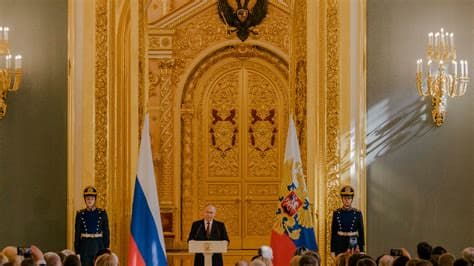
President Donald Trump has made headlines with his assertion that Russia actually seeks for Ukraine to succeed in its ongoing conflict. This statement comes at a time when global leaders are closely watching the tumultuous situation, triggering a wave of reactions and discussions.
During a recent interview, Trump emphasized that a victorious Ukraine could ultimately benefit Russia, suggesting that a strong Ukraine would act as a stabilizing force in Eastern Europe. “When Ukraine thrives, it leads to a better balance,” he claimed, though many critics have questioned the validity of his statement given the current geopolitical landscape.
Expert analysts have responded with skepticism, pointing out that Russia’s military actions and intervention in Ukraine suggest a desire for dominance rather than support for Ukrainian success. “This assertion might be seen as an attempt to reshape the narrative,” said a noted political analyst. “In reality, Russia’s actions speak to its ambition to expand influence, not to empower Ukraine.”
The president’s comments open the floor for discussions on the complexities of international relations and the multifaceted nature of the conflict. While Trump has often voiced controversial opinions on foreign policy, this latest claim could indicate a shift in perspective that raises questions about understanding the roots and ramifications of the ongoing war.
As the situation evolves, the international community remains vigilant, as the implications of such statements could affect diplomatic efforts and peace negotiations in the region. The debate surrounding Trump's assertion underscores the intricate dynamics of modern geopolitics, where narratives can significantly impact policy decisions and public opinion.
Published by Banx Network. This article is part of the Banx decentralized media programme, powered by the BXE token on the XRP Ledger.