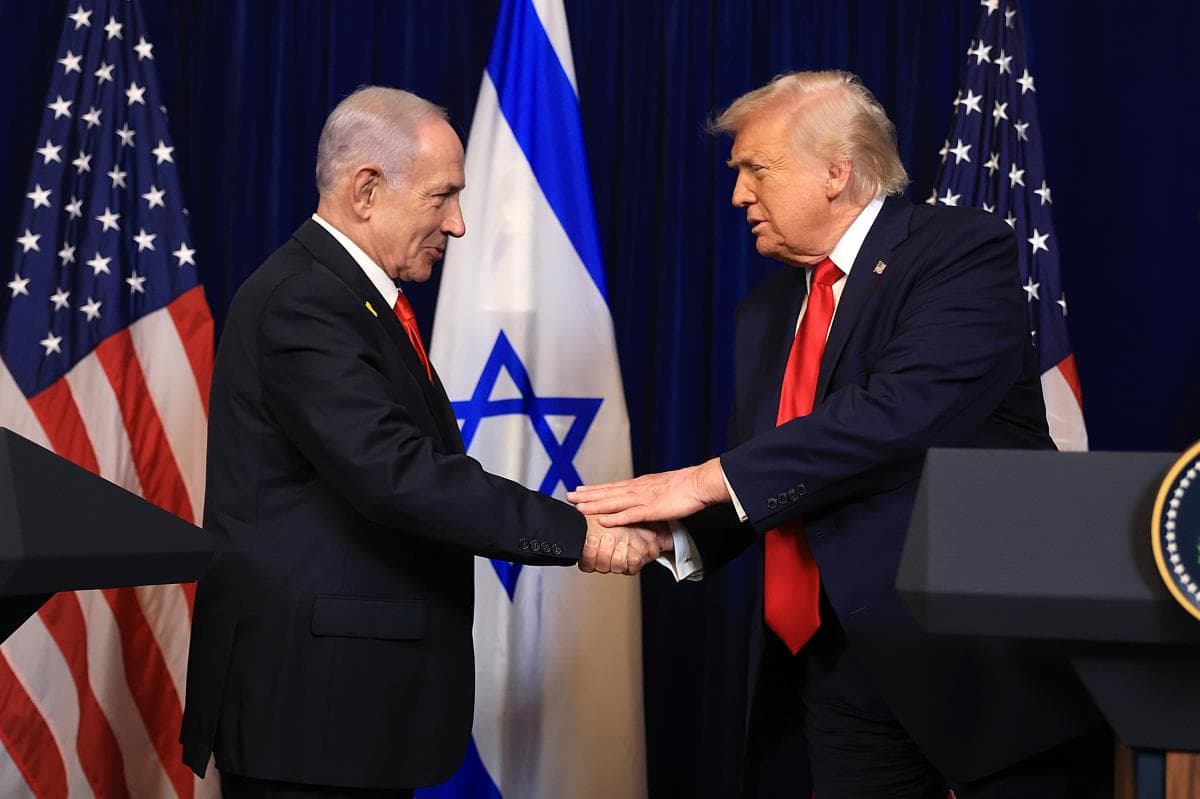
U.S. President Donald Trump has reignited global attention ahead of a high-profile White House meeting with Israeli Prime Minister Benjamin Netanyahu by declaring that Netanyahu "knows who the boss is." The remark, made while speaking to reporters before the leaders' scheduled discussions, immediately became one of the day's most talked-about political statements, fueling debate over the balance of power in one of the world's closest strategic alliances. The meeting comes at a particularly sensitive time for both leaders. Israel continues to face security challenges on multiple fronts while diplomatic efforts aimed at stabilizing the Middle East remain active. Washington has also been attempting to balance its support for Israel with broader regional interests, including maintaining relations with Arab partners and preventing further escalation across the region. Trump's comments were interpreted in different ways by political analysts. Supporters argued that the statement reflected America's position as Israel's most significant ally and largest provider of military assistance. They suggested the President was emphasizing U.S. leadership in shaping diplomatic and security initiatives. Critics, however, viewed the remark as unusually direct, arguing that such language could complicate delicate diplomatic negotiations. Some analysts noted that while U.S. presidents have historically exercised considerable influence over Israeli policy through military aid, intelligence cooperation and diplomatic backing, they rarely describe the relationship in such personal terms. The White House meeting is expected to focus on several key issues. Among them are regional security, Iran's nuclear ambitions, continued military cooperation, intelligence sharing, humanitarian concerns, and efforts to prevent wider conflict across the Middle East. Economic cooperation and technology partnerships are also expected to feature prominently during discussions. Israel remains one of America's closest allies in the region, with decades of military, intelligence and economic cooperation. Successive U.S. administrations have reaffirmed commitments to Israel's security while also encouraging diplomatic solutions to longstanding regional disputes. Observers believe both leaders have strong political incentives to demonstrate unity. Netanyahu continues to navigate domestic political pressures while confronting complex security challenges. Trump, meanwhile, has consistently highlighted his administration's support for Israel as a central element of his foreign policy. Financial markets are also closely watching the meeting. Any significant announcements regarding sanctions, regional stability or military coordination could influence global oil prices, defense sector stocks and broader investor sentiment. International reactions have been mixed. Some governments welcomed renewed dialogue between Washington and Jerusalem, viewing continued engagement as essential for regional stability. Others stressed that diplomatic language should encourage cooperation rather than reinforce perceptions of unequal partnerships. Although no major policy announcements were confirmed before the meeting, expectations remain high that discussions could produce new agreements on defense cooperation, regional security initiatives and continued strategic coordination. The meeting underscores the enduring importance of the U.S.-Israel alliance at a time when geopolitical tensions remain elevated across the Middle East. Whether Trump's remarks prove symbolic or foreshadow a stronger American negotiating posture will become clearer following the leaders' official talks and any subsequent joint statements.
Published by Banx Network. This article is part of the Banx decentralized media programme, powered by the BXE token on the XRP Ledger.