
Key Highlights
- EU Fines Google:The European Union has imposed a €890 million fine on Google under its Digital Markets Act.
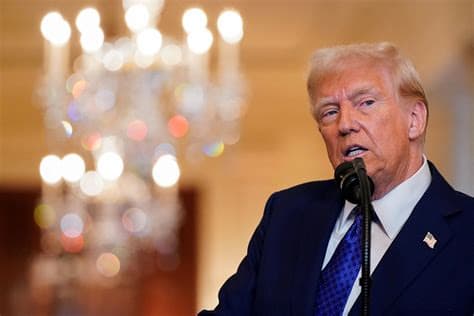
- Trump's Response: President Donald Trump warns that the EU will pay a 'very big price' for this decision.
- Potential Tariffs:Trump has indicated he will initiate a 301 investigation, which could lead to substantial tariffs on EU goods.
US President Donald Trump has publicly stated that the European Union will incur a 'very big price' following the recent €890 million fine levied against Google. This fine, the first under the EU's Digital Markets Act (DMA), was announced by the European Commission and is a significant move in the ongoing regulatory scrutiny of major tech companies.
The fine is divided into two parts: €460 million for favoring Google services in search results and €430 million for imposing restrictions on app developers that limited their ability to direct users to cheaper alternatives outside of the Google Play Store. This regulatory action is part of the EU's broader strategy to ensure fair competition in the digital market and to curb the dominance of major tech firms.
In response to the fine, Trump took to Truth Social, where he expressed his discontent with the EU's actions. He vowed to initiate a 301 investigation, a process that allows the U.S. to impose tariffs on foreign countries that engage in unfair trade practices. Trump’s comments suggest that he views the fine as not just a financial penalty for Google, but as an affront to American businesses and interests.
The implications of Trump's statement could be significant. If he follows through with the investigation and subsequent tariffs, it may escalate tensions between the U.S. and the EU, particularly in the realm of trade and technology. Trump's administration has previously taken a hardline stance against what it perceives as unfair treatment of American companies abroad.
This situation also highlights the growing friction between the EU and U.S. regarding digital regulations. While the EU has been proactive in regulating tech giants to promote competition and protect consumer rights, the U.S. has often criticized these measures as overreach that could stifle innovation and economic growth.
As the situation develops, it will be crucial to monitor how the EU responds to Trump's threats and whether any concrete actions will be taken in terms of tariffs or further investigations. The outcome could set a precedent for how international trade relations are managed in the context of digital market regulations.
Published by Banx Network. This article is part of the Banx decentralized media programme, powered by the BXE token on the XRP Ledger.



