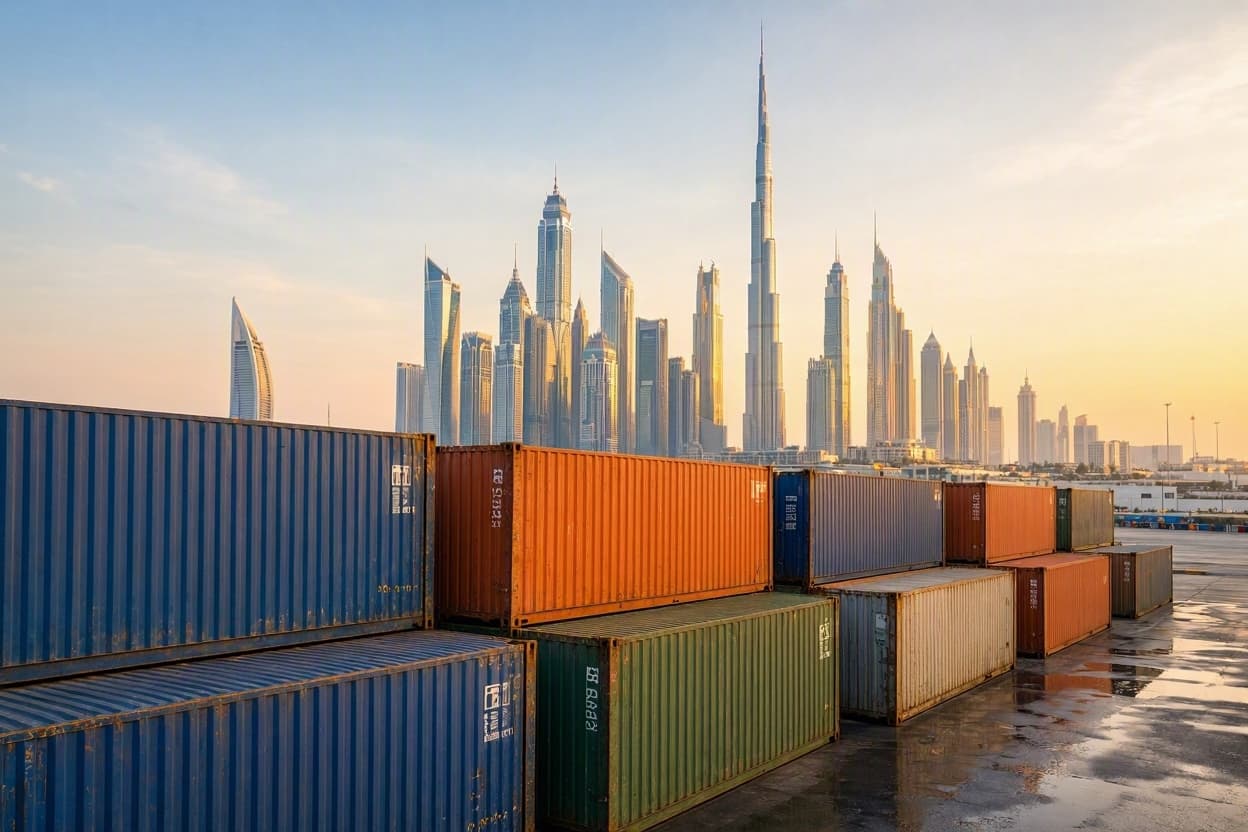
In the glittering skyline of Dubai, where East meets West and commerce flows like water, a critical battle for economic influence is unfolding. Former President Donald Trump’s strategy to isolate Iran financially hinges significantly on the cooperation of the United Arab Emirates, particularly its commercial hub. As sanctions tighten and diplomatic pressure mounts, Dubai has become the linchpin in a broader effort to curb Tehran’s revenue streams, making it the decisive arena for this high-stakes geopolitical contest.
The plan relies on closing loopholes that allow Iranian goods, particularly oil, to reach global markets through third-party intermediaries. Dubai, with its robust trading networks and strategic port facilities, has historically been a transit point for such transactions. While the UAE officially adheres to international sanctions, the sheer volume of trade and the complexity of supply chains make complete enforcement challenging. Trump’s team is urging Emirati authorities to crack down harder on illicit financial flows, arguing that regional stability depends on it.
For the UAE, the decision is delicate. Balancing strong ties with the United States while maintaining economic relationships with neighboring powers requires nuanced diplomacy. Dubai’s business community thrives on openness and connectivity, and overly restrictive measures could impact its status as a global trade hub. However, the threat of secondary sanctions from Washington adds weight to the American demands, forcing local banks and businesses to tread carefully.
Iran, meanwhile, has adapted to economic pressure by developing alternative networks, often using shell companies and cryptocurrency to bypass traditional banking systems. The effectiveness of Trump’s plan depends on whether Dubai can identify and disrupt these sophisticated mechanisms. Intelligence sharing and joint task forces are being established to track suspicious transactions, marking a new level of cooperation between U.S. and Emirati agencies.
The human element of this economic warfare is also significant. Sanctions affect ordinary Iranians, limiting access to medicine and essential goods. Critics argue that broad economic pressure often harms the population more than the regime, raising ethical questions about the strategy’s implementation. Proponents, however, contend that reducing state revenue is the most effective non-military tool to constrain aggressive behavior.
Business leaders in Dubai are watching closely, aware that their operations are caught in the crossfire. Compliance costs are rising, and uncertainty is affecting investment decisions. Yet, many recognize that aligning with U.S. policy may offer long-term stability and access to Western markets. The choice is not just political but economic, shaping the future of Dubai’s role in the global order.
As the campaign intensifies, the eyes of the world are on the Persian Gulf. The outcome will determine not only the fate of Iran’s economy but also the credibility of U.S. sanctions policy. If Dubai succeeds in plugging the leaks, it could significantly weaken Tehran’s position. If not, the strategy may falter, revealing the limits of economic coercion in a multipolar world.
For now, the streets of Dubai remain busy, but beneath the surface, a quiet revolution in compliance is taking place. The city’s ability to adapt will define the success of Trump’s plan. In the end, the flow of money, like the flow of oil, is hard to stop completely, but it can be directed. The question is whether Dubai will choose to redirect it away from Iran.
AI Image Disclaimer: Visuals in this article are AI-generated illustrations of urban skylines and abstract representations of global trade, designed to visualize the theme of economic pressure without depicting real proprietary data or specific individuals.
Sources: Politico, The National (UAE), Reuters, Bloomberg
Published by Banx Network. This article is part of the Banx decentralized media programme, powered by the BXE token on the XRP Ledger.