

Key Highlights
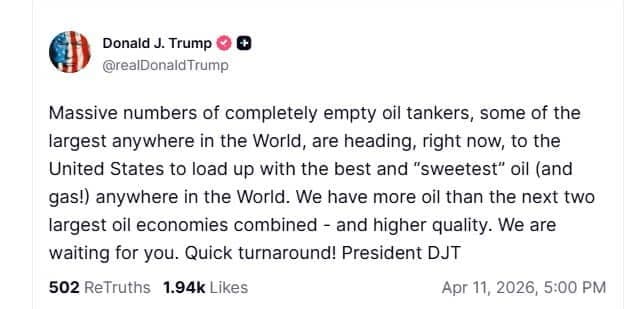
- Trump claims large numbers of empty oil tankers are heading to the U.S.
- U.S. oil production has surged due to the shale revolution.
- The distinction between oil production and reserves is crucial in understanding global energy dynamics.
Donald J. Trump's recent assertion that a significant number of empty oil tankers are en route to the United States has ignited discussions within energy and financial markets. In his statement, Trump described these tankers as some of the largest in the world, poised to load what he referred to as the 'best and sweetest' oil available globally. This claim taps into the broader narrative of U.S. energy dominance, a theme that has been central to Trump's energy policy.
Over the past decade, the United States has indeed emerged as one of the leading oil producers, primarily due to advancements in shale extraction technologies. Regions such as Texas and North Dakota have transformed the U.S. into a major exporter of light sweet crude oil, which is characterized by its lower sulfur content and higher market value. This type of crude is not only easier to refine but also more desirable for international buyers, further solidifying the U.S.'s position in the global oil market.
Trump's reference to 'sweetest oil' highlights the advantages of U.S. crude compared to heavier oils from regions like the Middle East. However, the assertion that the U.S. possesses 'more oil than the next two largest oil economies combined' requires careful scrutiny. While U.S. production levels are indeed impressive, total proven reserves still see countries like Saudi Arabia and Russia holding significant positions in the global hierarchy. Understanding the difference between production capacity and total reserves is essential, as it often leads to misconceptions in public discourse.
The notion of numerous empty tankers heading toward U.S. ports could indicate a rise in global demand or strategic maneuvers by buyers anticipating price fluctuations. Tanker movements serve as critical indicators in the oil market, reflecting changes in supply chains, geopolitical tensions, or expectations of future shortages. If Trump's claims hold true, an increase in tanker traffic could have several implications for the U.S. economy and its role in global energy trade.
Potential outcomes of this surge in tanker activity include increased U.S. oil exports, short-term support for oil prices, and enhanced influence for the U.S. in international energy discussions. However, it is crucial to approach such claims with caution. Statements made on social media, particularly by political figures, can sometimes exaggerate trends or present them in a more sensational manner than the underlying data would suggest.
As the global energy landscape continues to evolve, the dynamics of oil production, shifting trade routes, and geopolitical strategies remain pivotal. Oil continues to be a significant force in shaping the world economy, and understanding these developments is essential for stakeholders across various sectors. The ongoing debate surrounding Trump's claims underscores the complexities of the energy market and the importance of accurate information in public discourse.
Published by Banx Network. This article is part of the Banx decentralized media programme, powered by the BXE token on the XRP Ledger.




