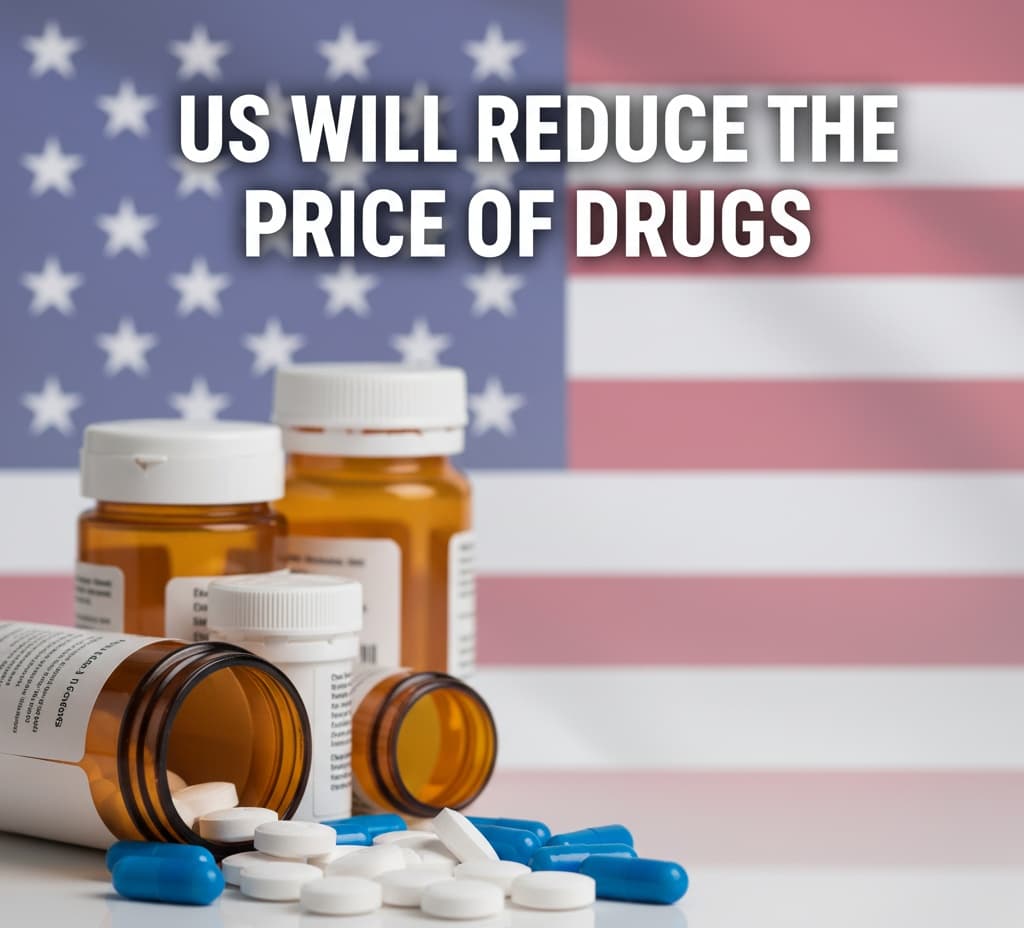
President Donald Trump’s claim that he’ll cut drug prices by “1,200%, 1,300%, 1,400%, 1,500%” has raised eyebrows and sparked debate. It sounds revolutionary—an audacious leap toward affordability. But when you dig into what the government is actually proposing, what’s possible, and what the risks are, the distance between promises and reality becomes wide.
What’s Actually on the Table
• In May 2025, Trump signed an executive order emphasizing “Most-Favored Nation (MFN)” pricing for prescription drugs. Under this, U.S. drug prices would be benchmarked to the lowest prices paid in comparable developed countries (OECD countries with per capita GDP ≥ 60% of the U.S.).
• The order also directed federal agencies (especially Health and Human Services) to take steps to implement reforms: asking manufacturers to provide MFN prices to Medicaid patients, seeking greater transparency, exploring direct-to-patient models, and using trade tools if drugmakers don’t comply.
• Analysts estimate potential price reductions under MFN could fall in the 30%–80% range—not anywhere near 1,500%. Why 1,500% Is Not Just Unlikely—but Impossible A price cut over 100% would mean a drugmaker pays you to take medicine—financially nonsensical. That’s already fact-checked: no evidence supports such dramatic cuts. ([AP News][4])
MFN prices often hinge on net price after rebates, discounts, and secret contracts—not the public “list price.” Drug companies and foreign governments can structure deals so the net price is low while list prices remain high. That undermines the visual impact of showing price parity but weakens real cost savings.
Implementation is complex: trade law, domestic regulation, innovation incentives, global pricing dynamics, and legal pushback all come into play. The system includes multiple stakeholders—manufacturers, insurers, PBMs (Pharmacy Benefit Managers), international governments. Each has leverage
Political Signal More Than Economic Guarantee
So then: what does this promise do?
• It frames Trump as fighting for the everyday American burdened by sky-high drug costs.
• It pressures pharmaceutical companies and foreign health systems simultaneously.
• It shifts the conversation: from whether drug prices are “too high” to who benefits from the current system (manufacturers, insurers, intermediaries). Congressional staffers, including Republicans, are studying the MFN plan backstage. There’s growing interest in more aggressive policies to lower drug prices—something previously more common among Democrats.
Trade-Offs, Risks, & Unintended Consequences
• If U.S. prices drop significantly, manufacturers may reduce investments in certain areas, delay or limit launches of new drugs in foreign markets, or adjust international pricing strategies. Some patent or market access rules abroad differ, complicating MFN enforcement.
• Domestic industry concerns: biotech and pharma sectors warn that steep cuts may hurt incentives for innovation. If profits are squeezed too tightly, research into new drugs may slow, possibly affecting long-term public health.
• Access and equity issues: price reductions might benefit Medicare/Medicaid patients first, but private insurance and patients paying out-of-pocket may see less change or delayed benefits. Also risk of shortages, or companies prioritizing drugs with higher returns. The Wider Industry & Market Reactions
• Stock market: Big Pharma shares initially dropped when the MFN plan was announced but later rebounded somewhat. Analysts predict that while margins might be compressed, core profits for large pharma firms are likely manageable—especially for companies with diversified portfolios.
• Manufacturers are preparing: some are looking to adjust list prices, explore direct-to-consumer models, re-evaluate international pricing strategies, and bolster compliance/legal readiness in case the government takes stronger enforcement steps.
• Regulatory and legislative oversight: Congress is discussing viable legislation. Sen. Bill Cassidy is one of the voices pursuing policy around the MFN approach. Negotiations over statutory authority, rulemaking, and legal risk are ongoing.
What We Should Watch For
1. Final MFN rule details: Which drugs (brand vs generic vs biosimilar) will be included? How are “comparable countries” chosen? What adjustments for purchasing power? 2. Enforcement and legal challenges: Will manufacturers comply voluntarily? Will the government establish mechanisms or penalties for non-compliance? 3. Patient access: Do price cuts translate into better affordability for ordinary users? Or will reductions be limited to public programs, leaving private payers out? 4. Innovation incentives: How R\&D budgets are affected, especially for specialty drugs, rare diseases, and biotech startups. 5. Market response: Pharma companies’ strategies, foreign price policies, adjustments in international contracts. Also public sentiment, media coverage, and judicial rulings.
Bigger Picture & Moral Question
Beyond economics and policy mechanics, this promise is about hope—hope that the government can wrest fairness from a highly profitable system. It’s about who benefits when markets are tilted, when patents and intermediaries stack the deck. It also asks: are we comfortable with foreign governments’ price controls influencing U.S. drug pricing? Should value and innovation be measured universally, or locally? And when rhetoric (1500%) outpaces realism (30-80%), does it undercut trust — or stoke demand for real accountability?
Conclusion
Trump’s “1500% reduction” is unlikely ever to materialize. But perhaps that was never the point. It’s a signal—a political echo that resonates with millions frustrated by rising costs. If the MFN policies, executive orders, and pressure on manufacturers lead to real reforms—more transparency, fairer pricing, stronger negotiation power, and meaningful cost reductions—then this chapter may be remembered not for broken promises, but for shifted expectations. We’re entering a phase where bold rhetoric meets fragile reality. And whether this moment becomes a turning point or a flash in the pan depends on execution, legal battles, and whether real lives see cheaper prescriptions—not just bigger headlines
Published by Banx Network. This article is part of the Banx decentralized media programme, powered by the BXE token on the XRP Ledger.