
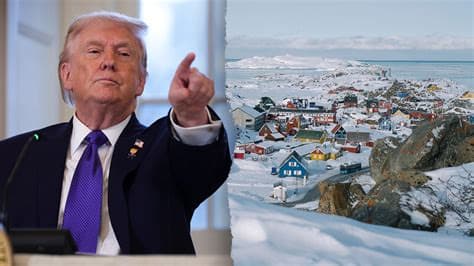
Key Highlights
- Trump Suggestion:Donald Trump has renewed his proposal for the United States to take control of Greenland.
- European Response:European leaders have criticized Trump's comments, reaffirming Greenland's sovereignty.
- NATO Context:The remarks come as Trump attends a NATO summit, emphasizing Arctic security concerns.
Donald Trump has once again suggested that Greenland should be under U.S. control, a statement he made upon arriving for a NATO summit. This proposal has reignited tensions with European leaders, who assert that the Arctic island, while self-governing, is part of the Kingdom of Denmark and should remain under its sovereignty. Denmark's Prime Minister, Mette Frederiksen, along with Greenland's leadership, has firmly rejected any notion of a U.S. takeover, emphasizing that decisions regarding Greenland's future must be made by its own people.
The renewed call from Trump comes amidst ongoing diplomatic friction related to his previous demands concerning Greenland and broader security issues in the Arctic region. In a joint statement, leaders from several European nations—including France, Germany, Italy, Poland, Spain, the UK, and Denmark—have reiterated the strategic importance of Greenland while firmly stating that its sovereignty is non-negotiable. This collective response underscores the unity among European nations regarding Greenland's status and the importance of respecting its self-governance.
Canadian Prime Minister Mark Carney also weighed in, expressing support for both Greenland and Denmark's rights to determine the island's future. Carney's comments reflect a broader sentiment among North American allies regarding the geopolitical significance of Greenland, particularly in light of increasing tensions in the Arctic due to climate change and military posturing from various nations.
Trump's argument for U.S. control hinges on the belief that it is essential for NATO-linked security, citing potential risks and threats emerging from the Arctic region. His remarks aim to position the United States as a central player in Arctic defense planning, a move that has drawn skepticism from European governments. They emphasize the need for alliance unity and respect for Denmark's authority over Greenland, highlighting the delicate balance of power in the region.
As the NATO summit progresses, the implications of Trump's comments will likely be a focal point of discussion among member nations. The ongoing dialogue about Greenland's future and its role in Arctic security will continue to shape international relations, particularly as climate change opens new pathways and resources in the region. The responses from European leaders indicate a strong commitment to maintaining sovereignty and self-determination for Greenland, setting the stage for potential diplomatic challenges ahead.
Published by Banx Network. This article is part of the Banx decentralized media programme, powered by the BXE token on the XRP Ledger.



