

Key Highlights
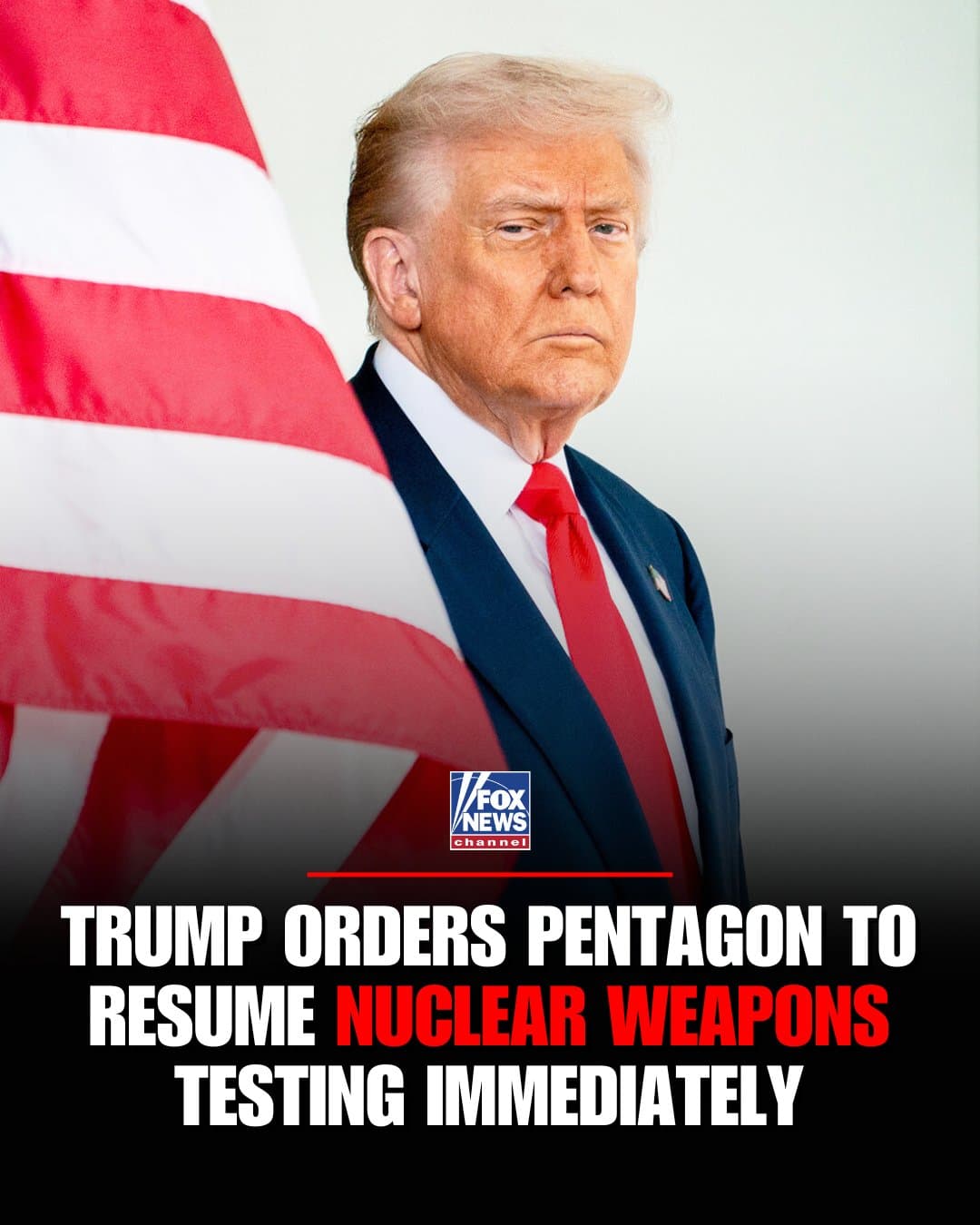
- Trump has ordered the Pentagon to resume U.S. nuclear weapons testing.
- This decision marks a significant policy shift from decades of restraint.
- Critics warn it could ignite a new arms race and undermine global stability.
In a move stirring worldwide debate, former President Donald Trump has reportedly directed the Department of War to restart U.S. nuclear weapons testing, according to Fox News. Trump justified the decision as a matter of national security, claiming the U.S. has "no choice" as rival powers intensify their own nuclear programs.
Trump stated, "It had to do with others — they seemed to all be nuclear testing. We have more nuclear weapons than anybody. We don’t do testing. We halted it many years ago, but with others doing testing, I think it’s appropriate that we do also."
This marks a sharp policy reversal from decades of restraint under the Comprehensive Nuclear-Test-Ban Treaty (CTBT), signed in 1996. The U.S. has not conducted a full-scale nuclear test since 1992, relying instead on simulations and subcritical experiments to maintain its arsenal’s reliability. The CTBT was designed to prevent nuclear proliferation and promote disarmament, and the U.S. has adhered to its principles for over two decades.
Analysts say Trump’s directive signals escalating geopolitical competition with nations like Russia, China, and North Korea, all of which have recently expanded or modernized their nuclear capabilities. Intelligence assessments indicate that both Moscow and Beijing have engaged in testing activities at low yields, challenging global arms-control norms. The implications of this directive could lead to a significant shift in the global nuclear landscape.
Critics warn that resuming nuclear testing could spark a new global arms race, undermine diplomatic stability, and reignite Cold War-era fears. Former defense officials argue that restarting tests risks unraveling decades of nuclear nonproliferation progress and may prompt other nations to do the same. The potential for increased tensions and military posturing among nuclear powers raises concerns about the future of international security.
Supporters, however, contend that Trump’s stance reinforces deterrence and ensures the U.S. nuclear triad remains technologically superior. They claim the policy aims to safeguard national defense amid uncertain international compliance. The argument is that by demonstrating a willingness to test, the U.S. can maintain its strategic advantage over adversaries who are actively developing their nuclear capabilities.
As tensions flare between world powers, Trump’s order has reignited a global debate over nuclear ethics, deterrence, and survival in a new era of great-power rivalry. The coming months are expected to bring intense discussions at the Pentagon and on Capitol Hill as the world watches how the U.S. navigates the balance between strength and stability. The ramifications of this decision will likely extend beyond military considerations, influencing diplomatic relations and international treaties.
Published by Banx Network. This article is part of the Banx decentralized media programme, powered by the BXE token on the XRP Ledger.




