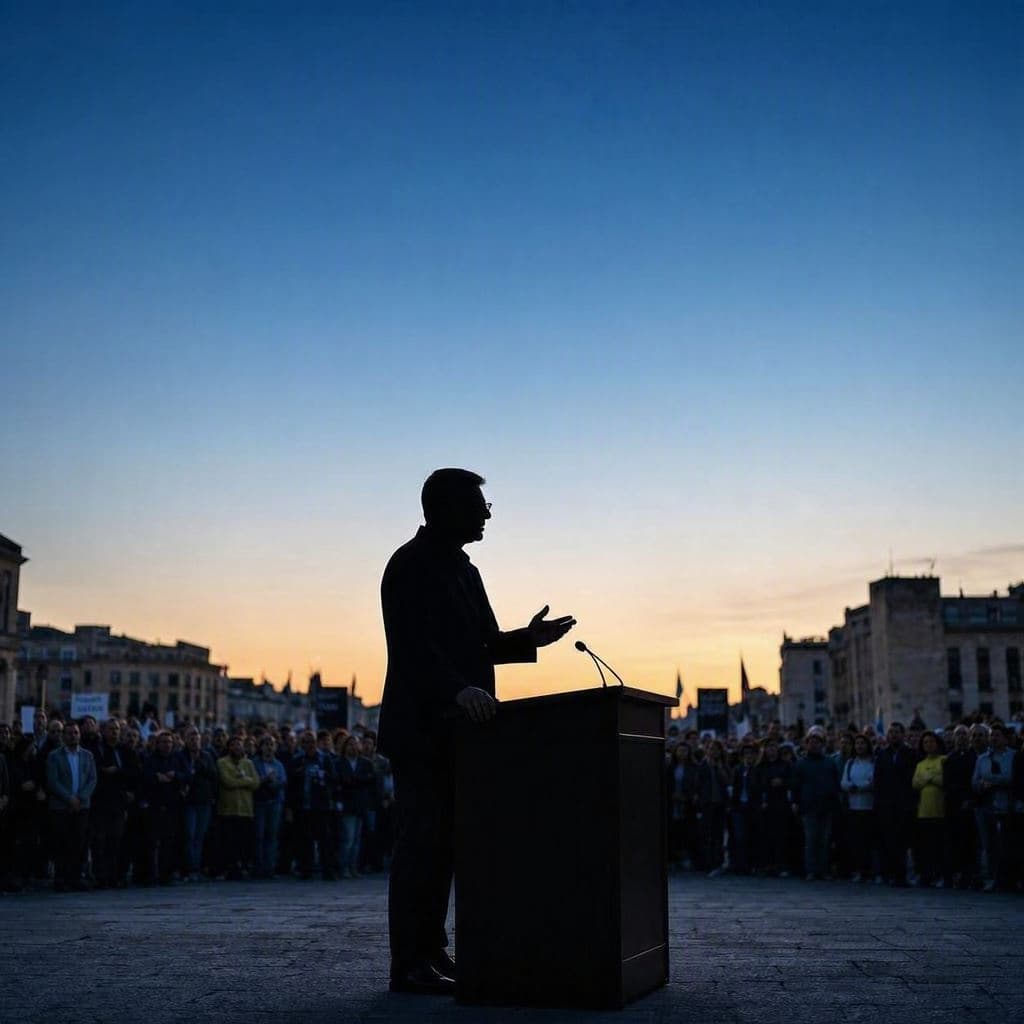
In the vibrant theater of political campaigning, moments of genuine human connection often share the stage with sharp rhetorical exchanges. Former President Donald Trump recently found himself at the center of such a duality, honoring a teenage lifeguard for his bravery while simultaneously directing criticism toward a CNN reporter. The event, typical of Trump’s unscripted and dynamic style, highlighted his ability to blend personal praise with political combat in a single breath.
The teenager, recognized for saving a swimmer from drowning, was invited onto the stage during a rally. Trump praised the young man’s courage and quick thinking, describing him as a hero. The gesture resonated with the crowd, offering a moment of warmth and appreciation amidst the usual political fervor. It served as a reminder of the individual acts of valor that often go unnoticed in broader national narratives.
However, the tone shifted quickly as Trump turned his attention to the media. He singled out a CNN reporter present at the event, criticizing the network’s coverage of his campaign and questioning their journalistic integrity. This confrontation, while predictable to his supporters, underscored the ongoing tension between the former president and mainstream media outlets. For Trump, the press remains a central adversary in his political journey.
The juxtaposition of honoring a civilian hero and attacking a journalist illustrates the complex nature of Trump’s public persona. He thrives on direct engagement, whether through applause or argument. This approach keeps his base energized and ensures that his messages dominate news cycles. It is a strategy that relies on emotional resonance and conflict to maintain visibility and influence.
Media analysts observe that such interactions are carefully calibrated to reinforce existing perceptions. Supporters see the praise for the lifeguard as evidence of Trump’s appreciation for everyday Americans, while the attack on the reporter confirms their skepticism of the media. Critics, meanwhile, view the confrontation as divisive and detrimental to civil discourse. The interpretation depends largely on the viewer’s perspective.
For the teenage lifeguard, the experience was likely surreal. Being recognized by a former president is a rare honor, one that may shape his future views on public service and leadership. His presence on stage served as a symbolic bridge between ordinary citizens and high-level politics, highlighting the impact of individual actions in the public sphere.
The incident also reflects the broader media landscape, where political figures and journalists often engage in a contentious dance. Trust in media institutions has declined in recent years, fueled by accusations of bias and misinformation. Trump’s criticisms tap into this sentiment, reinforcing the divide between his supporters and those who rely on traditional news sources for information.
As the campaign continues, such moments will likely recur, blending policy discussions with personal anecdotes and media critiques. They serve as microcosms of the larger political debate, where truth, perception, and personality intersect. For observers, they offer insight into the strategies and styles that define modern American politics.
AI Image Disclaimer: Images accompanying this report are AI-generated artistic interpretations of political rallies and media interactions, intended to visualize the themes of public engagement and journalism without depicting real individuals.
Sources: CNN, Fox News, Politico, The Hill
Published by Banx Network. This article is part of the Banx decentralized media programme, powered by the BXE token on the XRP Ledger.