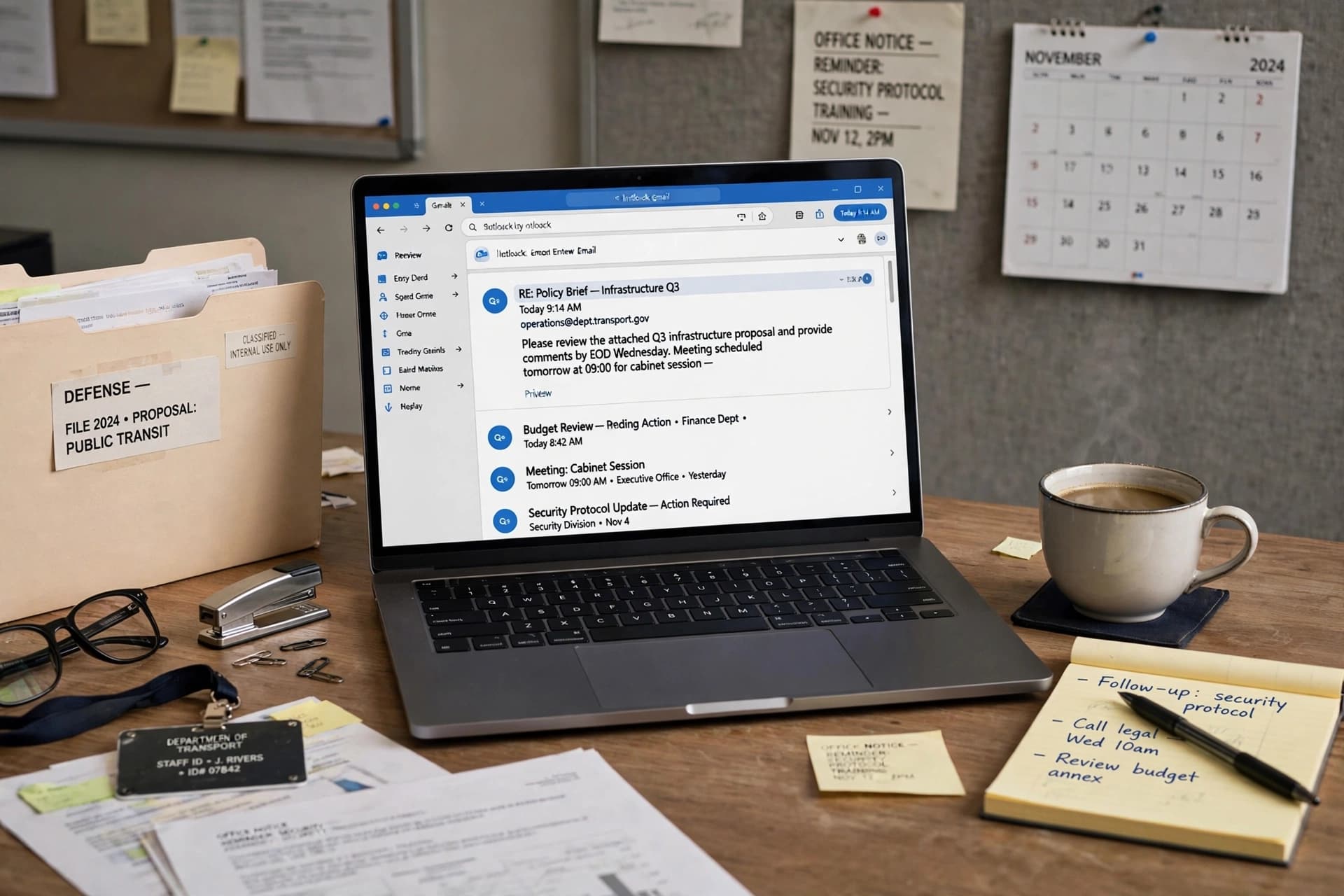
In the quiet corridors of American diplomacy, where discretion is the currency of the realm, a different kind of exchange has been unfolding—not across negotiating tables with foreign adversaries, but within the inboxes of the State Department itself. The emails, obtained and reported by Politico, reveal a year-long feud between two senior Trump appointees whose personal animosity grew so consuming that it eventually spilled into the open, exposing a side of governance rarely seen by the public that elects it .
At the center of the dispute are Deputy Secretary of State Christopher Landau and Paolo Zampolli, a former modeling agent and longtime Trump associate who served as special envoy for global partnerships . Landau, a Harvard-educated lawyer and former ambassador to Mexico, repeatedly ordered Zampolli to confine himself to cultural diplomacy—the stated scope of his role—and warned of "disciplinary action, dismissal, and legal liability" if he continued to operate beyond his authority . Zampolli, for his part, insisted that his true boss was the president himself, not the deputy secretary, and accused Landau of waging a campaign to destroy him from "Day 1" .
What gives the exchange its particular resonance is not merely the personal vitriol but the audience. Upward of sixteen administration officials were copied on some of these emails, including the director of presidential personnel . The dispute also reached beyond American shores: at one point, Landau contacted Serbia's foreign minister to clarify that Zampolli lacked authorization to represent the United States on matters beyond culture, apologizing for any confusion his visit had caused . An administration official described the whole affair as "cartoonish and embarrassing"—an assessment that, whatever its harshness, captures the gap between the grandeur of diplomacy and the pettiness of the conduct on display .
Zampolli's defenders might point to his loyalty and his access. He represented Melania Trump in the 1990s and is credited with introducing her to Donald Trump at a party; his relationship with the president predates and transcends the ordinary channels of bureaucratic hierarchy . But loyalty, however valued, does not resolve the fundamental question that Landau kept raising: whether a special envoy with a narrow cultural mandate should be meeting with Romania's energy minister, discussing nuclear energy in Hungary, or engaging Argentine officials on space policy . Zampolli defended those activities as advancing the president's interests, but the emails suggest a pattern of boundary-crossing that his supervisor found intolerable.
The timing of the public revelation is itself noteworthy. The feud had simmered for nearly a year, known only to those inside the administration's email chains. It became public only when Politico obtained and published the correspondence, and within hours, Zampolli was fired . He told the outlet he had "absolute zero surprise" at his dismissal, and in a statement afterward, he framed his departure as a return to the business world, quoting Trump as saying, "Why do you want to work in government when you can close all these deals?" . Whether that framing is resignation, relief, or revisionism, only he can say.
The episode raises questions that extend beyond the two men involved. In any administration, tension between political appointees and career leadership is not unusual; the machinery of government often grinds against the personal loyalties and informal power structures that presidents bring with them. What is unusual is the degree to which those tensions became visible—not through leaks or investigative journalism, but through the appointees' own willingness to put their grievances in writing, copied to colleagues, apparently without concern for consequence. An official familiar with the exchanges called the sniping "cartoonish and embarrassing," and one suspects the assessment is shared by many who watched it unfold .
The State Department spokesperson's response—that Landau is "focused on ensuring the department works together to accomplish President Trump and Secretary Rubio's foreign policy agendas"—carries the careful blandness of institutional self-preservation . But the emails have already told their own story, one in which the work of diplomacy was interrupted by a battle over who had the right to do it. Zampolli has moved on, or says he has. Landau remains in his post. And the State Department, that most formal of institutions, has been reminded that email chains, once sent, cannot be unsent.
This article contains AI-generated imagery for illustrative purposes only.
Sources: Politico, Mediaite, The New Republic, The Daily Beast
Published by Banx Network. This article is part of the Banx decentralized media programme, powered by the BXE token on the XRP Ledger.