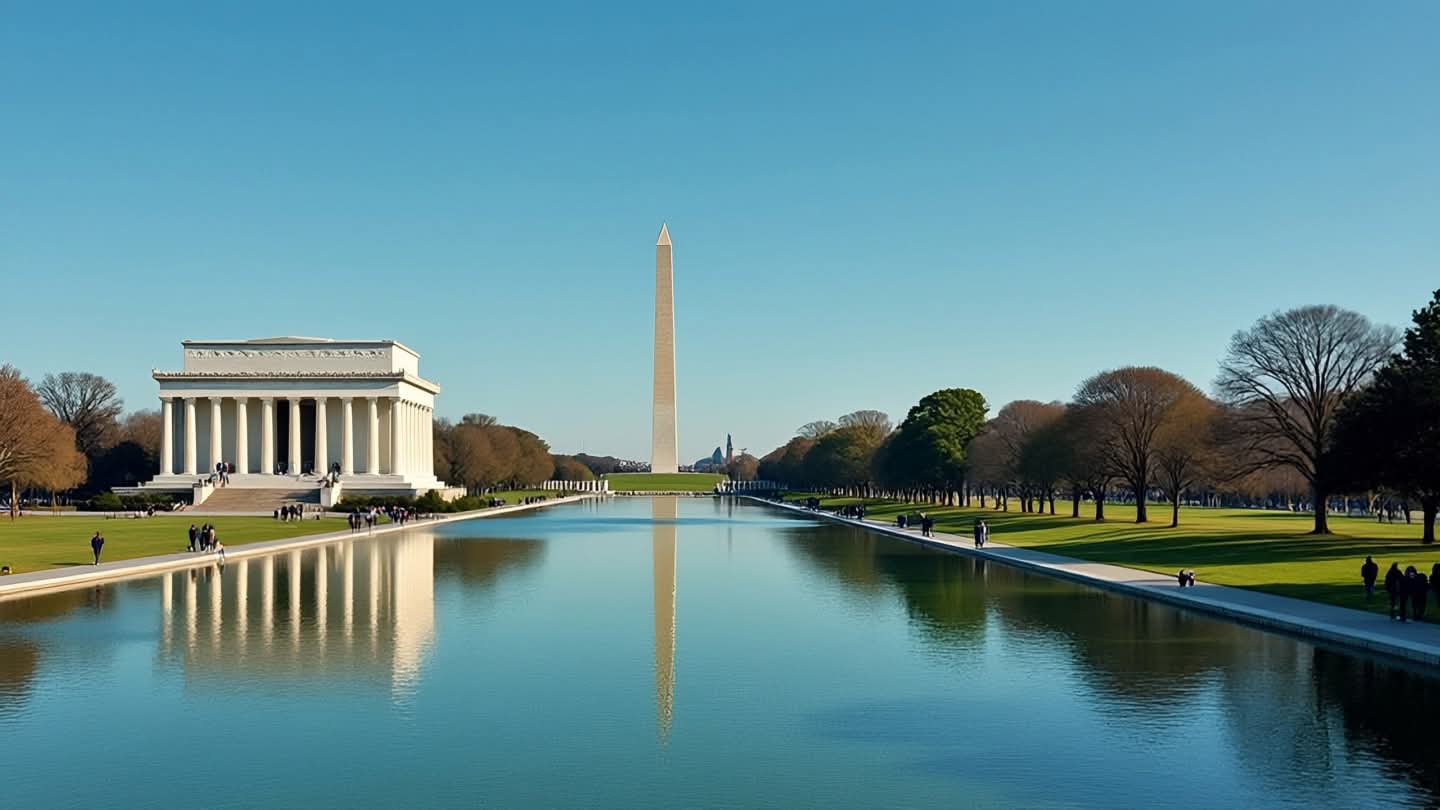
The Lincoln Memorial Reflecting Pool, a serene mirror of the Washington Monument, has long been a symbol of national unity and reflection. Recently, however, it became the center of a political storm when the Trump administration accused vandals of causing significant damage to its surface. New revelations indicate that federal engineers had warned officials about the pool’s deteriorating condition nearly a month before the vandalism claims were made, raising questions about the accuracy of the allegations.
In early June, a National Park Service engineer reported that the pool’s epoxy coating was peeling due to age and weather exposure, a natural process of wear and tear. Despite this internal warning, the administration publicly attributed the damage to malicious actors, launching a high-profile investigation and charging several individuals with vandalism. The discrepancy between the technical assessment and the political narrative has since drawn sharp criticism from experts and lawmakers alike.
The charges, which included felony counts against former Olympian David Hearn and others, were based on the premise that the damage was intentional and extensive. Prosecutors presented evidence suggesting that the individuals had used tools to scrape the pool’s surface. However, as the case progressed, doubts emerged about the extent of the damage and its cause. The earlier engineering report suggested that the peeling was widespread and consistent with material failure rather than isolated acts of sabotage.
Federal prosecutors eventually moved to drop the charges, acknowledging that the evidence did not support the claim of criminal vandalism. The dismissal was a significant embarrassment for the administration, which had touted the incident as an example of lawlessness and disrespect for national landmarks. It also highlighted the dangers of politicizing routine maintenance issues, turning a simple repair job into a national scandal.
For the National Park Service, the incident underscores the challenges of managing historic infrastructure. The Reflecting Pool, like many older structures, requires regular upkeep and eventual renovation. Blaming vandals for natural degradation not only misleads the public but also distracts from the real need for funding and maintenance. Experts argue that transparent communication about the condition of national monuments is essential for public trust.
The political fallout has been substantial. Critics have accused the administration of using the incident to distract from other issues and to rally its base against perceived enemies. Supporters, however, remain skeptical of the dismissal, questioning whether political pressure influenced the decision. The episode serves as a cautionary tale about the intersection of law, politics, and public infrastructure.
As the dust settles, the focus returns to the pool itself. Restoration work is underway to repair the peeling epoxy and ensure the landmark’s longevity. The incident has sparked a broader conversation about how we care for our national treasures and the importance of accurate information in public discourse.
In the end, the Reflecting Pool remains a place of beauty and contemplation. The controversy surrounding it, however, serves as a reminder of the fragility of truth in the modern political landscape. It invites us to look closer, question narratives, and appreciate the complex reality behind the images we see.
AI Image Disclaimer: Images accompanying this report are AI-generated artistic interpretations of the Reflecting Pool and legal symbols, intended to visualize the context of the controversy without depicting real individuals or proprietary engineering reports.
Sources: NBC News, The New York Times, The Guardian, KVUE
Published by Banx Network. This article is part of the Banx decentralized media programme, powered by the BXE token on the XRP Ledger.