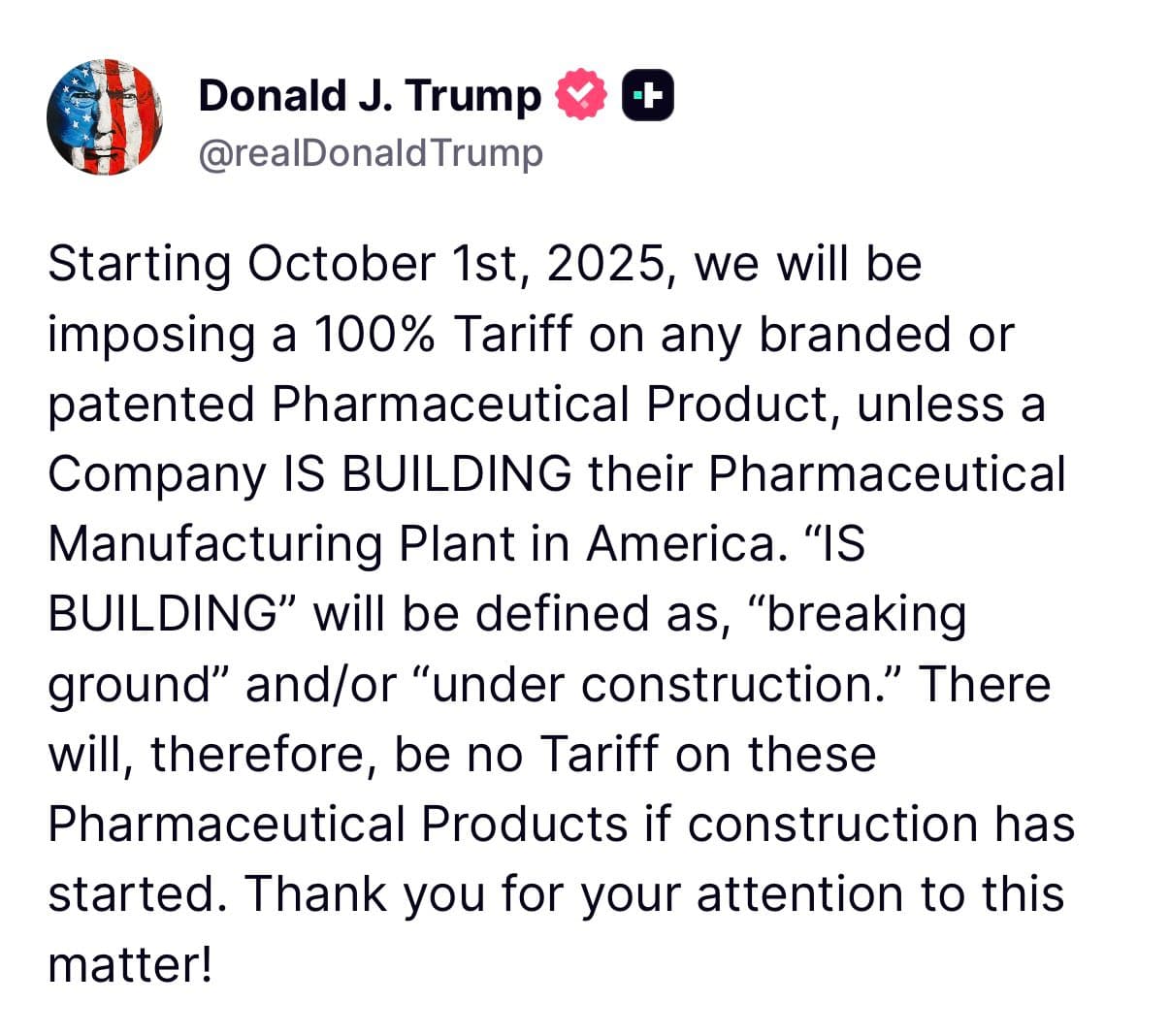
Starting October 1, 2025, a major shift in U.S. trade and healthcare policy will take effect. President Donald J. Trump announced that his administration will impose a 100% tariff on all branded or patented pharmaceutical products that are manufactured outside the United States. The bold move is designed to push pharmaceutical companies to bring production back to American soil.
The policy includes a crucial exception: companies that are actively building pharmaceutical manufacturing plants in the United States will be exempt from the tariff. According to the announcement, “IS BUILDING” will be legally defined as projects that have either “broken ground” or are already “under construction.” This means pharmaceutical firms can avoid the steep tariff if they have begun the process of establishing U.S.-based production facilities by the enforcement date.
The administration argues that this measure will not only strengthen America’s supply chain resilience but also reduce dependence on foreign manufacturing, particularly in critical healthcare sectors. The COVID-19 pandemic underscored the vulnerabilities of global pharmaceutical supply chains, where reliance on overseas facilities led to shortages and bottlenecks. Trump’s move is being framed as a decisive step toward ensuring drug security and fostering domestic job creation.
For pharmaceutical companies, however, the policy creates a significant challenge. Many firms rely on lower-cost overseas manufacturing to keep expenses down. A 100% tariff would effectively double the price of imported branded medicines, potentially making them unaffordable for American patients unless companies shift production back home.
Industry analysts suggest this tariff could accelerate the reshoring of pharmaceutical manufacturing to the U.S., but warn of potential short-term disruptions. Critics argue that consumers may face higher drug costs in the immediate future, while supporters claim the long-term benefits of domestic production will outweigh initial challenges.
The move is also expected to spark debates on international trade relations. Countries that currently serve as key suppliers of branded pharmaceuticals may view the tariff as protectionist, potentially leading to retaliatory measures.
Still, Trump’s announcement sends a clear message: the U.S. intends to reclaim control over pharmaceutical production. By tying tariff exemptions directly to domestic manufacturing projects, the administration is creating powerful incentives for the pharmaceutical industry to invest in American factories, jobs, and innovation.
This decision could reshape the pharmaceutical landscape for decades, positioning the U.S. as a global leader not just in drug research but in large-scale production as well.
Published by Banx Network. This article is part of the Banx decentralized media programme, powered by the BXE token on the XRP Ledger.