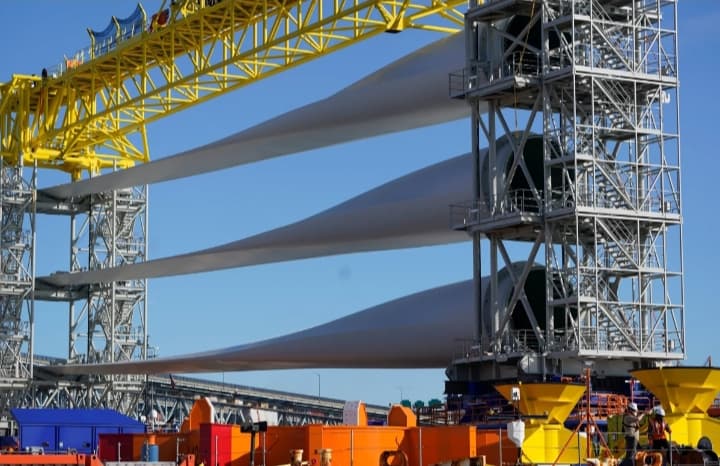
The Trump administration announced the suspension of five proposed offshore wind energy projects located along the East Coast, citing national security concerns as the primary reason. Officials have expressed apprehension that the wind farms could interfere with military training exercises and operations, particularly in areas crucial for national defense.
The projects, which aimed to harness wind energy to power thousands of homes, have been championed by environmental advocates as a step toward clean energy transition. However, the administration's decision aligns with its broader agenda to prioritize fossil fuel energy sources and limit renewable energy initiatives that they assess as conflicting with military readiness.
Key stakeholders, including state governors and environmental groups, have criticized the suspension, arguing that it undermines efforts to combat climate change and reduce reliance on fossil fuels. They contend that careful planning and collaboration can resolve these national security concerns without halting progress on renewable energy projects.
As the nation grappled with energy policy debates, this suspension has ignited discussions on the balance between national security and the urgent need to transition towards sustainable energy sources in the face of an evolving climate crisis. The administration's stance may have lasting implications for how offshore renewable energy is authorized and pursued in the future.
Published by Banx Network. This article is part of the Banx decentralized media programme, powered by the BXE token on the XRP Ledger.