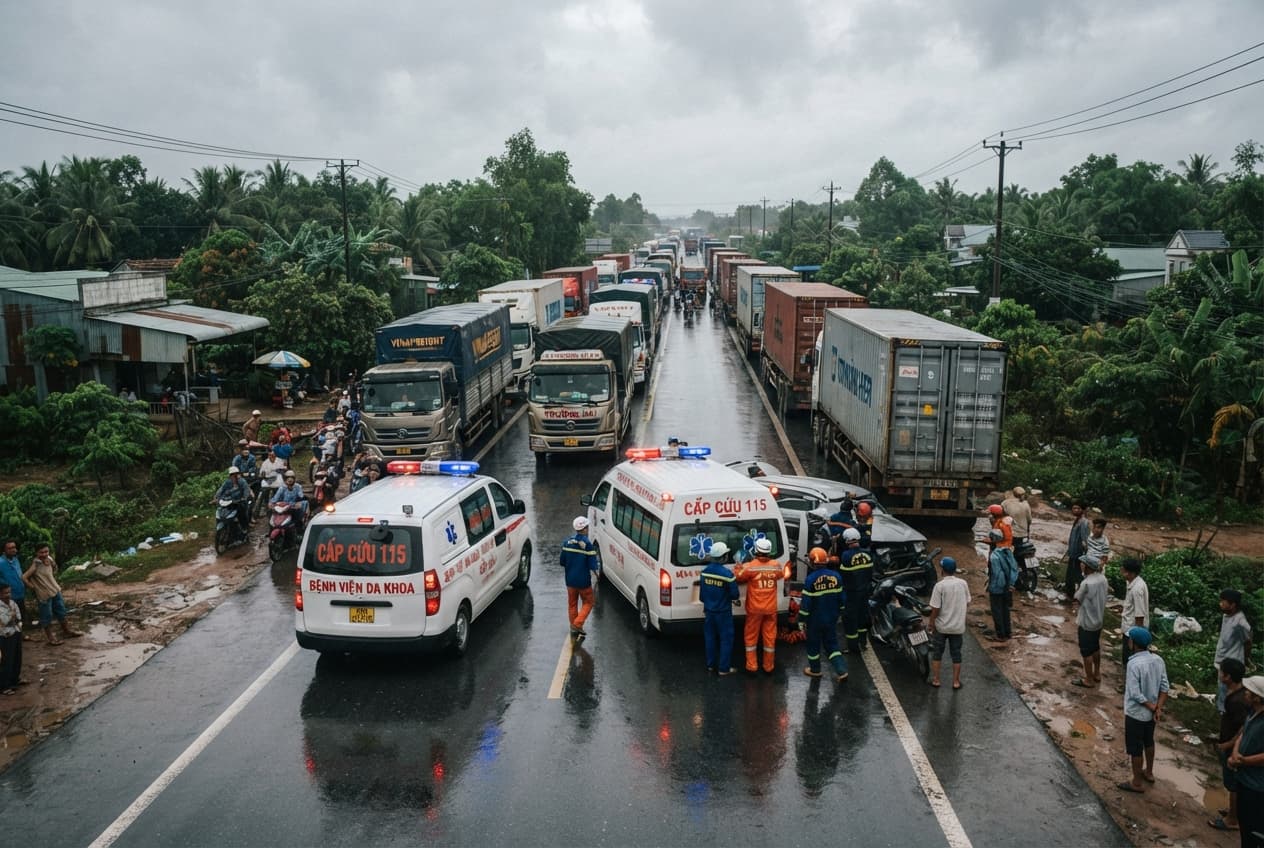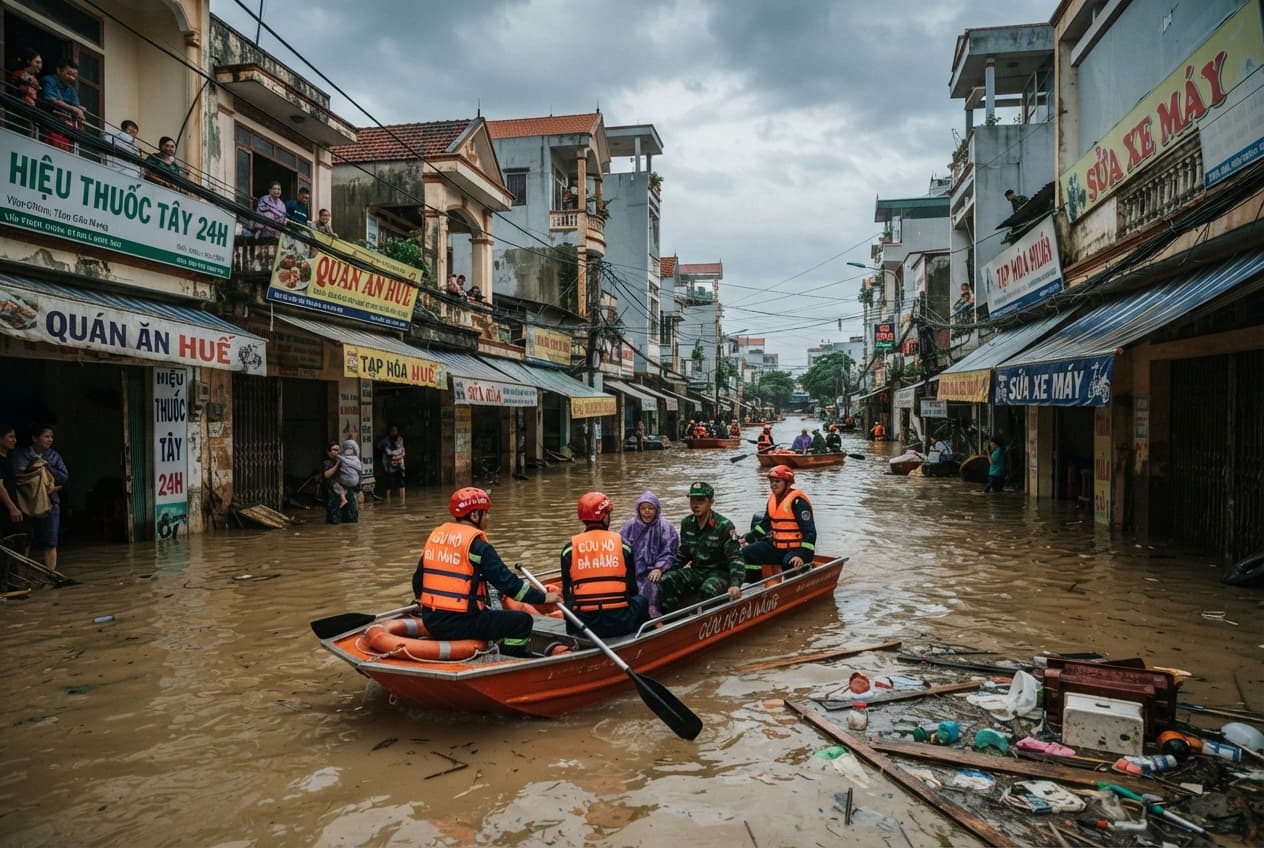
Da Nang, Vietnam—A powerful typhoon slammed into the central Vietnamese coast earlier today, leaving a path of widespread destruction and 12 confirmed dead in Da Nang. Emergency rescue teams, military personnel, and municipal disaster squads mobilized immediately as fierce winds and torrential downpours battered the city. Rescuers navigated flooded thoroughfares using rubber boats, pulling stranded residents from inundated neighborhoods as rising river levels breached sea dikes.
The storm made landfall during the early morning hours, packing sustained hurricane-force winds and torrential rain bands that overwhelmed municipal drainage systems. Massive gales tore roofs off commercial buildings, uprooted hundreds of mature trees, and snapped concrete utility poles across multiple urban wards. Storm surges pushed seawater miles inland, flooding coastal avenues and trapping vehicles in deep saltwater basins.
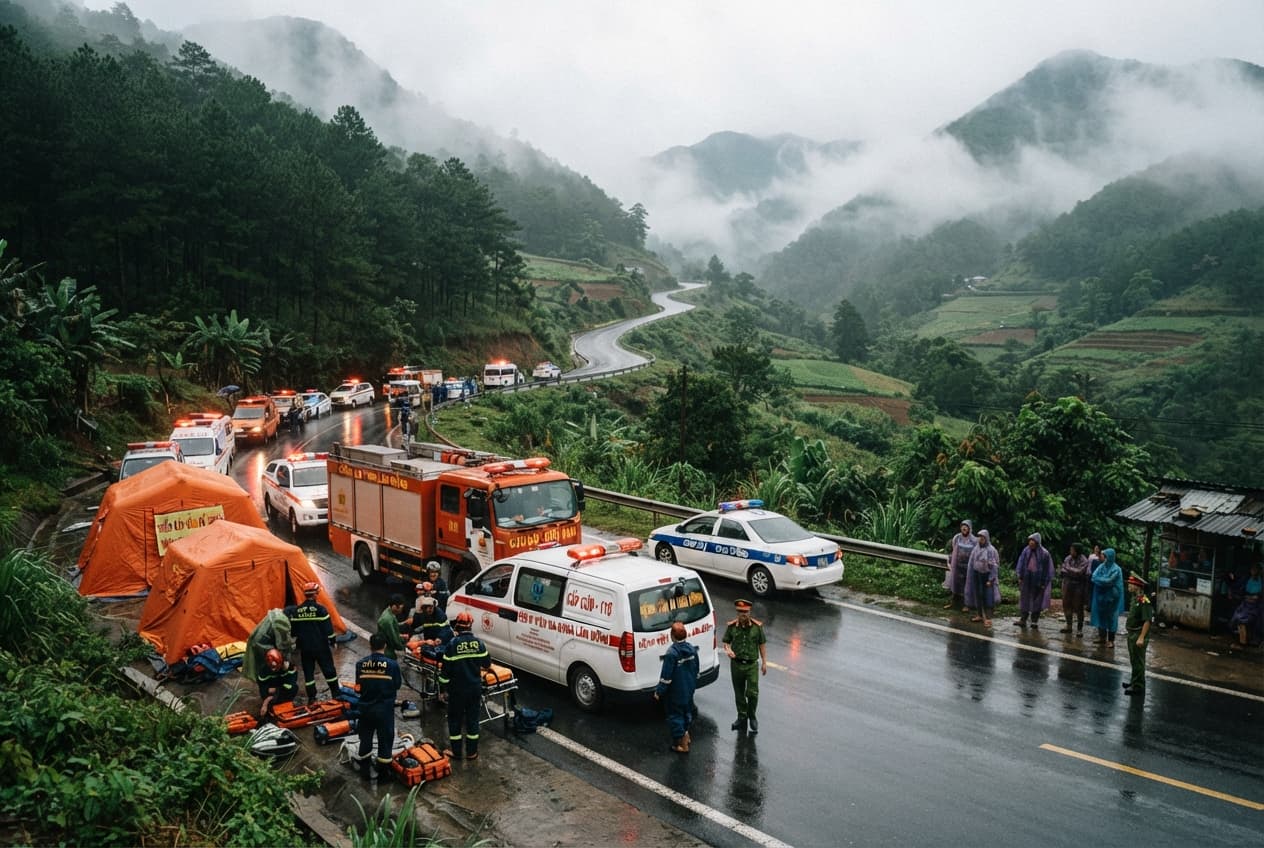
Rescue units recovered 12 bodies from collapsed structures, flooded basements, and swept-away riverbanks within hours of the storm's initial strike. Paramedics and military medical staff established triage tents on higher ground to treat hundreds of injured citizens suffering from lacerations, hypothermia, and blunt trauma. Emergency field hospitals worked around the clock to manage the influx of casualties coming from outlying districts.
Municipal power grids failed completely as transformers exploded under high-voltage surges and downed lines severed regional electricity transmission. Da Nang International Airport suspended all flight operations, while railway tracks linking northern and southern trunk lines suffered severe washout damage. Civil defense teams deployed heavy machinery to clear debris-choked roads, allowing emergency supply trucks to reach isolated populations.
Local authorities declared a state of emergency across the affected coastal zone, mobilizing thousands of soldiers to assist in search, rescue, and relief operations. Evacuation centers schools and government offices accommodated thousands of displaced families whose homes sustained structural damage or complete collapse. Relief organizations began distributing emergency rations, bottled water, and purification tablets to prevent waterborne disease outbreaks.
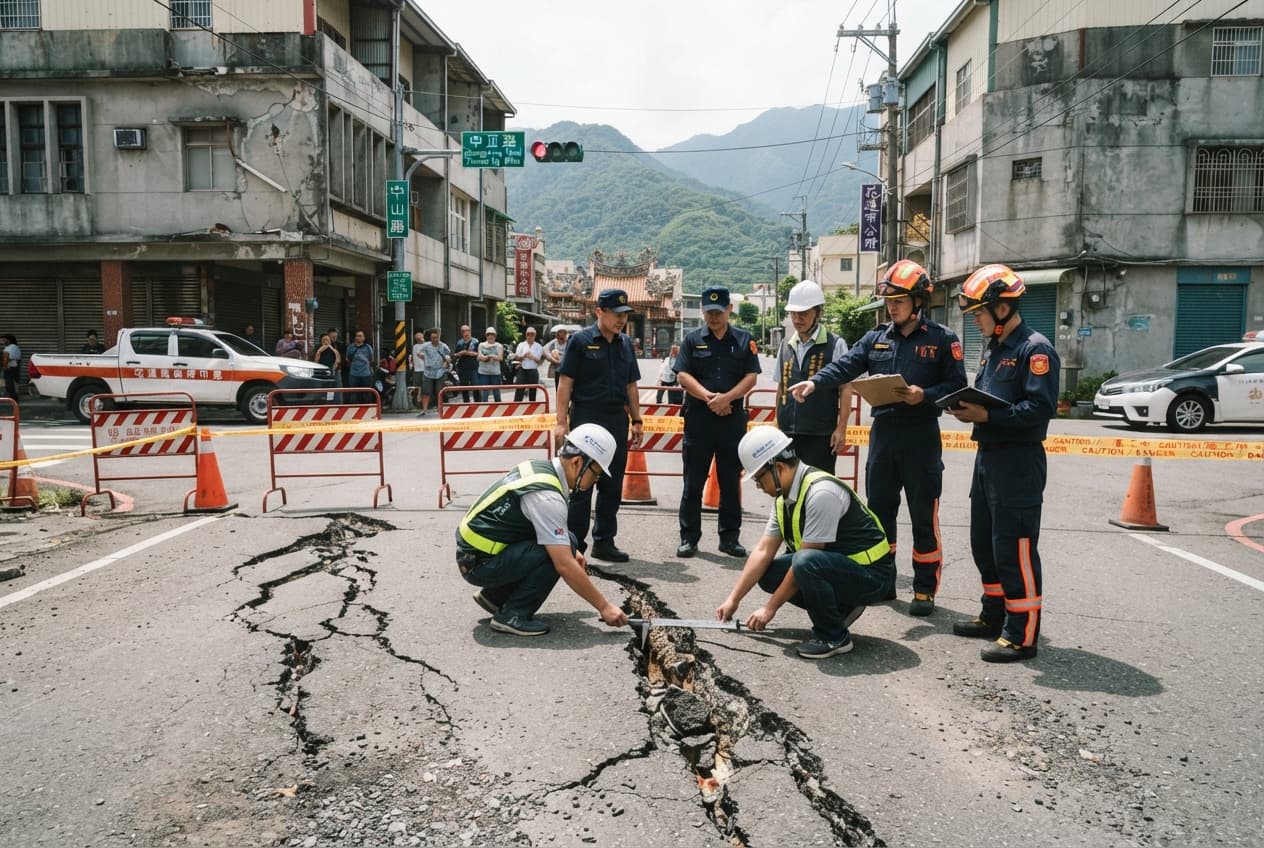
Agricultural experts and local officials warned of severe long-term economic impacts on regional farming and aquaculture sectors following extensive flood damage to coastal fish farms. Infrastructure engineers inspected damaged bridges and seawalls to evaluate structural stability before allowing public transit to resume. Government ministries pledged immediate financial assistance to support recovery efforts across the central provinces.
Cleanup crews began clearing shattered glass, corrugated metal sheets, and uprooted trees from main urban arteries as winds gradually subsided late in the afternoon. Utility repair technicians worked in dangerous conditions to restore electrical power and communication links to critical municipal facilities. Civil authorities ordered residents in heavily flooded zones to remain indoors until floodwaters recede.
Forensic examination teams assisted local police in identifying victims recovered from debris fields and transferring remains to municipal mortuaries for family release. Social welfare workers coordinated with community leaders to register missing persons and track displaced families across temporary shelters.
Rescue operations remain active in submerged suburban areas where communication links are still partially severed. The National Committee for Incident and Disaster Response confirmed that relief assets will remain deployed in the region until all communities regain basic utility access. The typhoon has since weakened into a tropical depression over neighboring highlands.
Published by Banx Network. This article is part of the Banx decentralized media programme, powered by the BXE token on the XRP Ledger.