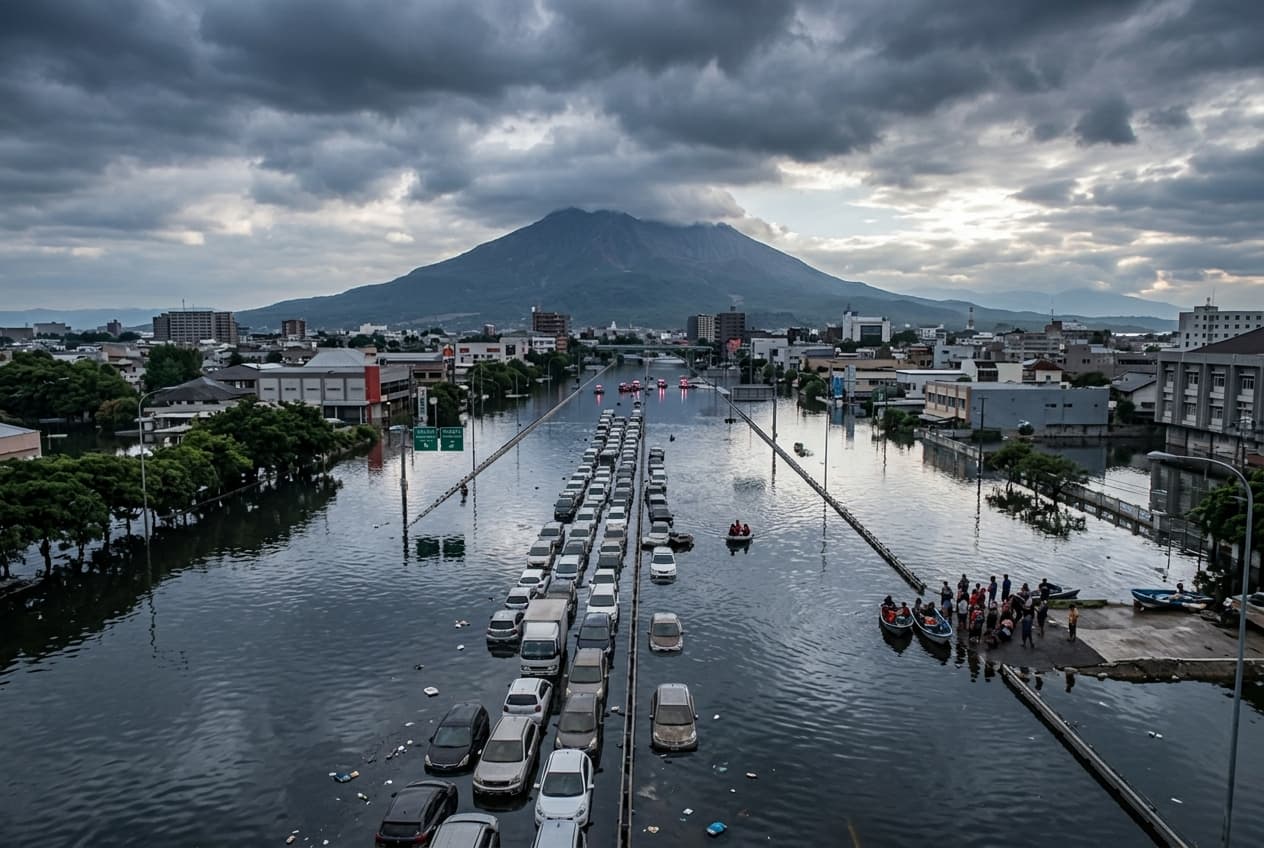
Tripoli, Libya—Torrential autumn rainstorms inundated key residential neighborhoods and commercial districts across Tripoli on October 13, 2026, killing two people and causing widespread municipal gridlock.
The downpour unleashed rapid runoff across urban concrete, choking drainage canals and transforming central thoroughfares into roaring currents. Emergency services confirmed the discovery of two victims inside submerged vehicles after floodwaters trapped motorists on major bypasses during peak morning transit.
Civic infrastructure across the capital buckled under the deluge, cutting off power lines and flooding ground-floor facilities at regional medical centers. Public works crews deployed heavy water trucks and specialized pumps to clear deep pooling along the Second Ring Road, where traffic remained entirely halted for hours
"The drainage systems were instantly overwhelmed by the volume of water, trapping people in their cars before anyone could mobilize heavy rescue equipment," said Ahmed Al-Mabrouk, a municipal worker clearing drainage grates near the city center.
Low-lying neighborhoods saw standing water rise over structural doorways, forcing families to move equipment and livestock to higher ground. Civil defense units responded to dozens of distress calls from trapped drivers, maneuvering inflatable crafts through flooded underpasses to reach stranded civilians.
The severe storm highlights the long-standing frailty of the city’s aging underground stormwater network, which has suffered from decades of underinvestment and rapid urban growth. Construction debris and uncollected waste blighted key culverts, compounding water retention across low-elevation zones.
Meteorological tracking stations warned that additional coastal rain systems could track inland, threatening to stall drainage efforts across vulnerable municipal quarters. Local authorities instructed residents in low-lying zones to remain indoors and avoid travel on flooded arterial routes.
Emergency crews continue operating mobile suction pumps to clear submerged transit routes across the central district. Public works teams remain stationed along key bypasses as civil defense crews monitor persistent water levels across low-lying neighborhoods.
Published by Banx Network. This article is part of the Banx decentralized media programme, powered by the BXE token on the XRP Ledger.