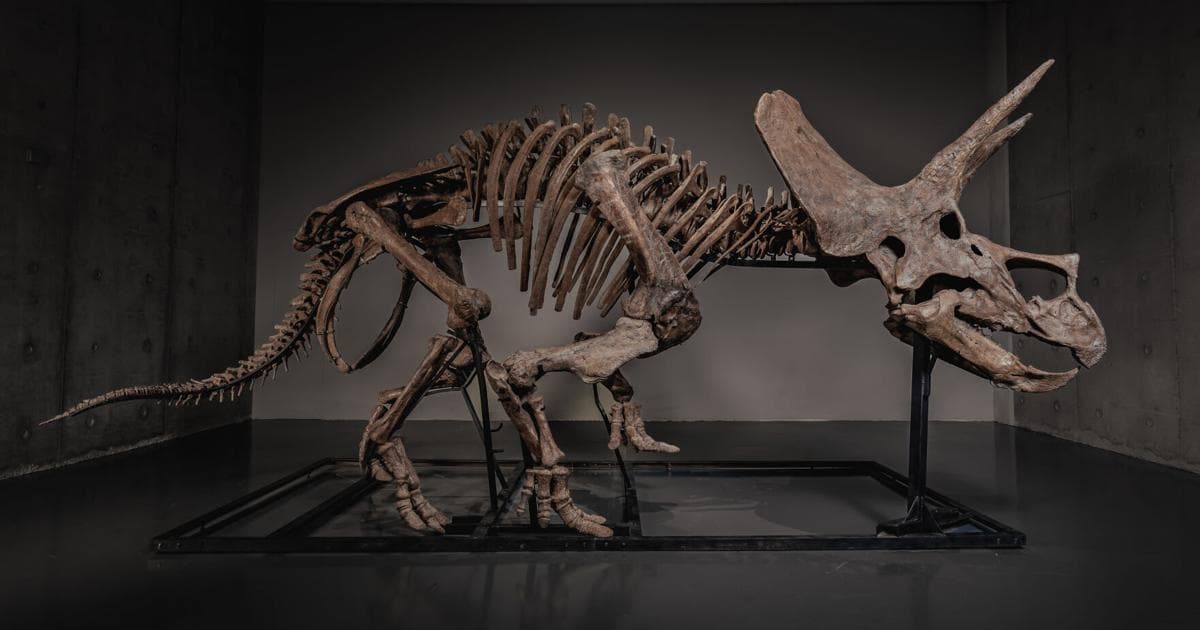
The Triceratops skeleton known as “Trey” will soon be available at auction, tapping into a booming market for dinosaur fossils. This nearly complete skeleton, estimated to be over 66 million years old, has captivated the attention of collectors and paleontology enthusiasts due to its impressive size and well-preserved state.
The auction reflects a growing trend in interest for rare prehistoric specimens, driven by increased media attention and the allure of owning a piece of history. Experts predict that Trey could fetch a substantial price, with estimates reaching into the millions, as collectors vie for one of the most recognizable dinosaurs in history.
As the auction date approaches, both private collectors and institutions are preparing to place bids, highlighting the competitive nature of the current fossil market. Museums, in particular, see these acquisitions as opportunities to enhance their collections and educate the public about prehistoric life.
The sale of Trey not only emphasizes the financial value of dinosaur fossils but also raises discussions surrounding ethical considerations in paleontological practices. While private ownership of such specimens is legal, there is an ongoing debate about the potential impact on scientific research and preservation.
As excitement builds around the auction, Trey stands as a testament to the fascination with dinosaurs and the continuing appeal of ancient life in popular culture. The outcome of the auction will likely set a benchmark for future sales in the thriving market for dinosaur-related artifacts.
Published by Banx Network. This article is part of the Banx decentralized media programme, powered by the BXE token on the XRP Ledger.